
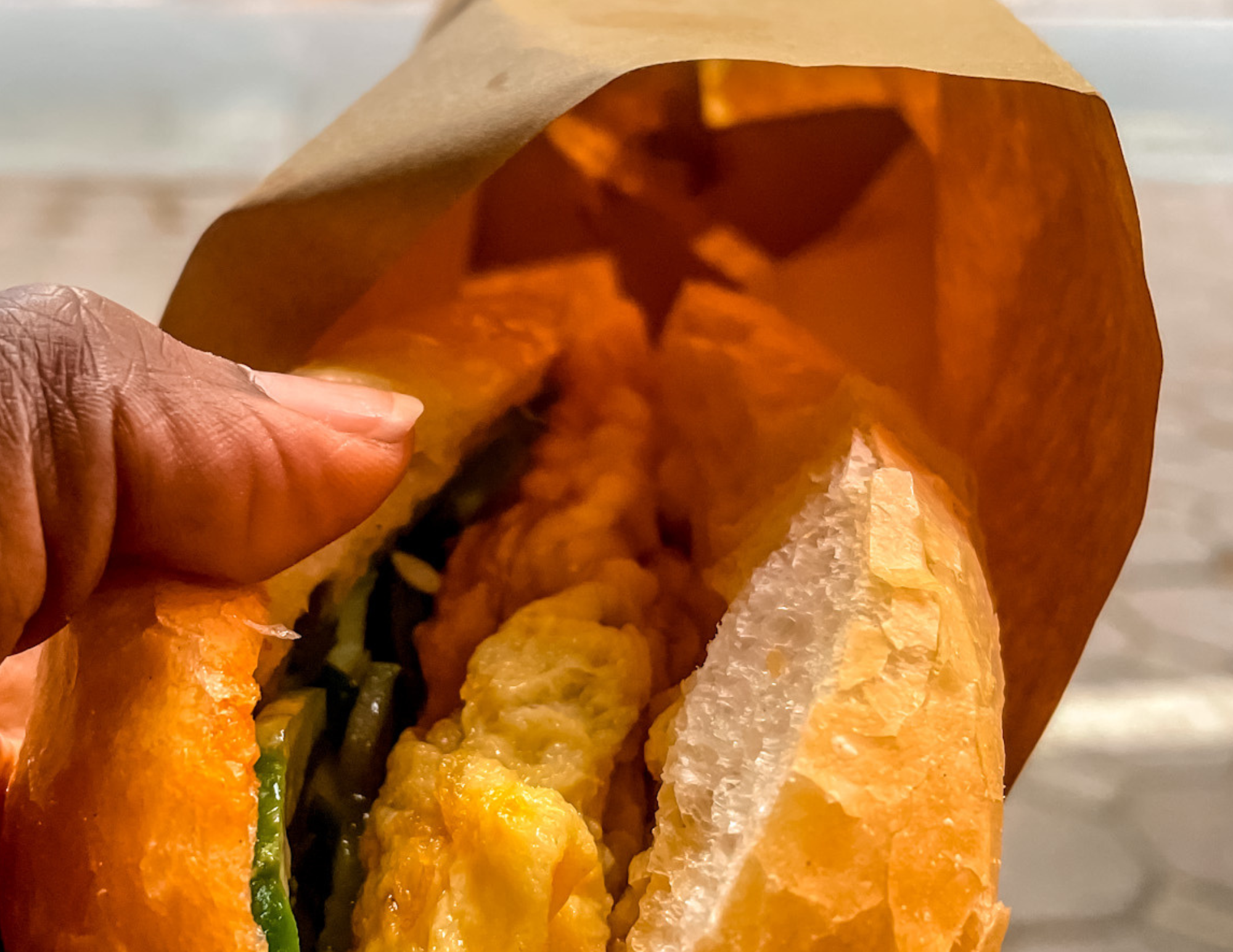
You can travel across Vietnam eating bowls of noodle soup, plates of grilled meat, and endless street food snacks, but there is one food you will see everywhere from big cities to small towns.
Banh mi.
It is quick, inexpensive, portable, and deeply tied to the country’s history. It is also one of the easiest Vietnamese foods for visitors to try because it feels familiar at first glance. Bread, meat, vegetables. But after the first bite you realize it is very different from any sandwich you have had before.
This guide explains what banh mi actually is, where it came from, what goes inside it, and how to order one properly in Vietnam.
What Banh Mi Is
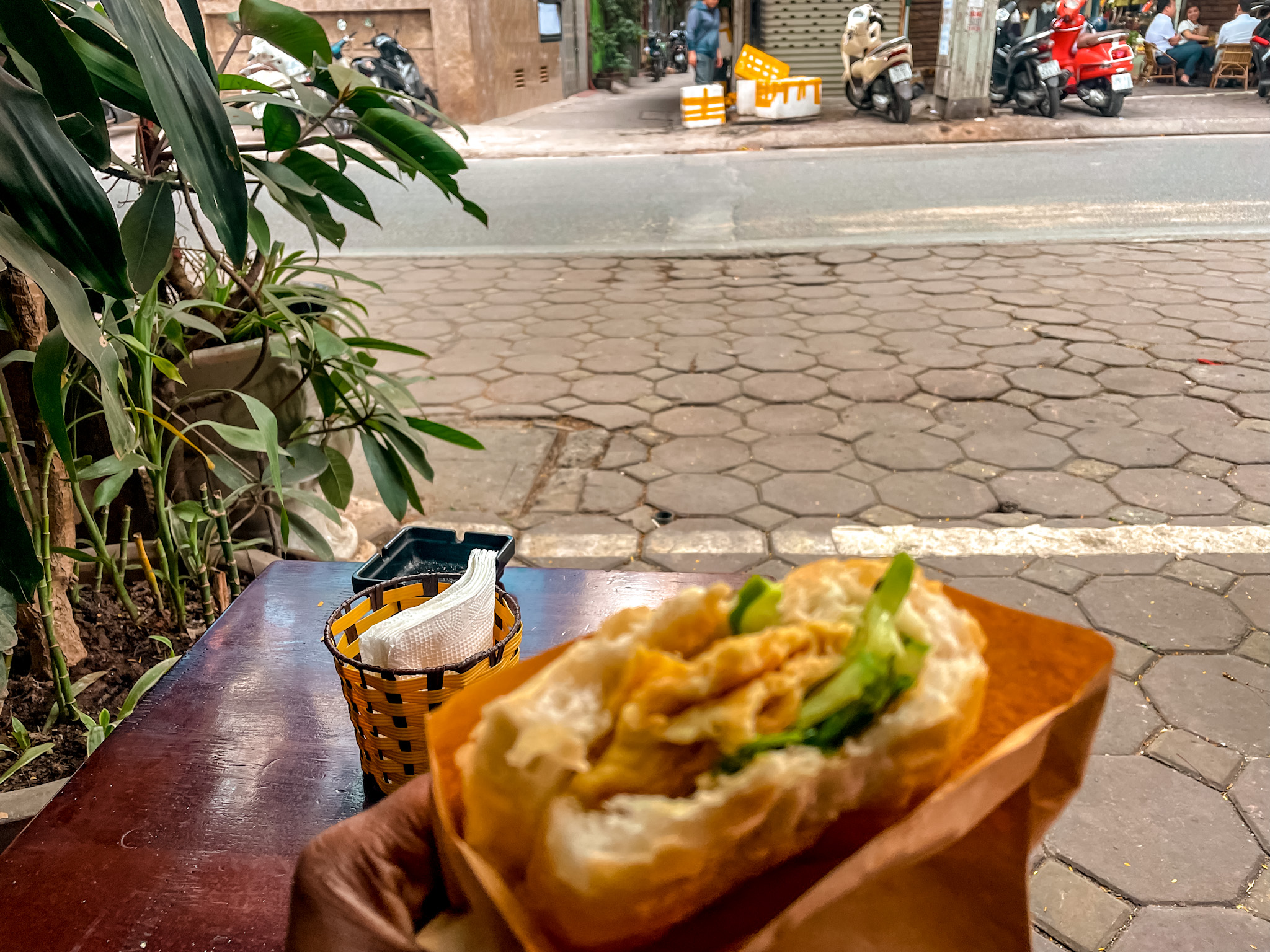
Banh mi simply means bread in Vietnamese, but internationally the term refers to the filled sandwich.
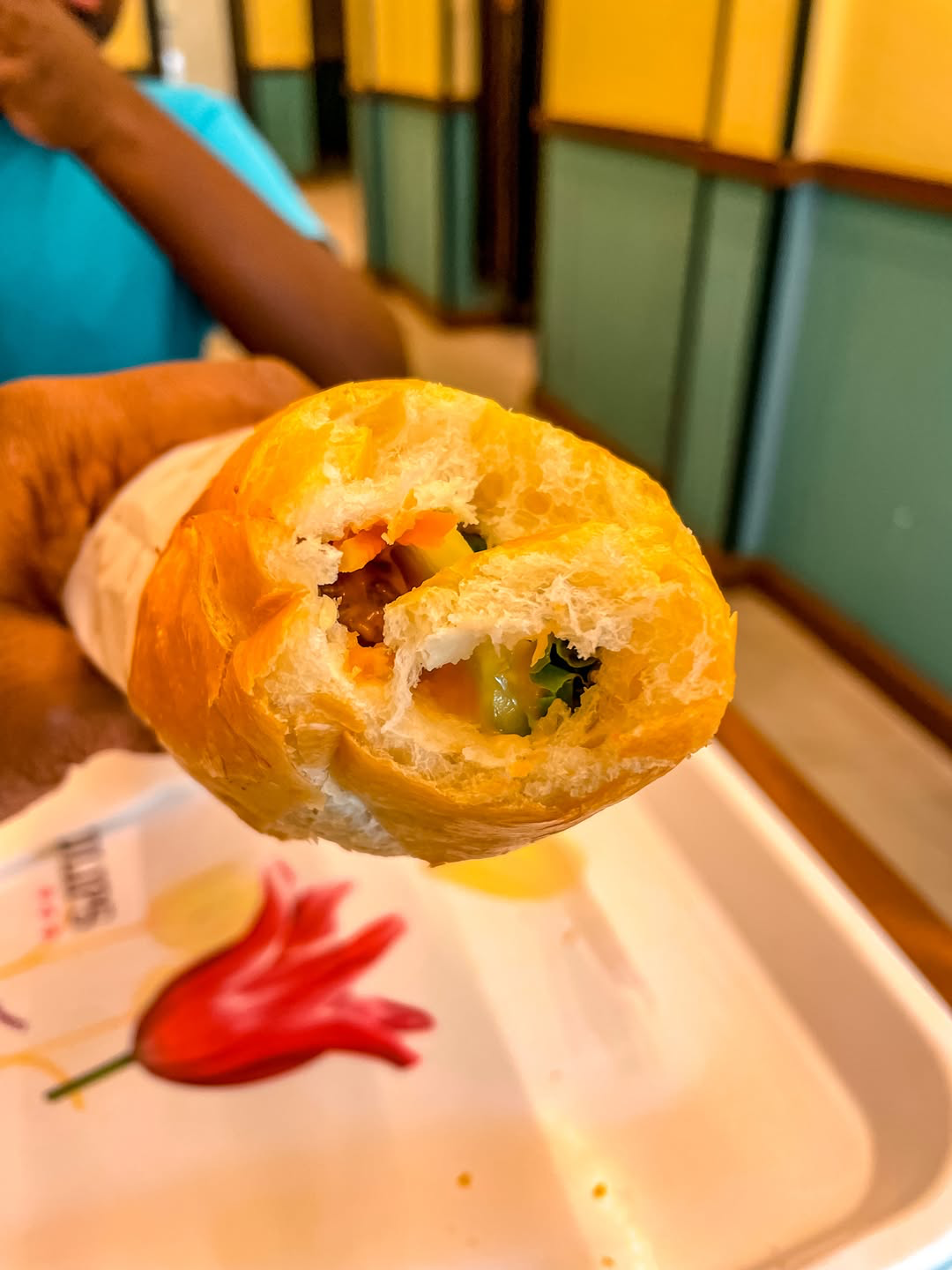
At its core, banh mi is a Vietnamese baguette filled with savory ingredients and bright pickled vegetables. The bread is the foundation of the experience. It looks like a French baguette but is lighter and crispier because it uses a mix of wheat and rice flour. The crust cracks easily while the inside stays airy.
The result is a sandwich that feels crisp without being heavy.
The History Behind Banh Mi
The sandwich exists because of French colonial history in Vietnam during the late 19th and early 20th centuries.
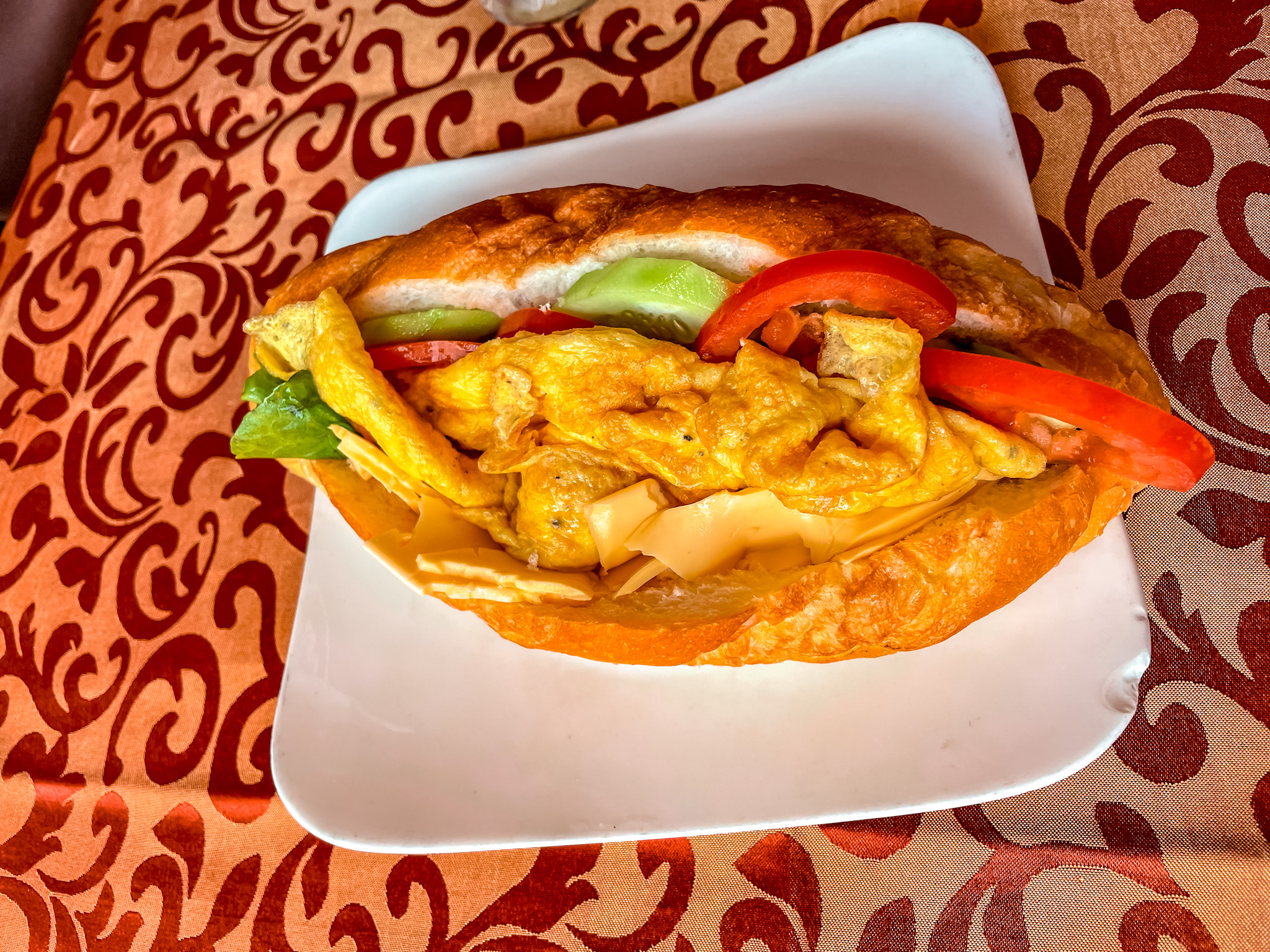
The French introduced wheat bread, butter, and pâté. Vietnamese cooks adapted those ingredients to local tastes and available foods. Over time the sandwich changed from a European style baguette with simple fillings into something entirely new.
Local herbs, pickled vegetables, chili, and sauces were added. Instead of cheese being the focus, freshness and balance became the goal. By the mid 20th century banh mi had become distinctly Vietnamese rather than French.
After the Vietnam War, Vietnamese immigrants brought the sandwich abroad where it became globally recognized, but in Vietnam it never stopped being everyday street food.
What Goes Inside a Traditional Banh Mi
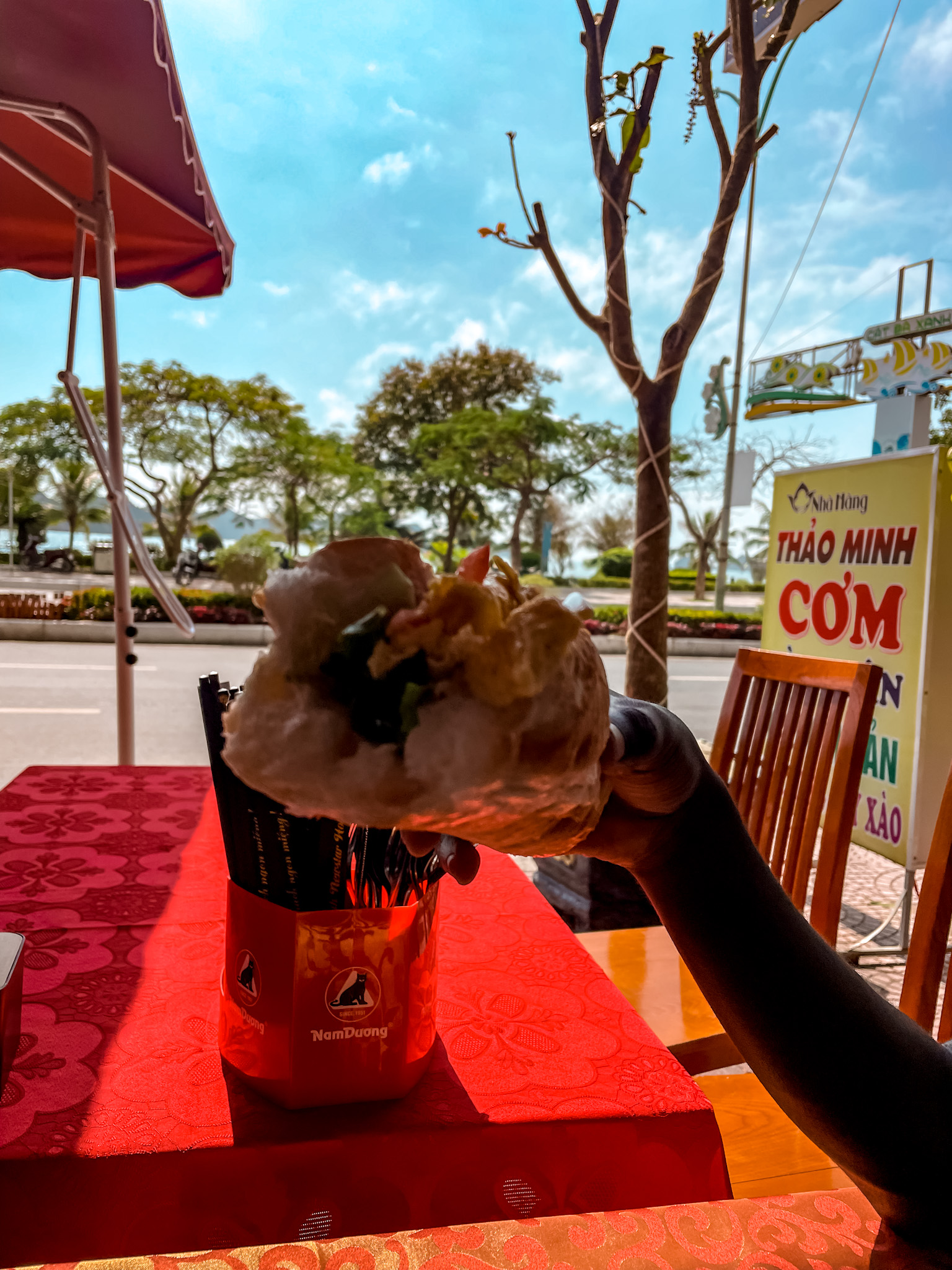
There is no single correct version, but most banh mi share a common structure.
Bread
Light crispy baguette
Spread
Mayonnaise or butter
Liver pâté
Protein
Roast pork
Grilled pork
Cold cuts
Chicken
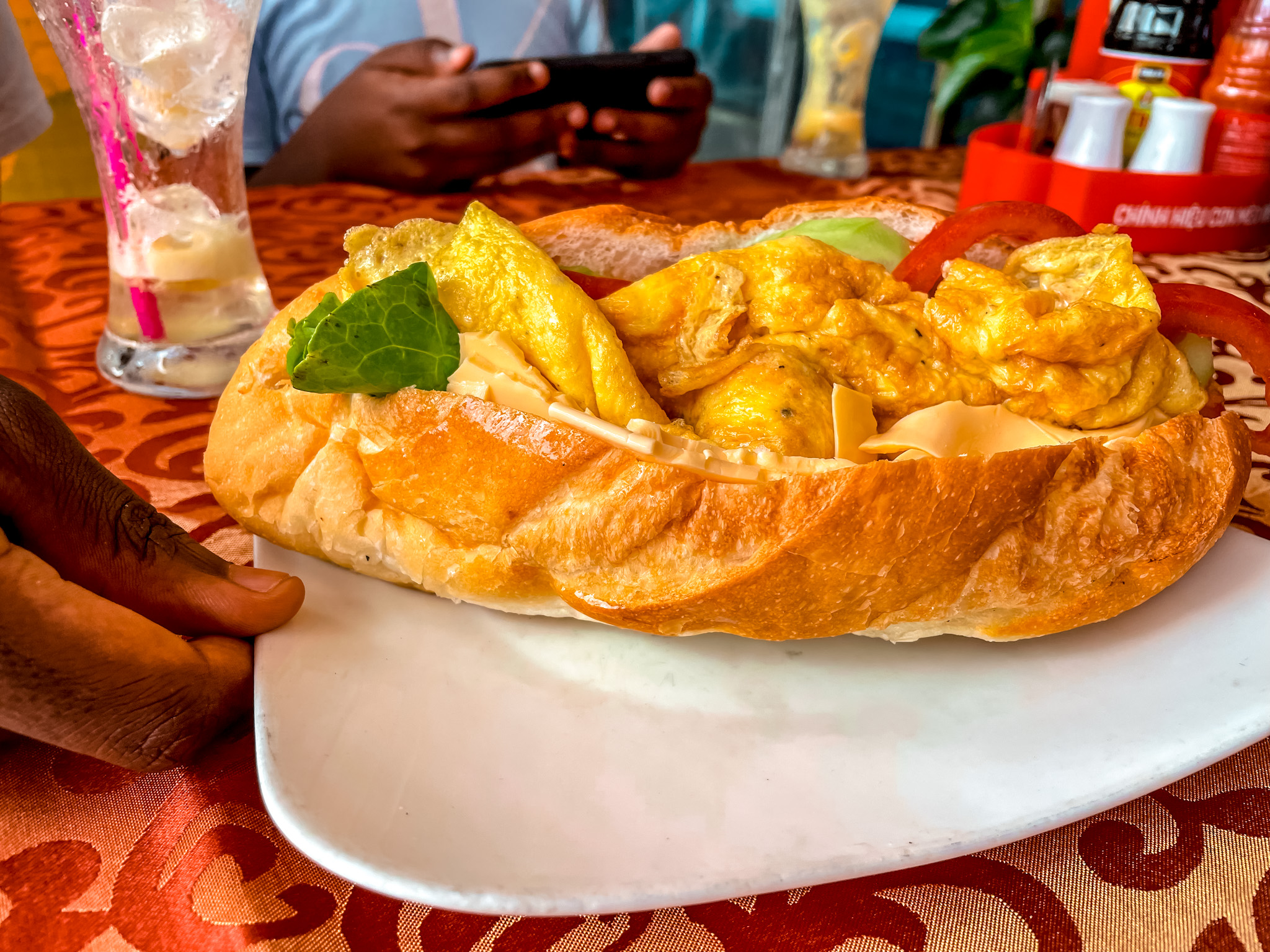
Egg
Tofu
Vegetables
Pickled carrot and daikon
Cucumber
Cilantro
Seasoning
Soy sauce
Maggi seasoning
Chili
The magic is in contrast. Warm meat, cool vegetables, creamy spread, crunchy bread, and fresh herbs all in one bite.
Regional Differences Across Vietnam
Southern Style
Often slightly sweeter with more pickled vegetables and sauce. Ho Chi Minh City versions tend to be generous and bold.
Northern Style
Usually simpler and more balanced. Flavors are often lighter and less sweet.
Central Vietnam
Spicier and sometimes more intense seasoning.
Travelers often notice they like different versions in different cities.
Why It Is a Must Eat in Vietnam
Banh mi represents the country’s food philosophy. Balance over heaviness, freshness over richness, and adaptation over imitation.
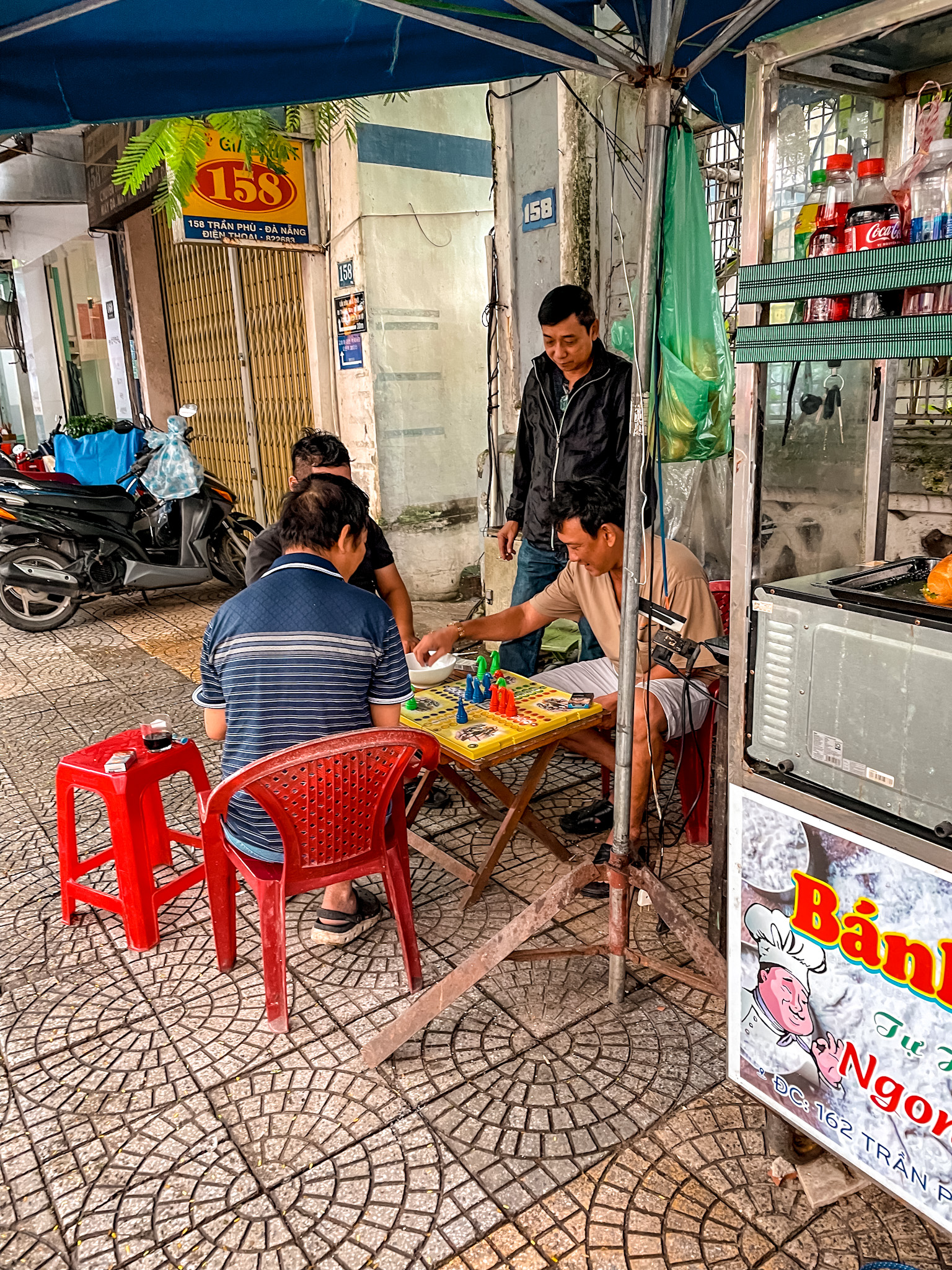
It is also one of the best values you will find. You can buy one almost anywhere, eat it while walking, and immediately understand why locals eat it daily.
Unlike some dishes that require a restaurant visit, banh mi is part of daily life. Workers grab one before work. Students eat them after school. Travelers eat them between sightseeing stops.
How to Order Banh Mi
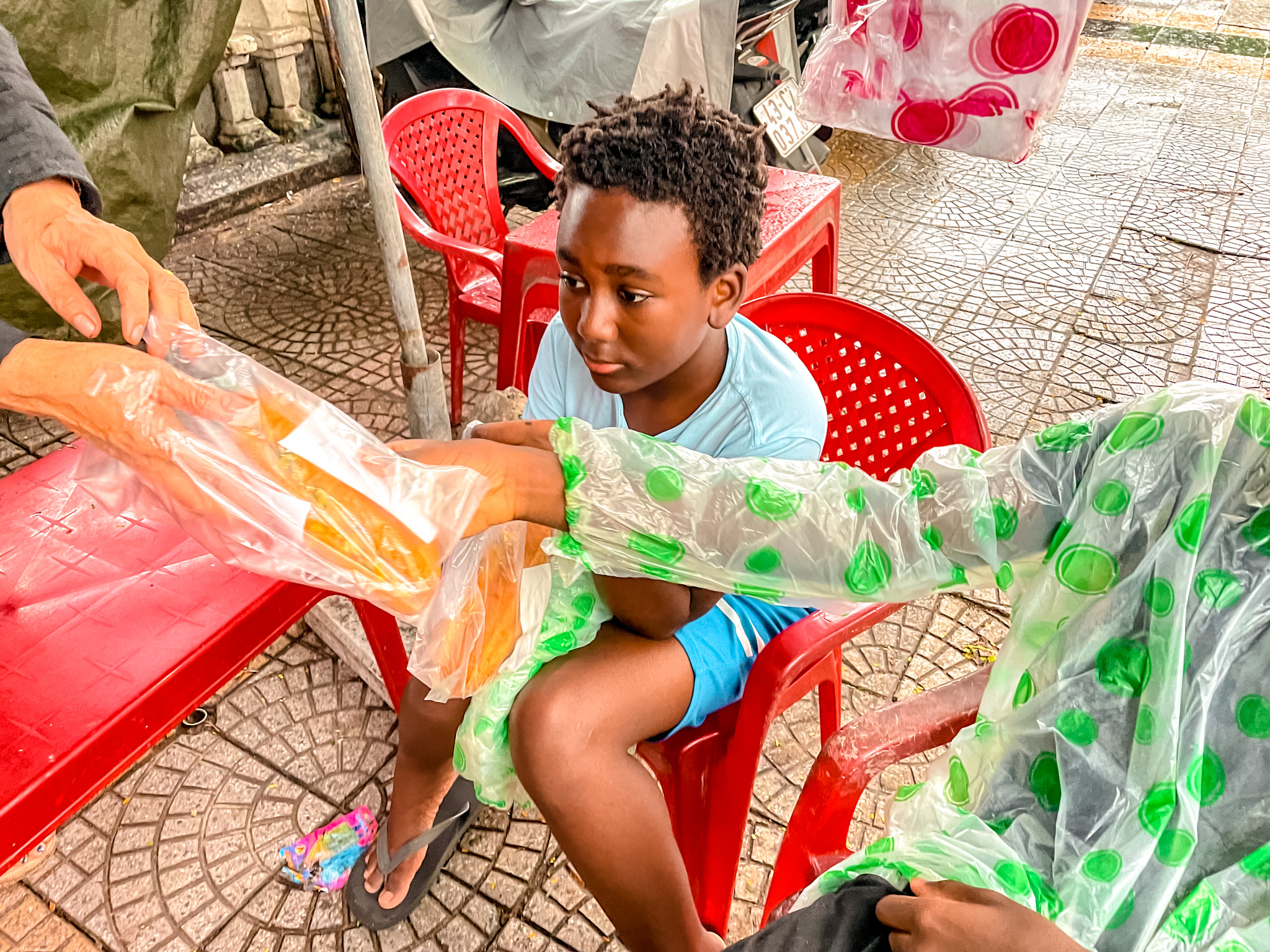
At a street stall you usually point and choose protein, then the vendor builds it for you. You can request spice level or no chili if needed.
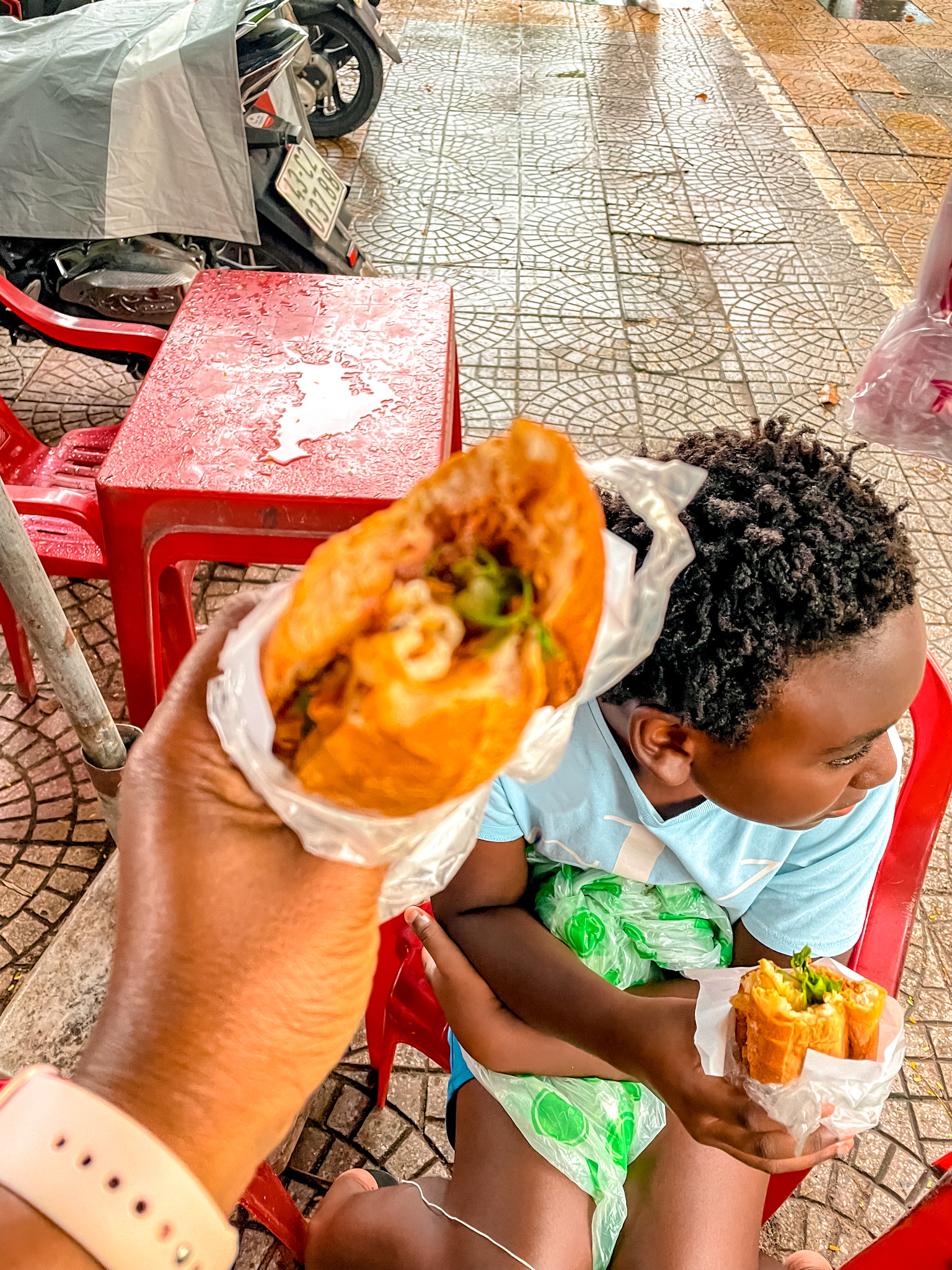
It is normal to eat it immediately rather than saving it for later. The bread texture is best right after preparation.
Tips Before Trying One
Eat it fresh
Ask about chili if sensitive to spice
Try more than one type during your trip
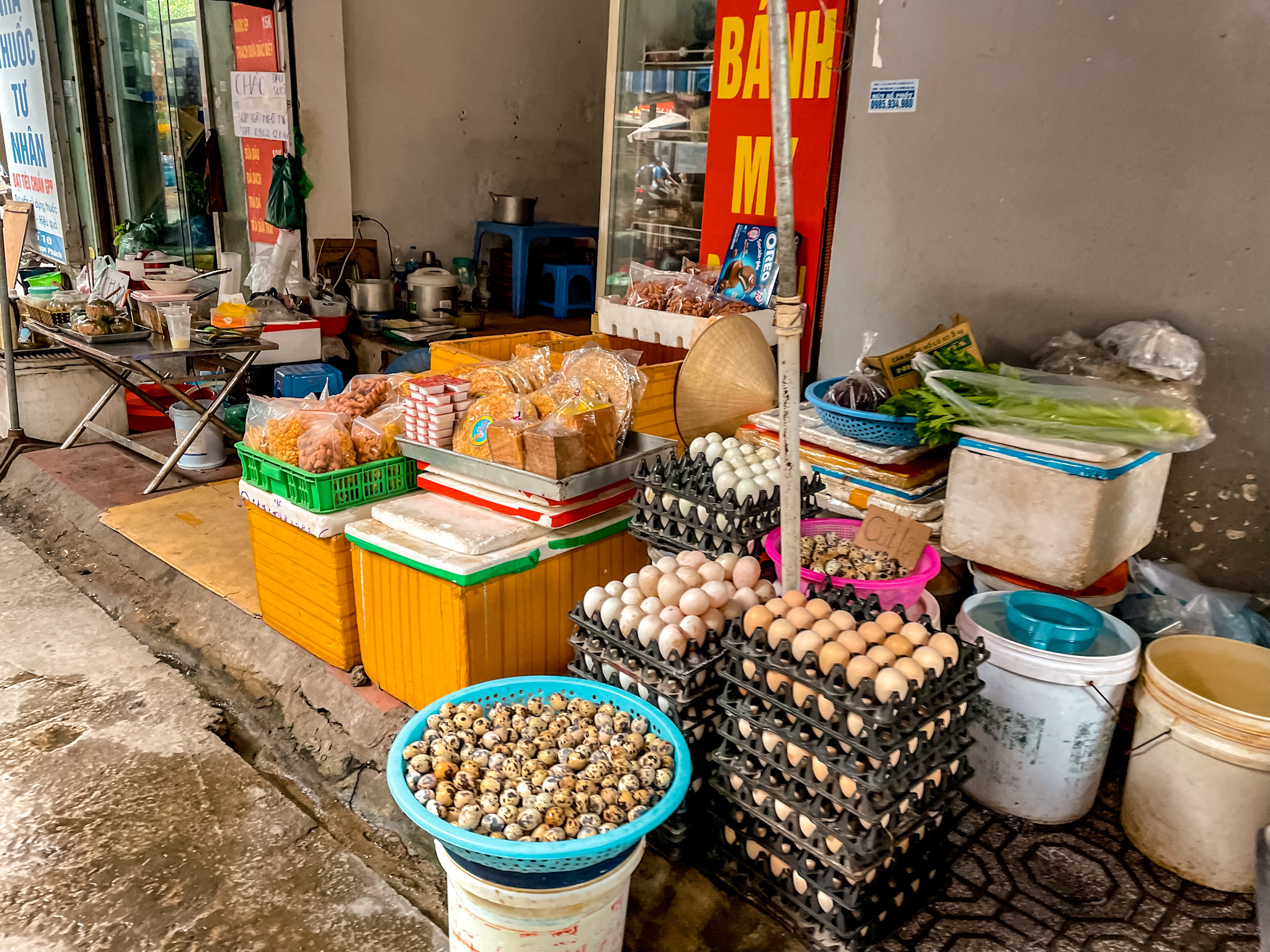
Do not judge the stall by appearance, busy stalls usually mean good food
Vietnam feels safe, but traffic, food adventures, and travel delays are part of real life here. We use SafetyWing for travel medical coverage that works across 175 plus countries and can be started even after you are already abroad. Check out their coverage HERE
Why People Remember It
Many foods impress because they are complex. Banh mi impresses because it is balanced. Every component matters but none dominate.
It feels simple until you try to recreate it elsewhere and realize something is always missing. The bread, herbs, and freshness combine in a way tied closely to place.
Final Thoughts
If you only try one everyday food in Vietnam, make it banh mi. It is quick to eat but explains the country’s culinary history, colonial influence, and modern identity all at once.
It is not just a sandwich. It is a timeline you can hold in your hand.
