

Ba Mu Temple Gate is one of Hoi An’s most photographed yet often misunderstood landmarks. At first glance, it looks like a decorative entrance standing alone in the middle of a peaceful reflecting pool. Many visitors assume it is simply a scenic backdrop.
In reality, Ba Mu Temple Gate is the surviving entrance to a once significant religious complex. While much of the original temple structure no longer exists, the gate remains as a symbolic and cultural reminder of Hoi An’s spiritual past.
If you are visiting Hoi An and want more than lantern photos, this site deserves context.
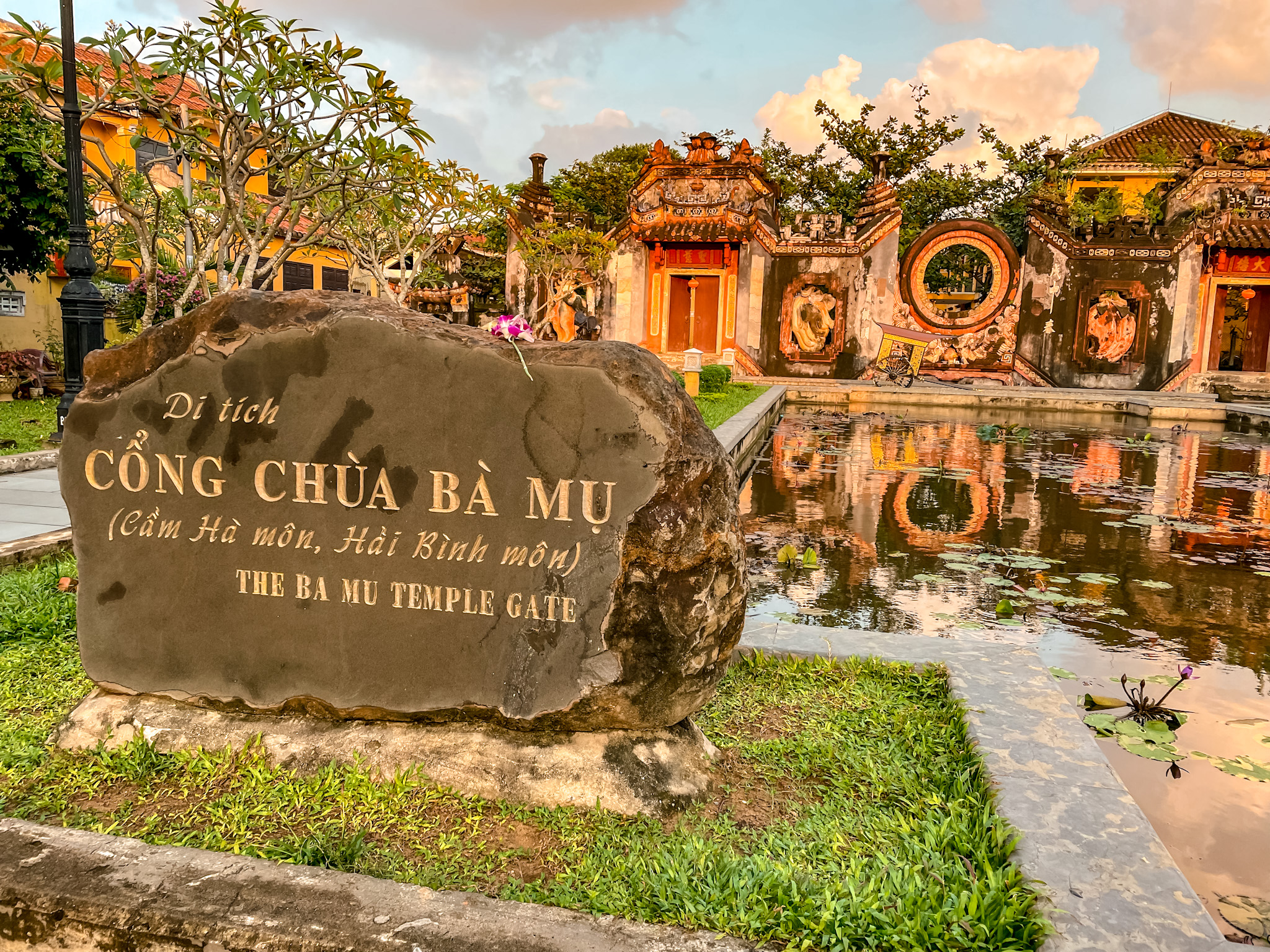
Where Is Ba Mu Temple Gate Located?
Ba Mu Temple Gate is located just outside the main Ancient Town area, making it an easy addition to your walking route.
Address:
675 Hai Ba Trung Street, Cam Pho Ward, Hoi An, Vietnam
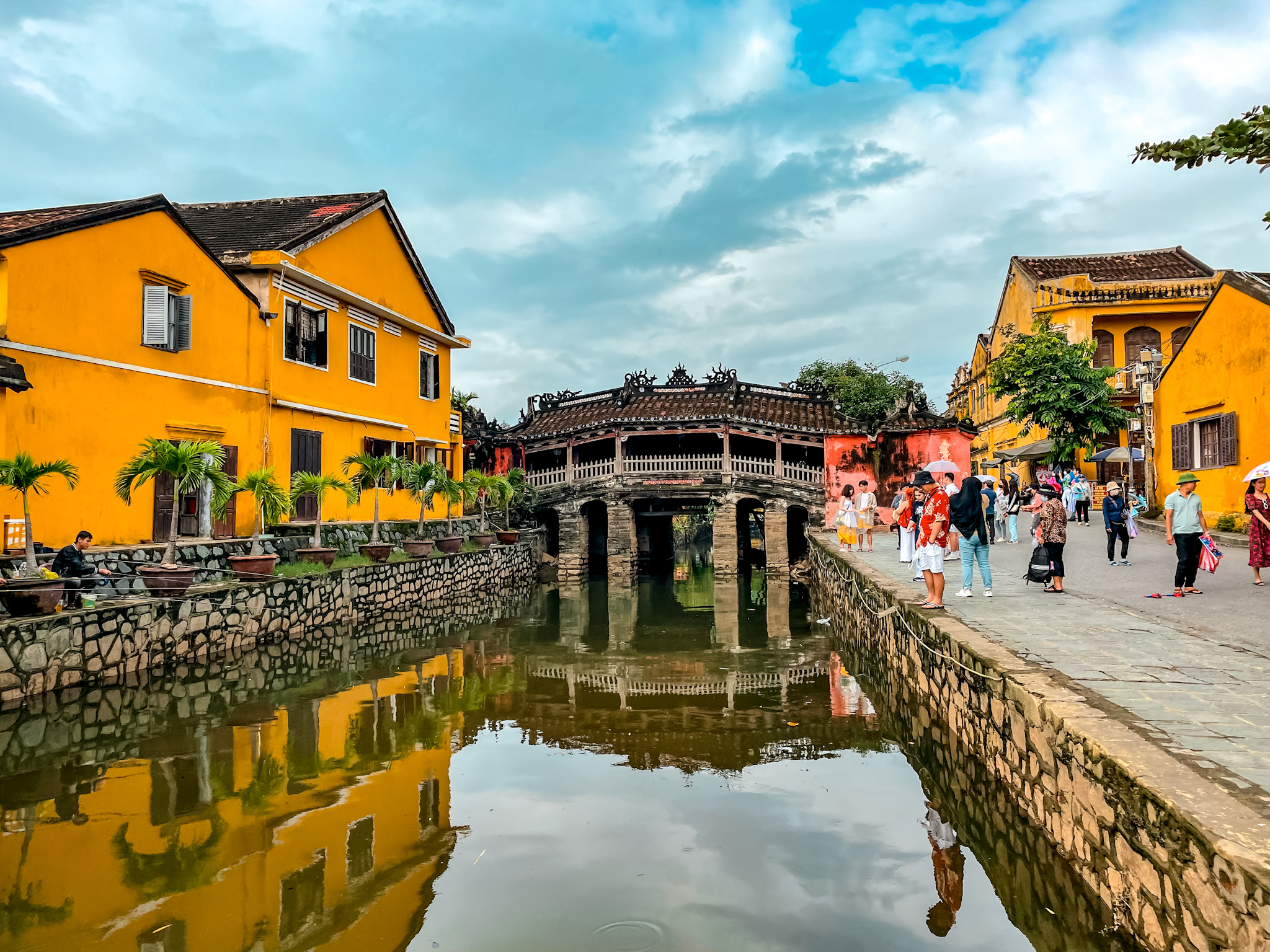
It sits near the northern edge of the Old Town. If you are already exploring the Japanese Covered Bridge area, you can walk to Ba Mu Temple Gate in about 10 to 15 minutes.
Because it is slightly removed from the most crowded streets, it often feels calmer than the riverfront areas.
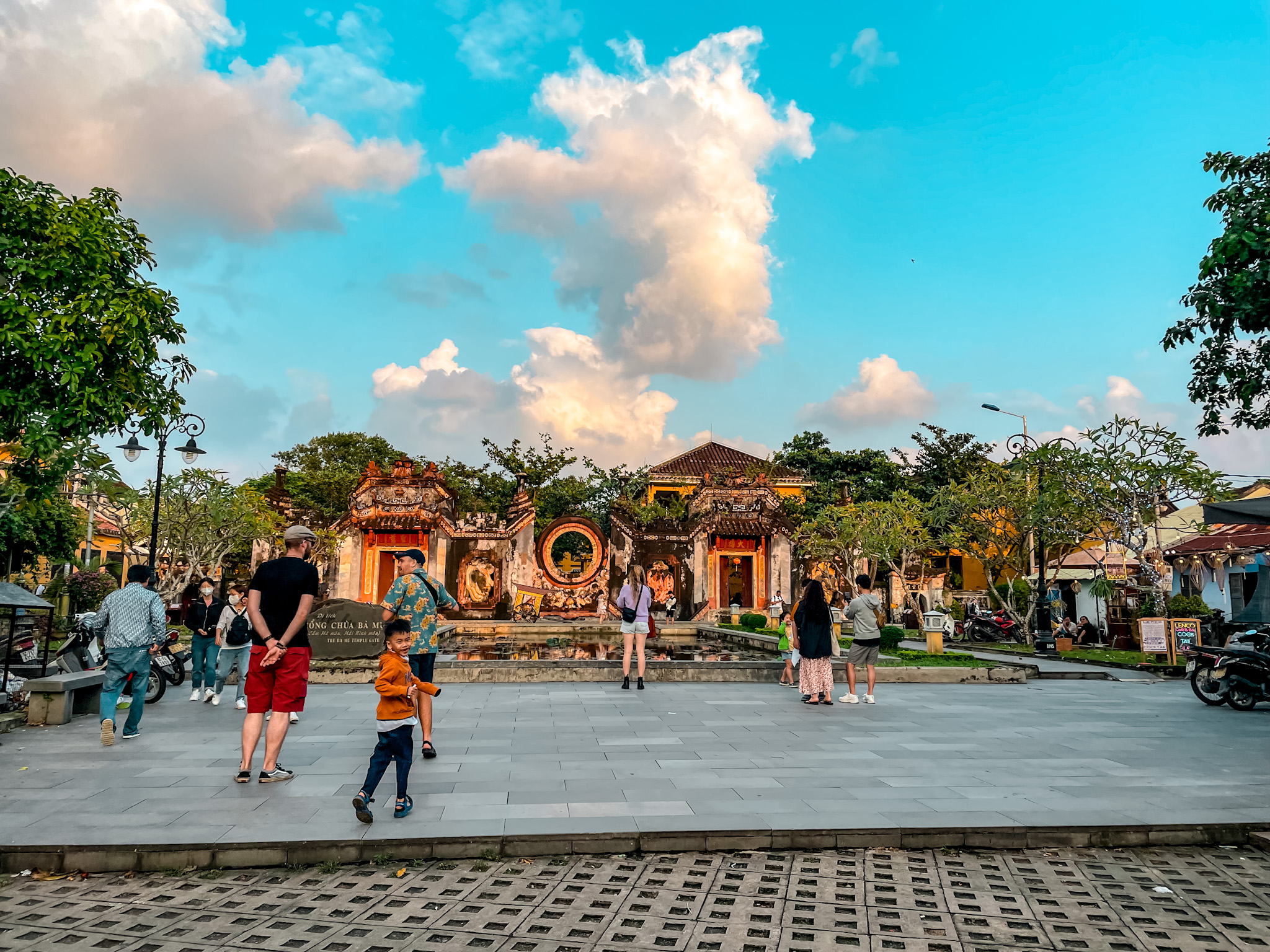
The History of Ba Mu Temple
The original Ba Mu Temple complex was built in the early 17th century. It was dedicated to the Twelve Midwives and the Thirty Six Generals in Vietnamese spiritual tradition.
In Vietnamese folklore, the Twelve Midwives are believed to shape and protect children before and after birth. Families would visit the temple to pray for fertility, safe pregnancies and the wellbeing of newborns.
Over time, much of the original temple structure was damaged and eventually disappeared. The gate remained as the most visible surviving element.
In recent years, the area around the gate was restored and enhanced with a landscaped pond and open courtyard to preserve its historical significance.
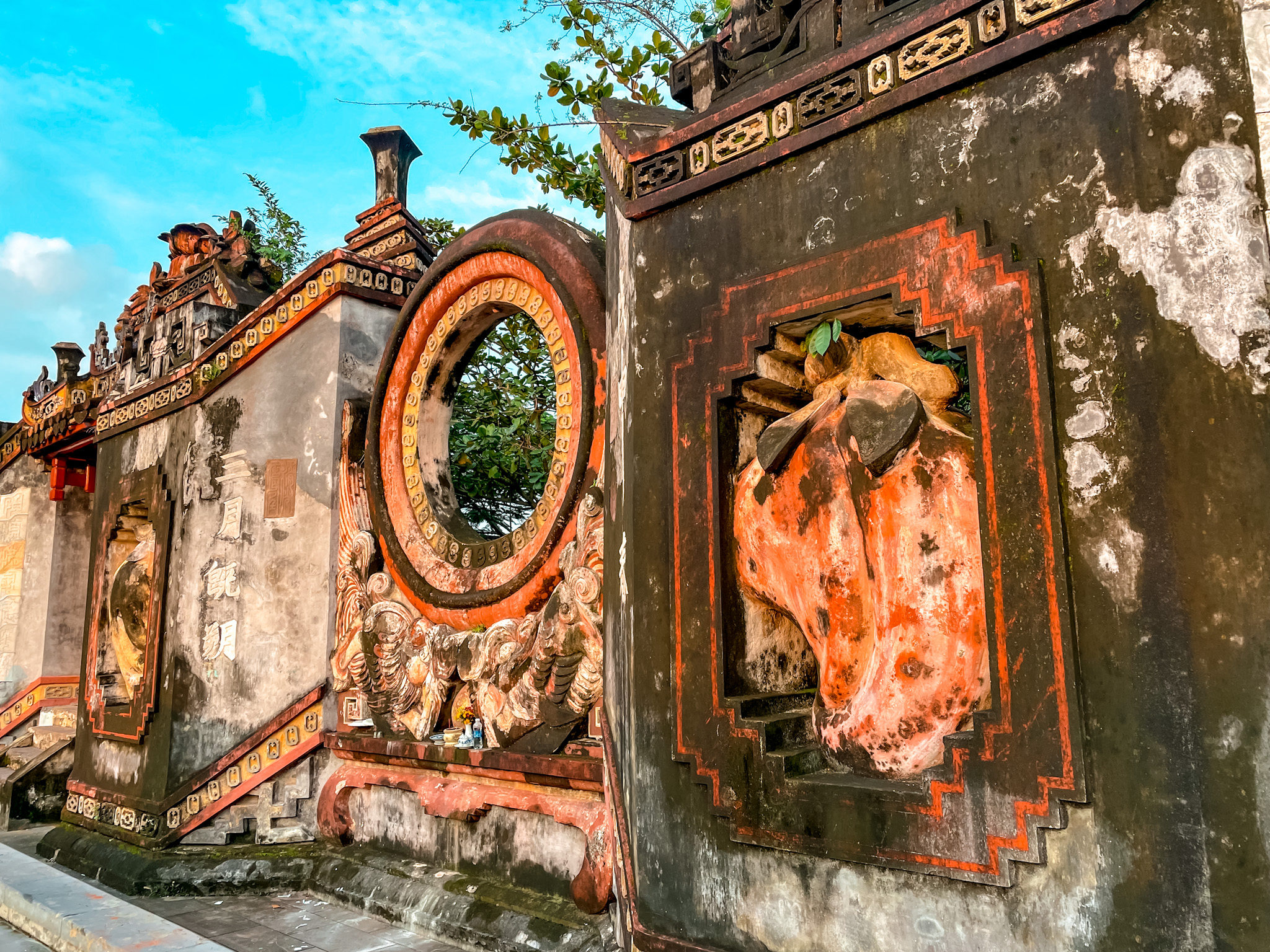
What You Will See Today
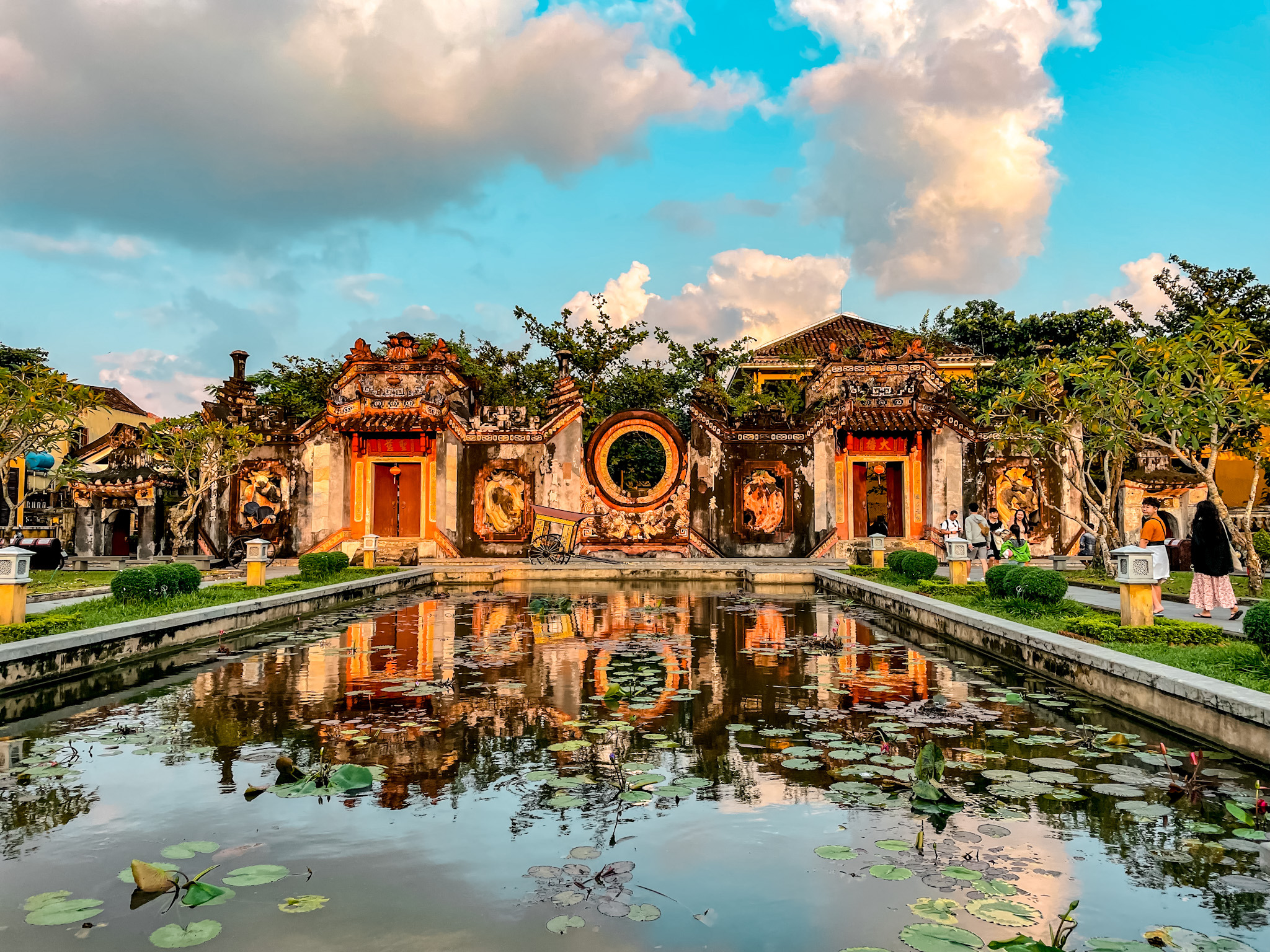
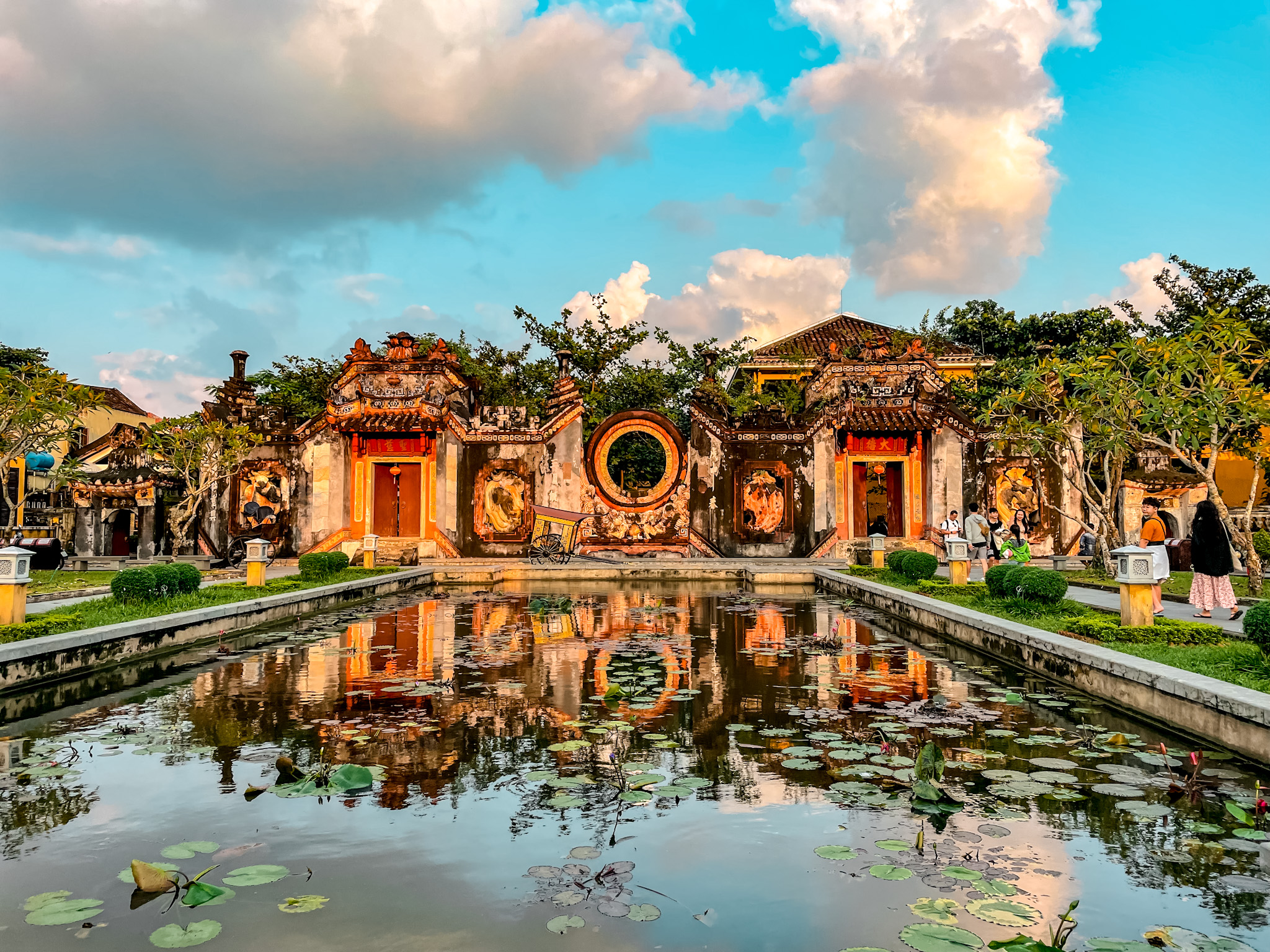
Today, Ba Mu Temple Gate stands prominently in front of a rectangular reflecting pool. The water creates a mirrored image of the ornate structure, making it especially popular for photography.
The gate features traditional curved rooflines, intricate carvings and Chinese influenced architectural details. The bright red and gold tones contrast beautifully with the surrounding greenery and sky.
Behind the gate, the larger temple complex is no longer intact, but the restored space creates a peaceful setting that invites slow appreciation.
Cultural and Spiritual Meaning
Although the full temple complex no longer stands, Ba Mu Temple Gate still carries symbolic meaning. It represents fertility, protection and spiritual guardianship in traditional Vietnamese belief.
For locals, the site is not just decorative. It reflects ancestral values and spiritual customs that once played an important role in community life.
Understanding this adds depth to what might otherwise seem like just another photo stop.

Best Time to Visit
Early morning is the best time to visit Ba Mu Temple Gate if you want quiet surroundings and softer lighting.
Late afternoon also offers beautiful light for photographs, especially when the sun reflects off the water.
Because it is outside the densest part of Ancient Town, it is generally less crowded than lantern lined streets at night.
Photography Tips
Stand directly facing the gate to capture its full reflection in the pond. The symmetry creates striking images.
Visit when the water is still for the clearest reflection.
Step slightly to the side to incorporate trees and sky for added depth.
As always, be respectful of the space and avoid climbing on structures or blocking others for extended photo sessions.
How Long to Spend
Ba Mu Temple Gate is a short stop. You likely need 15 to 30 minutes depending on how much time you spend taking photos.
It works well as a pause between exploring the Japanese Covered Bridge and continuing toward other parts of Hoi An.
Is There an Entrance Fee?
There is no separate entrance fee to view Ba Mu Temple Gate from the outside. It is freely accessible as part of the surrounding public area.
G
Unlike some Ancient Town buildings, it is not part of the ticketed entry system.
Pair It With These Nearby Attractions
You can easily combine Ba Mu Temple Gate with:
Japanese Covered Bridge
Hoi An Ancient Town
Local cafes and street food spots
Tailor shops
Lantern lit evening strolls
Because everything is walkable, it fits naturally into a half day exploration.
Why It Is Worth Visiting
Ba Mu Temple Gate represents something subtle about Hoi An. The town is not only about trade and tourism. It also holds spiritual traditions that shaped daily life centuries ago.
Even though only the gate remains, it anchors a story about family, fertility and community beliefs that once defined the area.
It is a quiet site. But quiet sites often tell the most layered stories.
Final Thoughts
Ba Mu Temple Gate may not take long to visit, but it adds historical and cultural dimension to your time in Hoi An.
If you walk past it quickly, it becomes just another backdrop. If you pause and understand what it once represented, it becomes part of a larger story about this ancient trading town.
Add it to your Hoi An walking route and give it a few minutes of attention. It deserves it.
Before heading to Vietnam, make sure you have travel medical coverage in place. We personally use SafetyWing because it is flexible and built for long term travelers.

Cavetta is the creator of LifeWithVetta.com and has been traveling the world full time since 2020. She has visited more than 60 countries while worldschooling her son and documenting what it really takes to live abroad. Her guides focus on travel, moving abroad, digital nomad life, and designing a life beyond the traditional path.
