
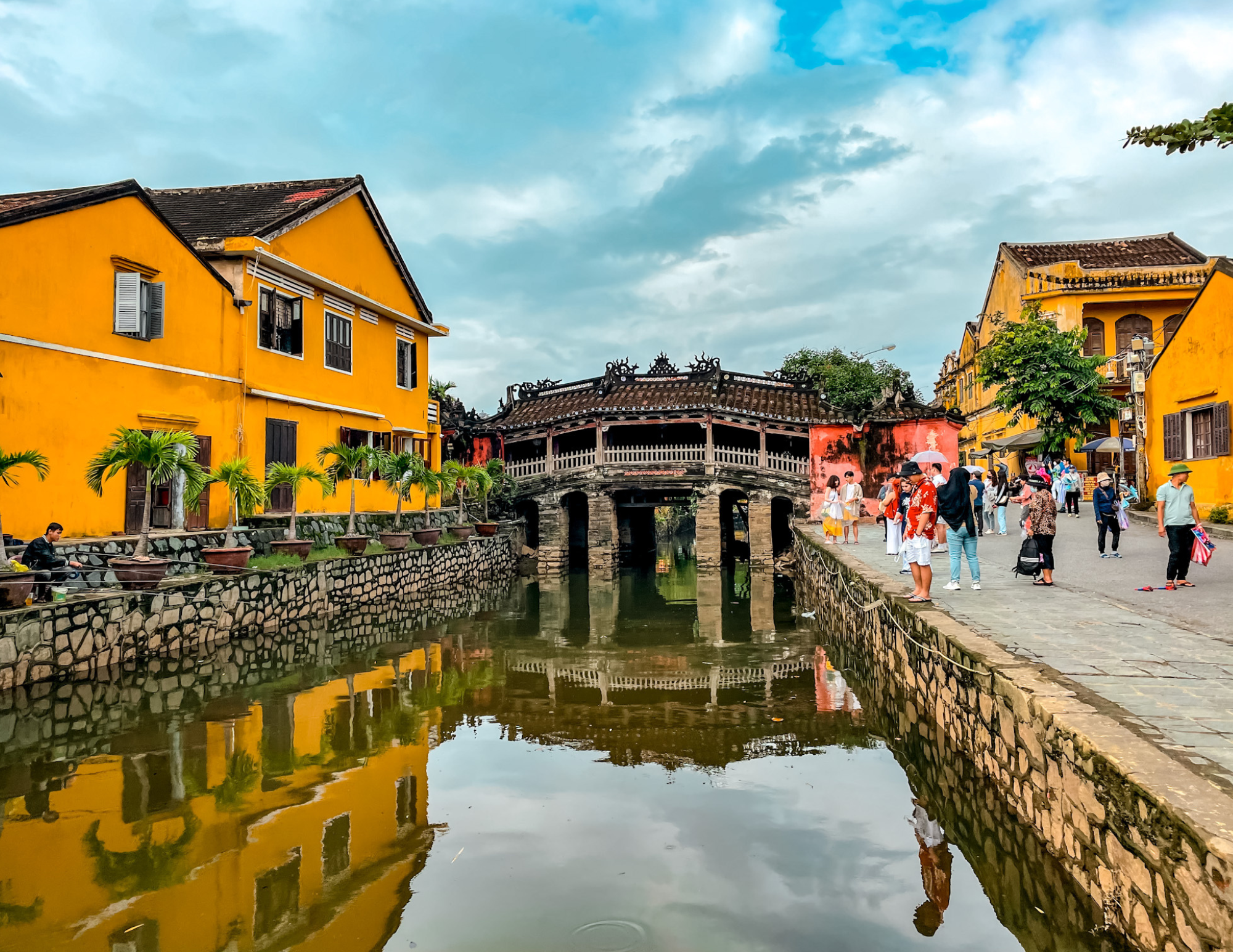
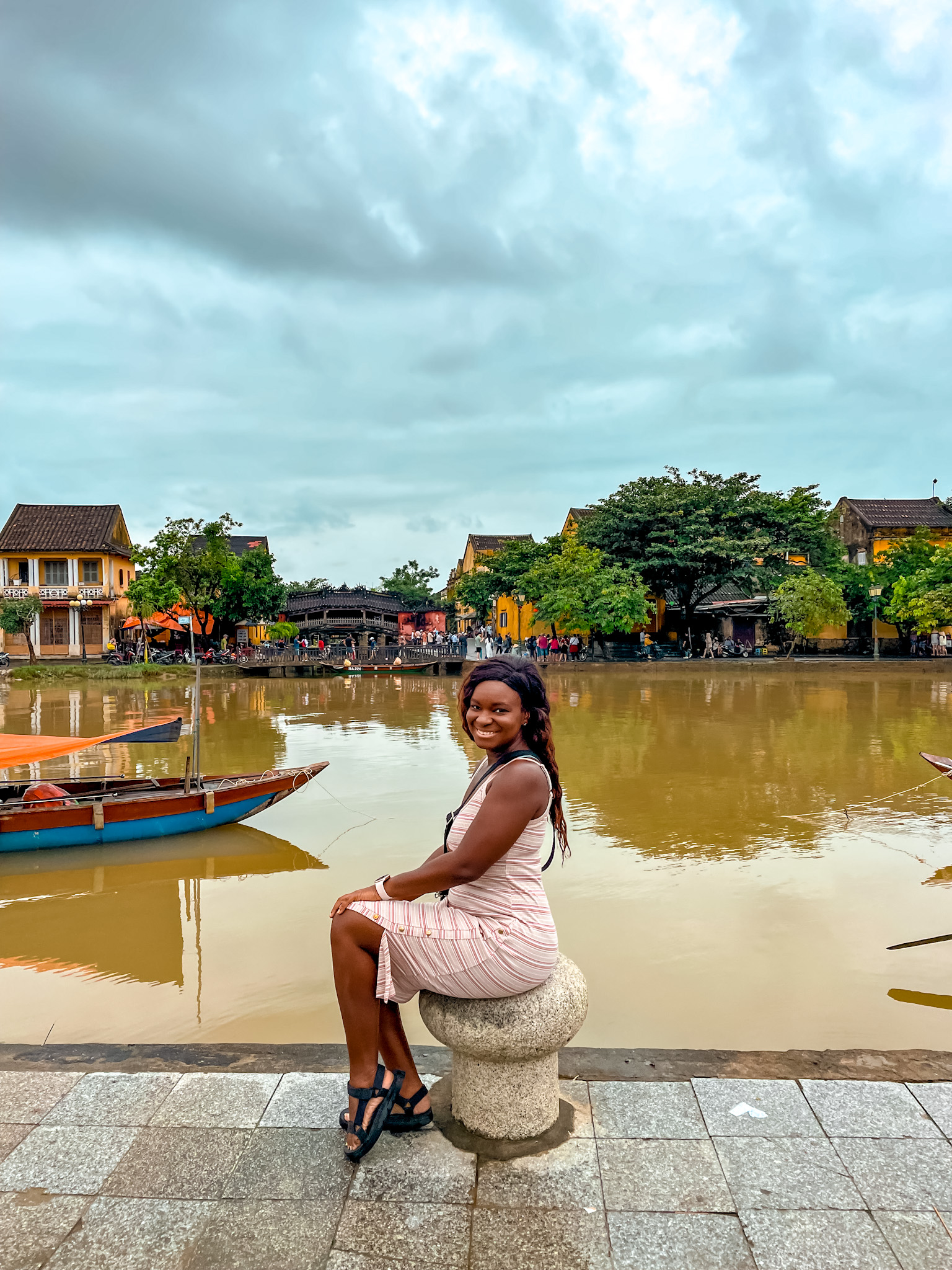
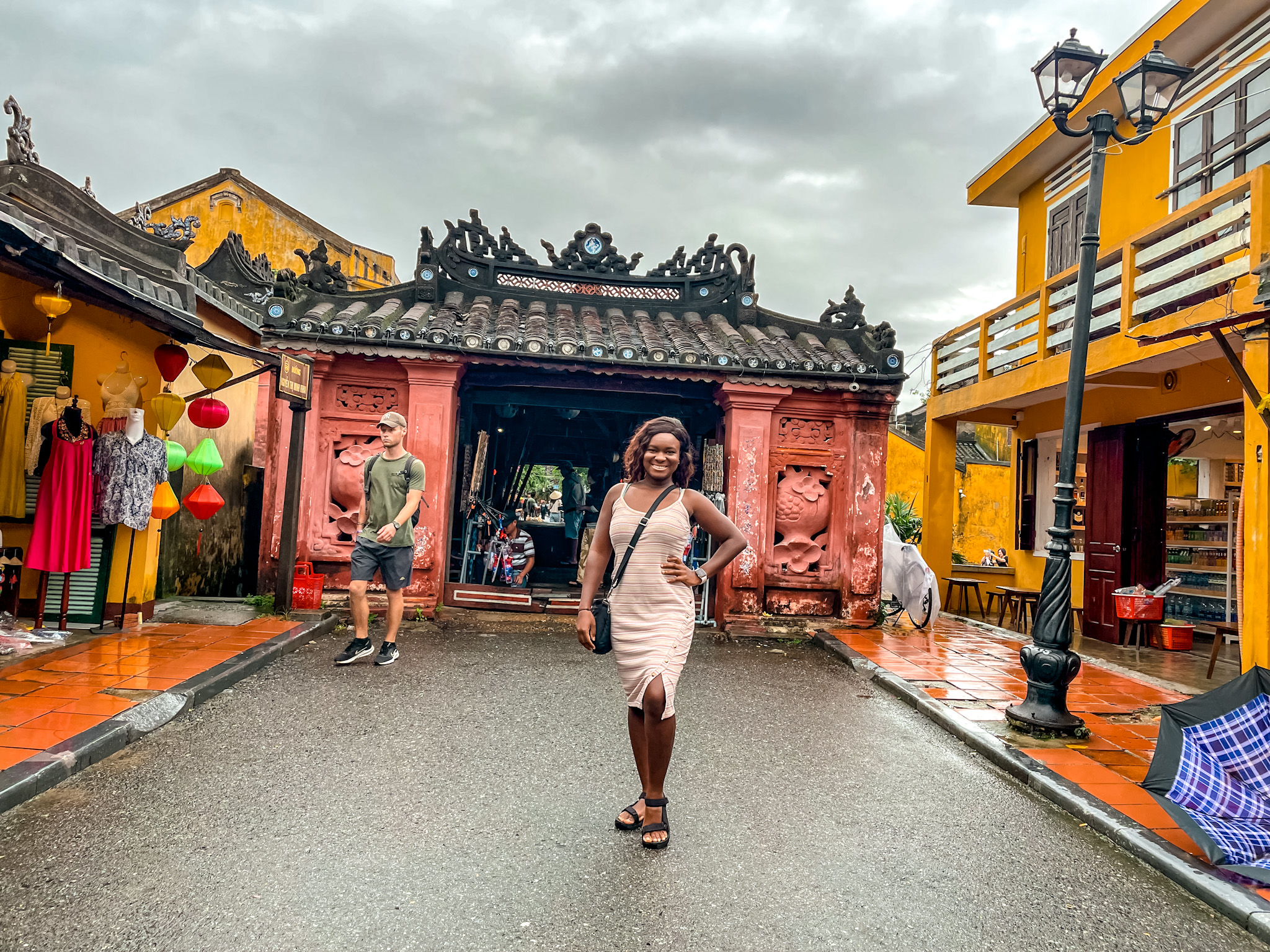
The Japanese Covered Bridge is one of the most recognizable landmarks in Hoi An. If you have seen photos of the Ancient Town, chances are you have already seen this structure. Its curved tiled roof, ornate wooden carvings and small temple interior make it one of the most photographed spots in central Vietnam.
But the Japanese Covered Bridge is not just decorative. It carries centuries of history and cultural symbolism tied to Hoi An’s days as an international trading port.
This guide reflects current visiting information and restoration updates so you know exactly what to expect before you go.
Where Is the Japanese Covered Bridge?
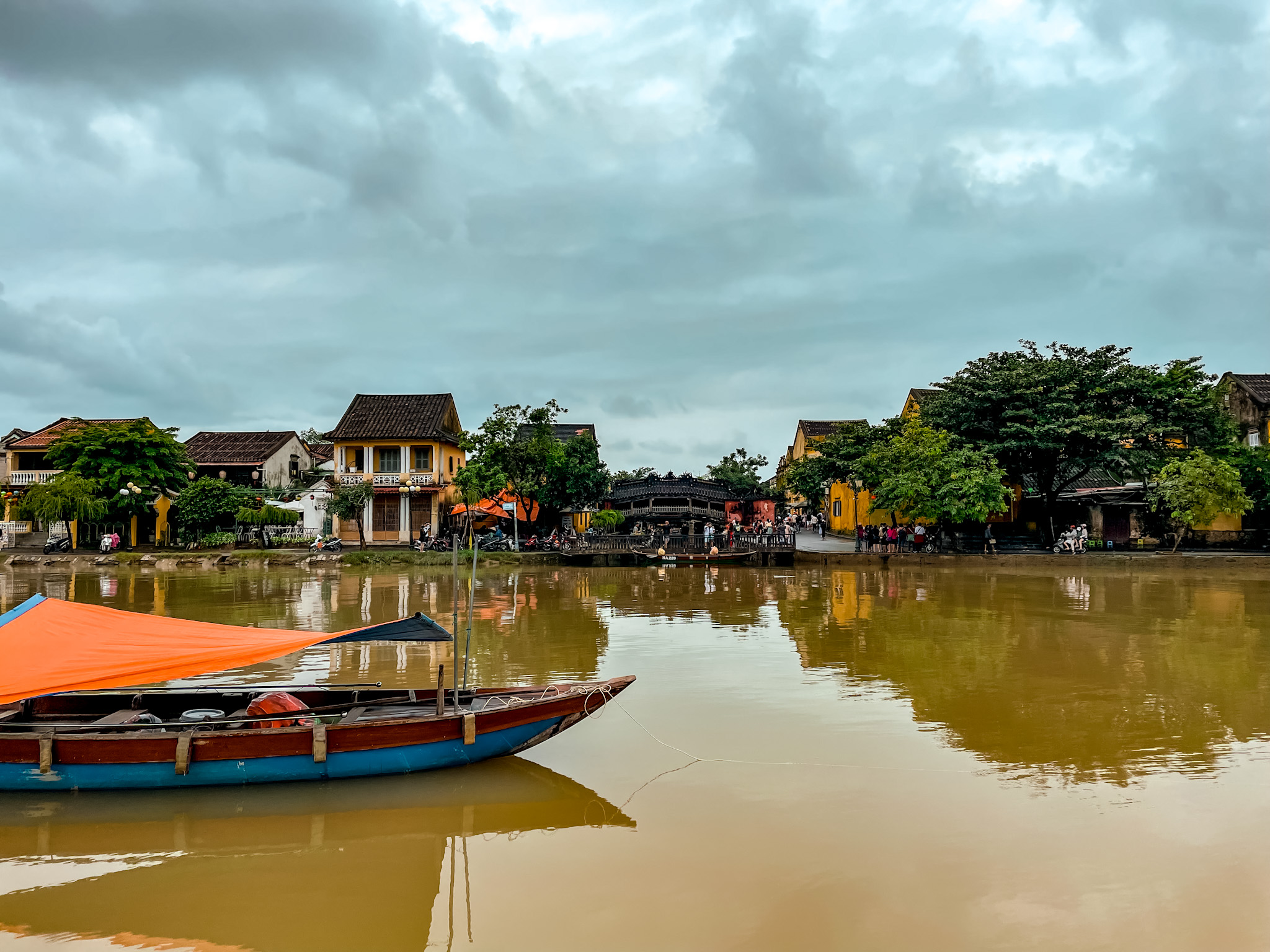
The Japanese Covered Bridge sits in the heart of Hoi An Ancient Town, connecting Tran Phu Street and Nguyen Thi Minh Khai Street.
Because it lies within the pedestrian core, you can easily reach it on foot while exploring the Old Town.
It is located near:
Ba Mu Temple Gate
Lantern lined riverfront areas
Traditional merchant houses
Assembly halls
It naturally becomes part of most walking routes.
A Brief History
The bridge was built in the early 17th century by the Japanese community living in Hoi An at the time. During that era, Hoi An was a major trading port, and Japanese merchants had their own neighborhood.
The bridge was constructed to connect the Japanese quarter with the Chinese side of town across a small canal.
Over time, the structure evolved and was modified, including the addition of a small temple dedicated to the Taoist god Tran Vo Bac De, believed to protect the land and control natural disasters.
Although called the Japanese Covered Bridge, it reflects a blend of Japanese, Vietnamese and Chinese architectural influence.
Why It Is Culturally Important
The bridge symbolizes international cooperation and the multicultural roots of Hoi An. It represents a time when merchants from different countries coexisted and contributed to the town’s prosperity.
It is also one of the few surviving examples of a covered bridge in Southeast Asia that still retains its historical character.
In 1990, the bridge was featured on the 20,000 Vietnamese Dong banknote, further cementing its national importance.
Restoration and Renovation
Over the years, the Japanese Covered Bridge has undergone multiple restorations due to weathering, flooding and structural aging.
Recent renovation efforts aimed to stabilize the structure and preserve its historical integrity. When you visit, you may notice areas that look refreshed or reinforced. These efforts are part of maintaining the bridge for future generations.
Because it is a protected heritage site, restoration work is done carefully to preserve original features wherever possible.
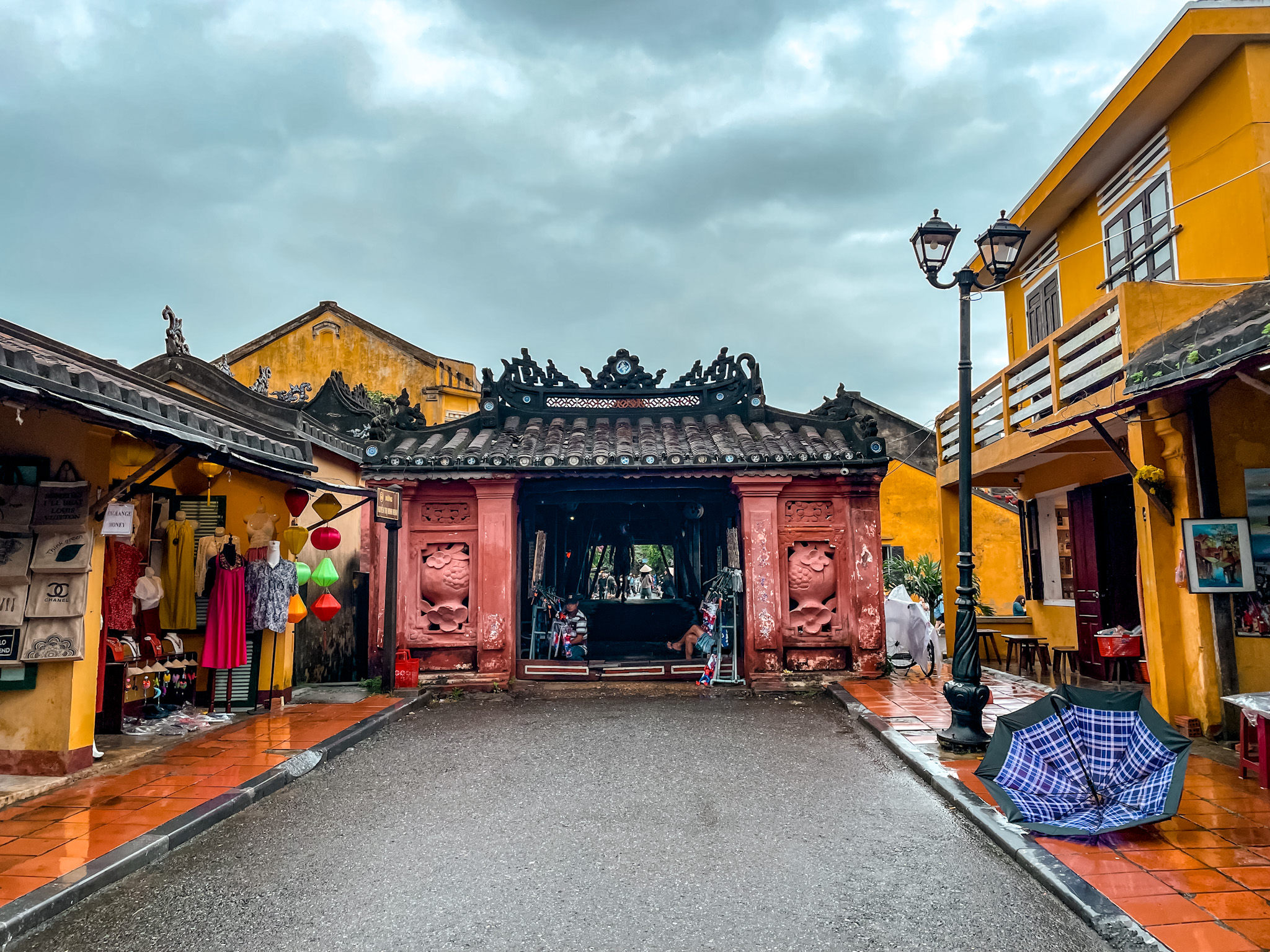
Do You Need a Ticket?
This depends on how you want to experience it.
You can walk across the bridge exterior freely as part of Ancient Town exploration.
However, entering the small temple space inside the bridge typically requires a Hoi An Ancient Town ticket. The bridge is one of the sites included in the ticket system.
If you plan to visit multiple historic buildings, purchasing the Ancient Town ticket is worthwhile.
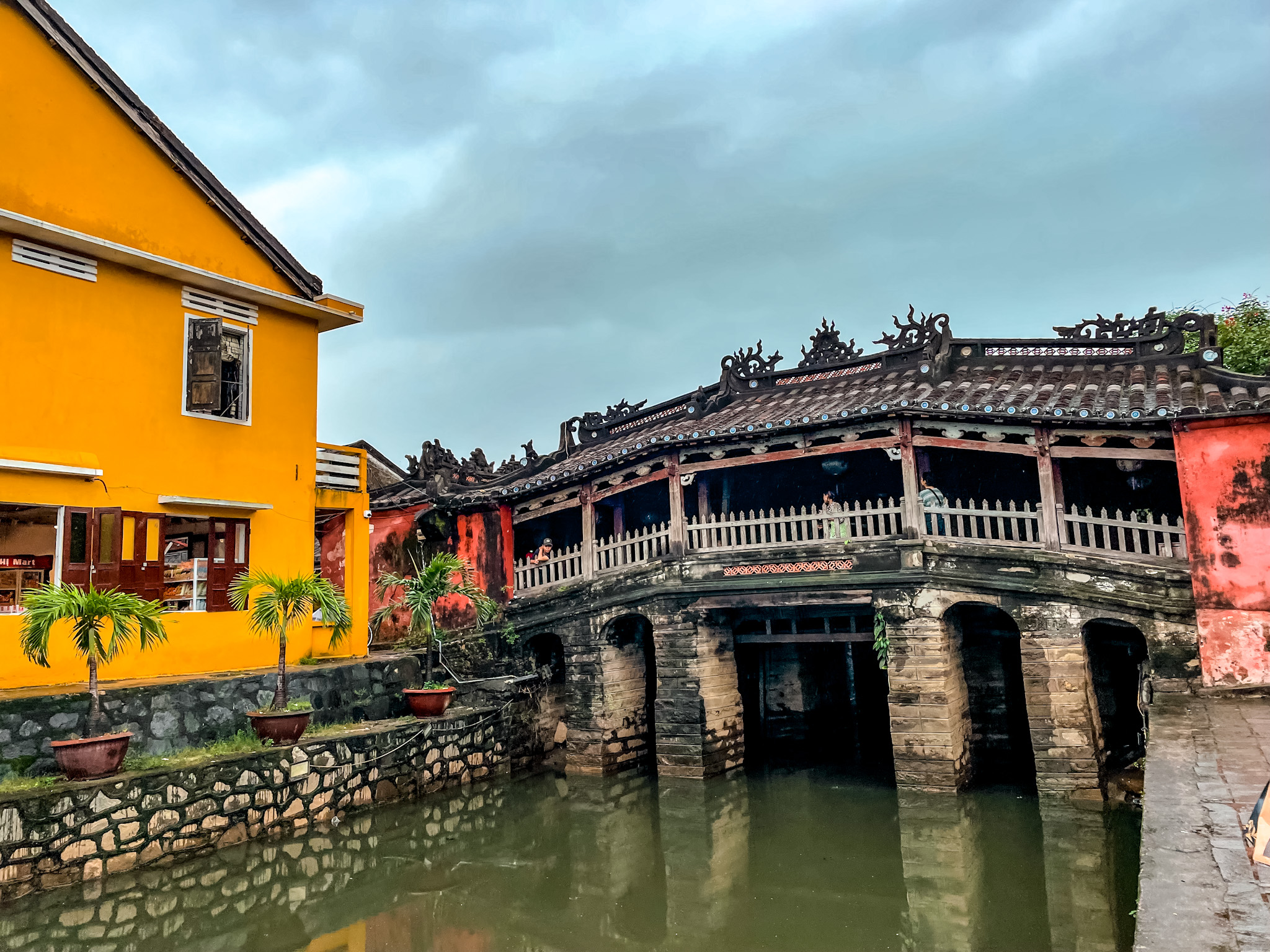
What You Will See
From the outside, you will notice:
Curved tiled roofing
Intricate wood carvings
Decorative statues at the entrances
A slightly arched walkway
Inside, the small temple contains an altar and incense offerings. It is modest but spiritually meaningful.
Because the bridge is narrow, movement through it can feel tight during peak hours.
Best Time to Visit
Morning is ideal if you want fewer people and better photo conditions.
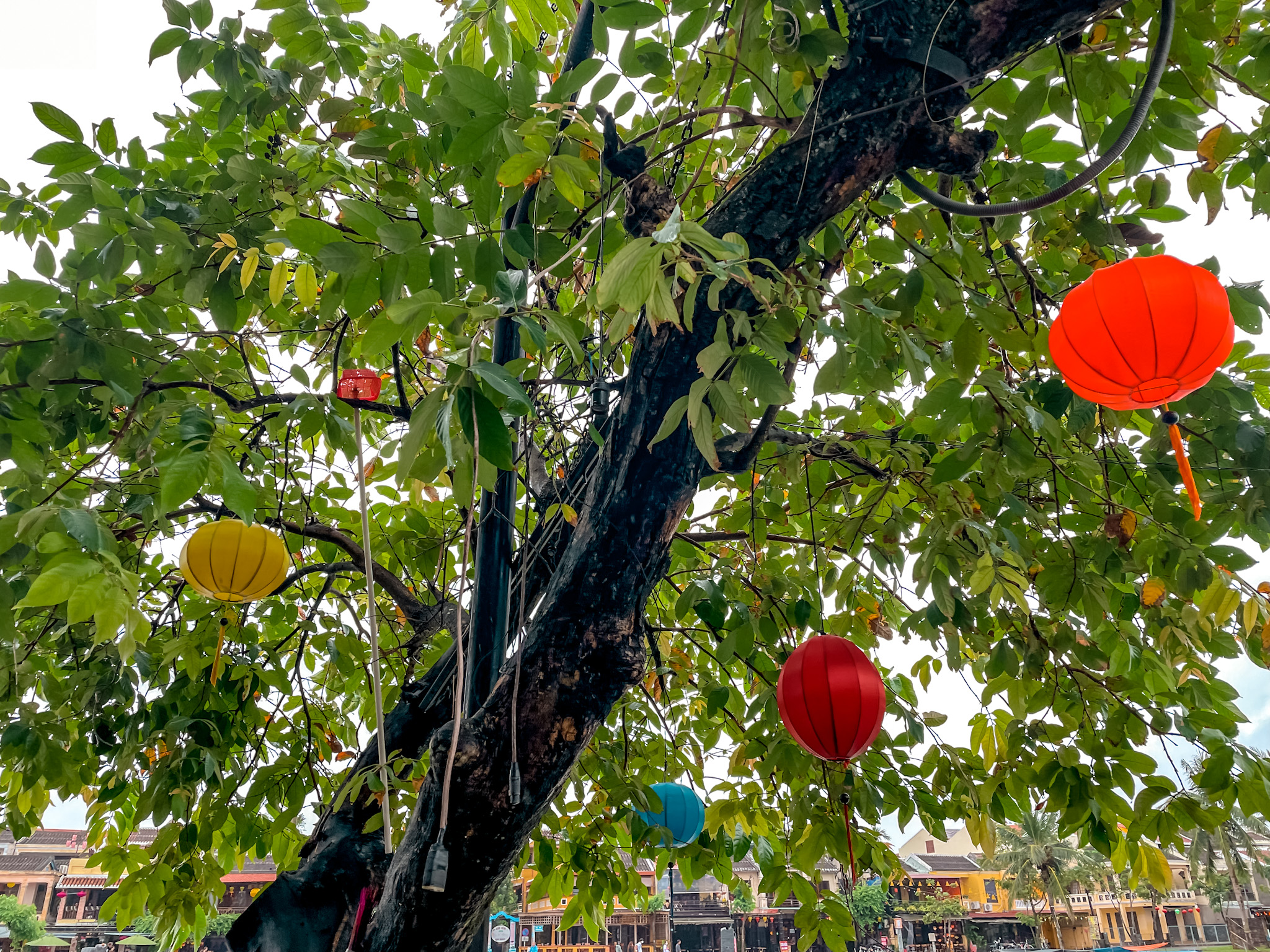
Evening offers dramatic lighting and lantern glow nearby, but crowds increase significantly after sunset.
If you want the best combination of atmosphere and space, late afternoon before full sunset often works well.
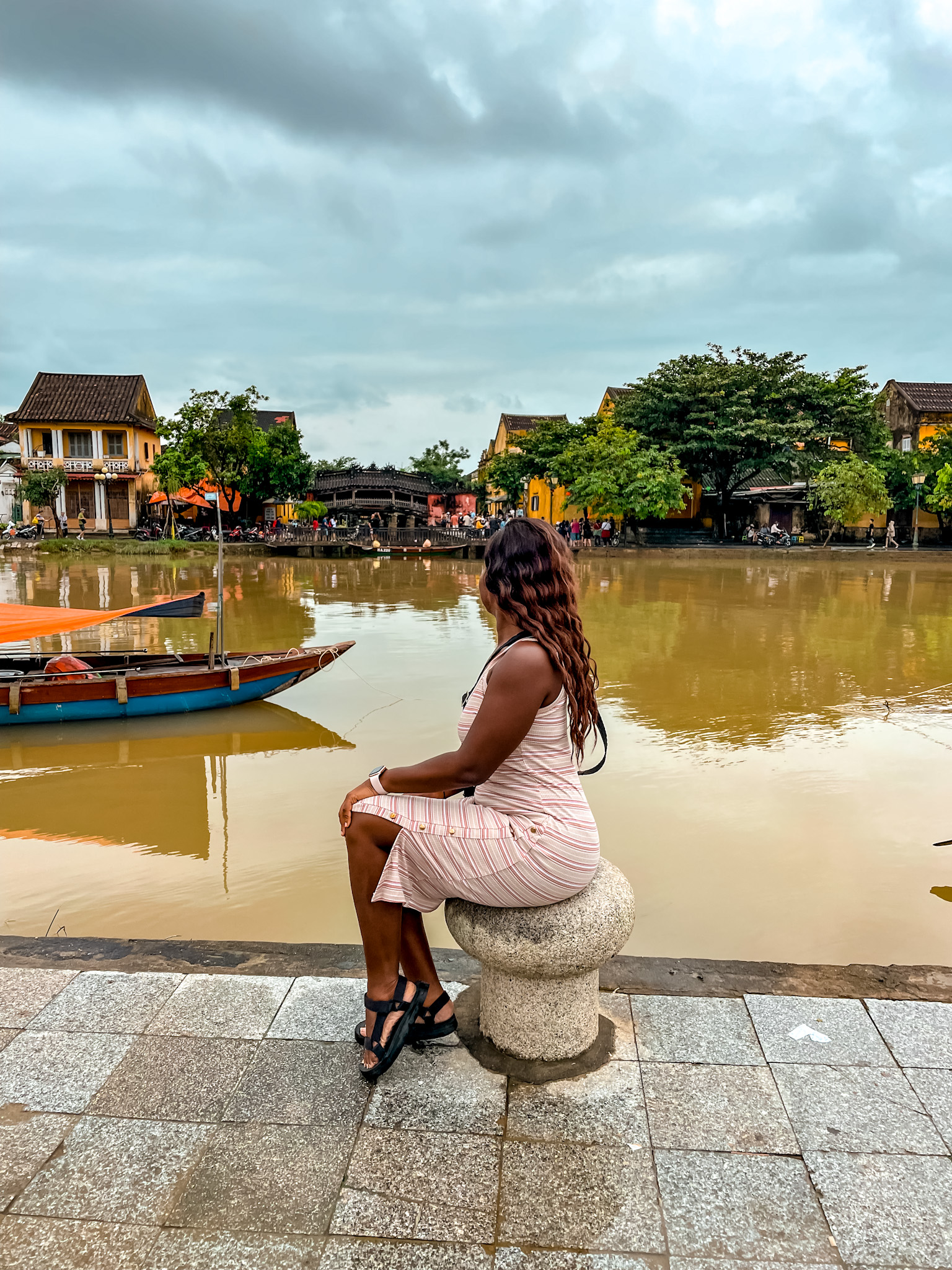
Photography Tips
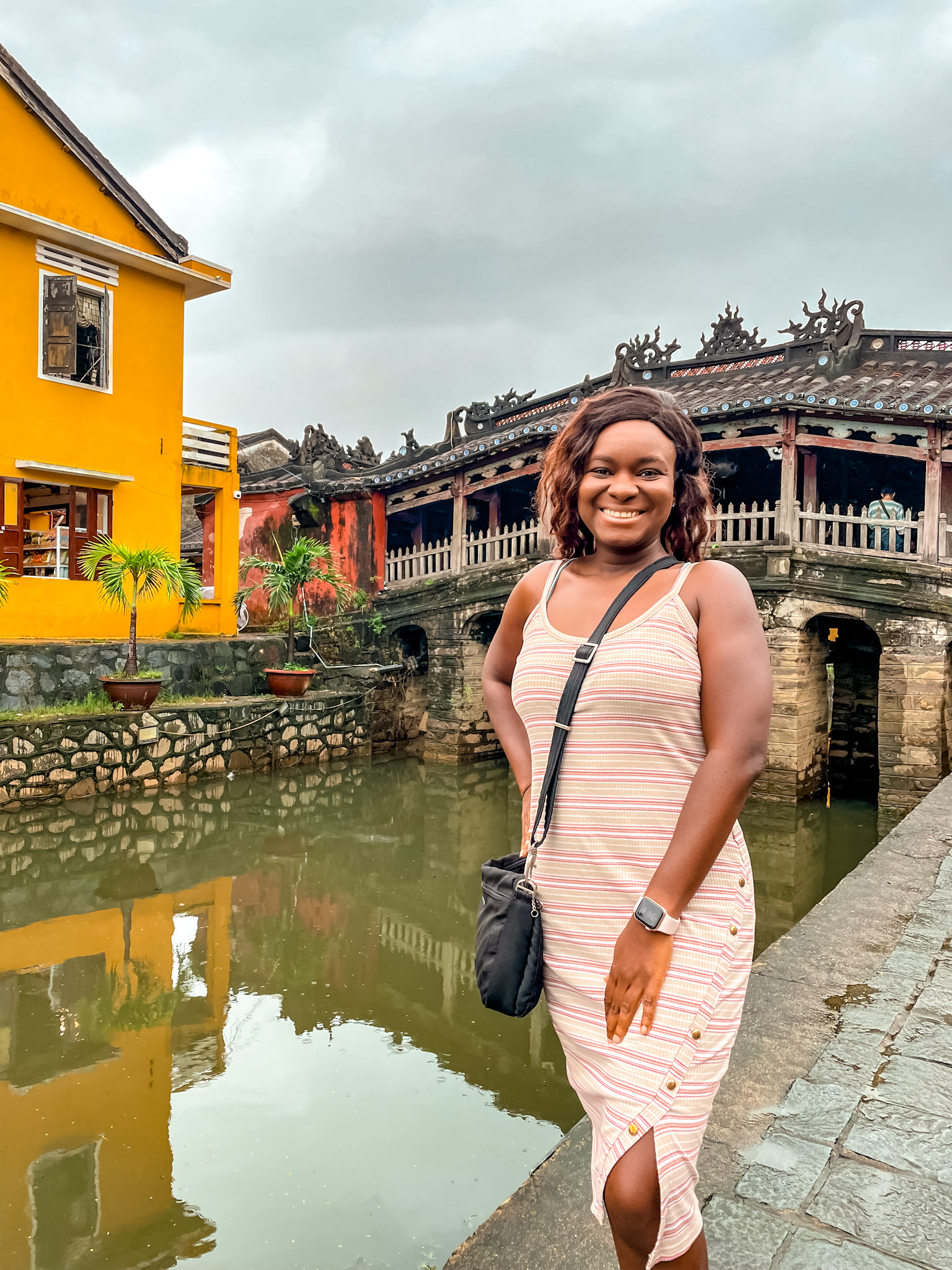
Photograph from a slight angle rather than directly head on to capture depth.
Stand across the canal for a full bridge frame.
Visit early morning for clean compositions without heavy foot traffic.
Be patient. Crowds move in waves.
How Long to Spend
You do not need long. Fifteen to twenty minutes is usually enough to walk across, observe details and take photos.
The value comes from understanding its history rather than the time spent physically there.
Common Mistakes Visitors Make
Only taking a photo without understanding its cultural background.
Visiting during peak night crowds and feeling overwhelmed.
Skipping the Ancient Town ticket and missing interior heritage sites nearby.
The bridge is most meaningful when part of a larger exploration of Hoi An Ancient Town.
Before heading to Vietnam, make sure you have travel medical coverage in place. We personally use SafetyWing because it is flexible and built for long term travelers.
The Japanese Covered Bridge is small in size but significant in meaning. It reflects Hoi An’s international trading past, architectural blending and cultural cooperation.
It is easy to treat it as just another photo stop. It is better experienced as a symbol of the town’s layered identity.
When you visit, slow down. Look at the woodwork. Notice the statues. Imagine the merchants who once crossed it centuries ago.
That is when it becomes more than a bridge.

Cavetta is the creator of LifeWithVetta.com and has been traveling the world full time since 2020. She has visited more than 60 countries while worldschooling her son and documenting what it really takes to live abroad. Her guides focus on travel, moving abroad, digital nomad life, and designing a life beyond the traditional path.
