
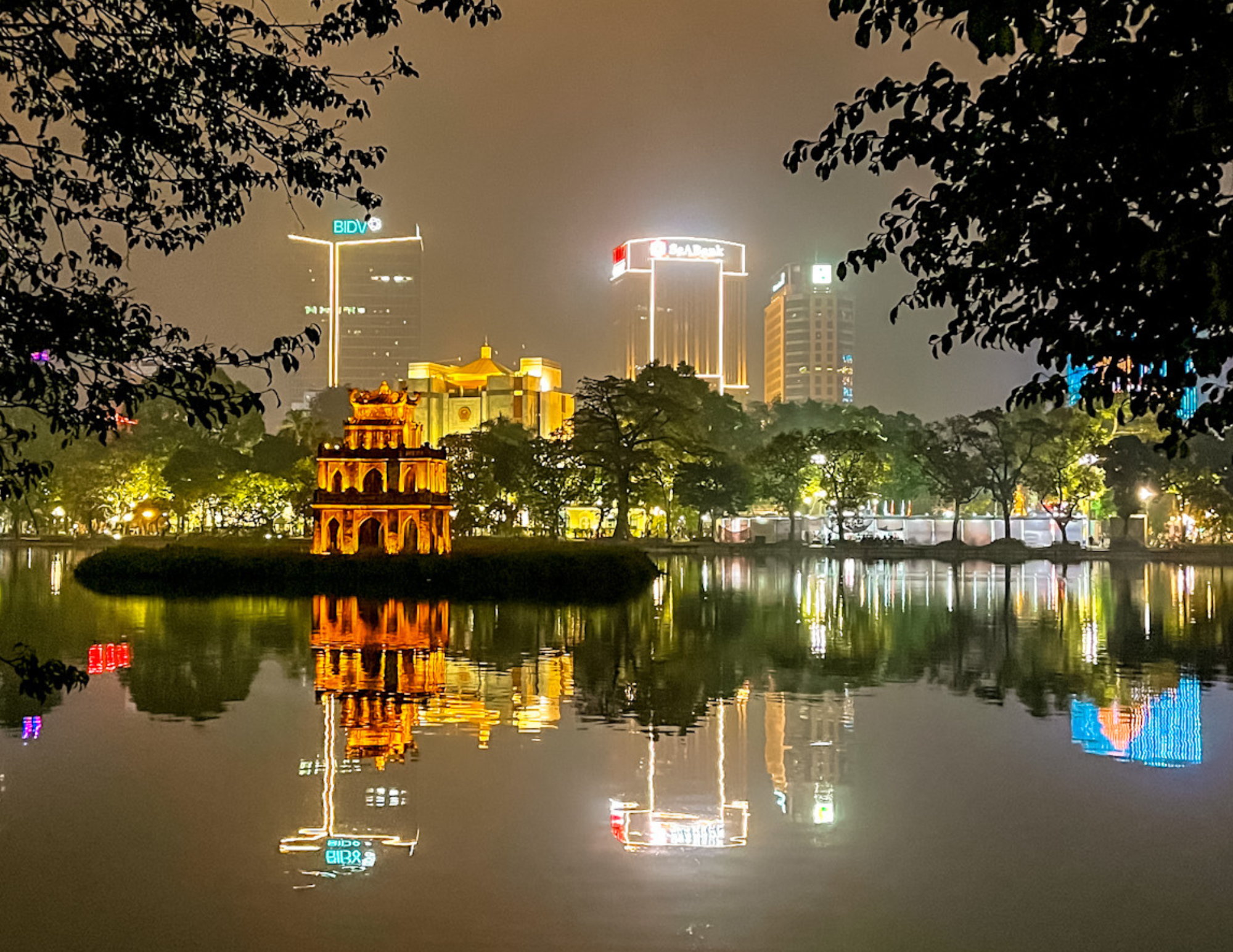
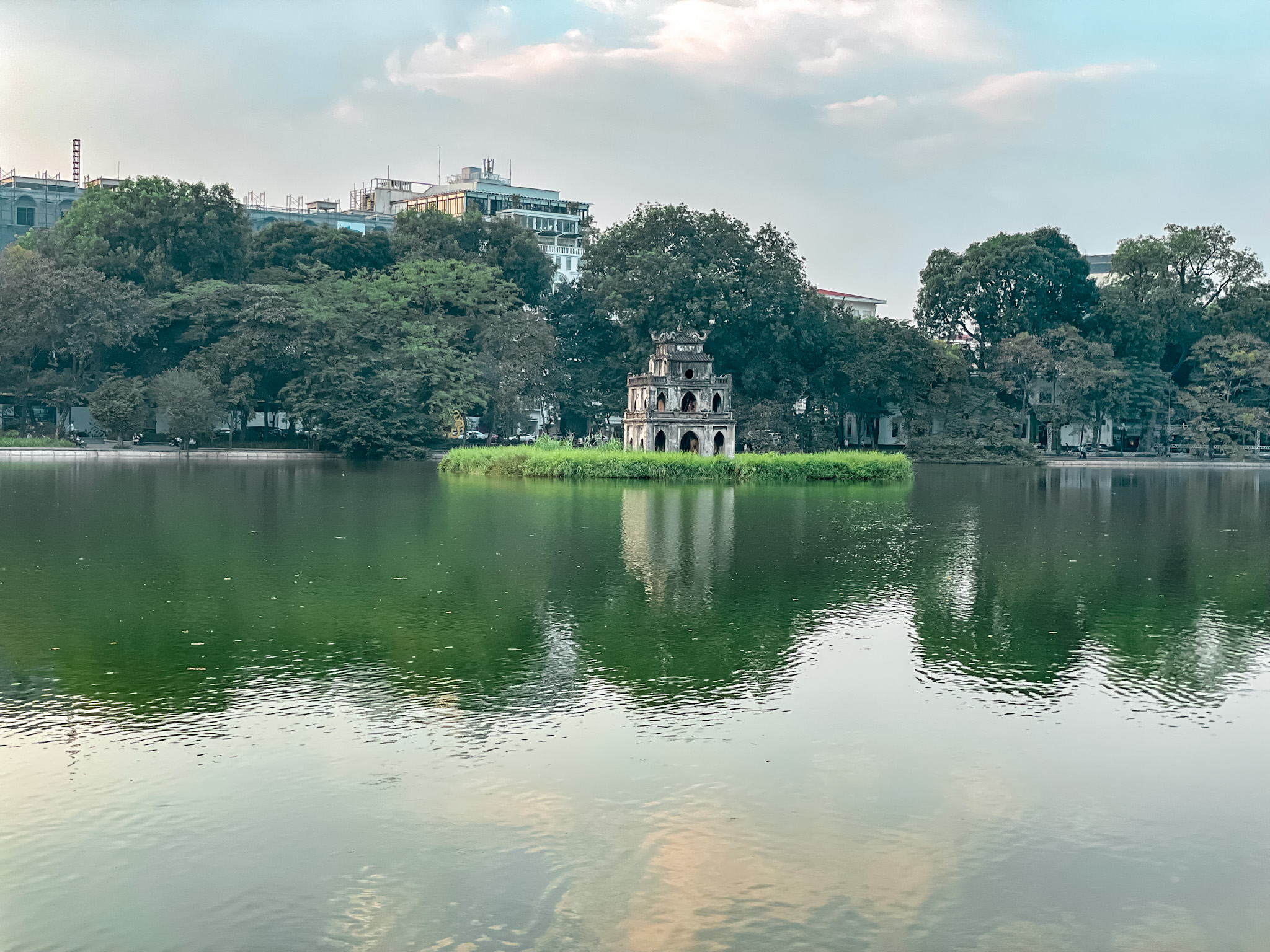
In the middle of the busy Old Quarter sits Hoan Kiem Lake, and in the middle of the lake sits Ngoc Son Temple. You reach it by walking across a bright red wooden bridge that has become one of Hanoi’s most recognizable scenes.
Many visitors assume this temple is just a quick photo stop, but once inside it explains the cultural meaning of the lake itself. The temple is tied directly to the legend of the returned sword and to the idea of knowledge, protection, and harmony.
It is small, but it connects history, mythology, and daily life in one place.
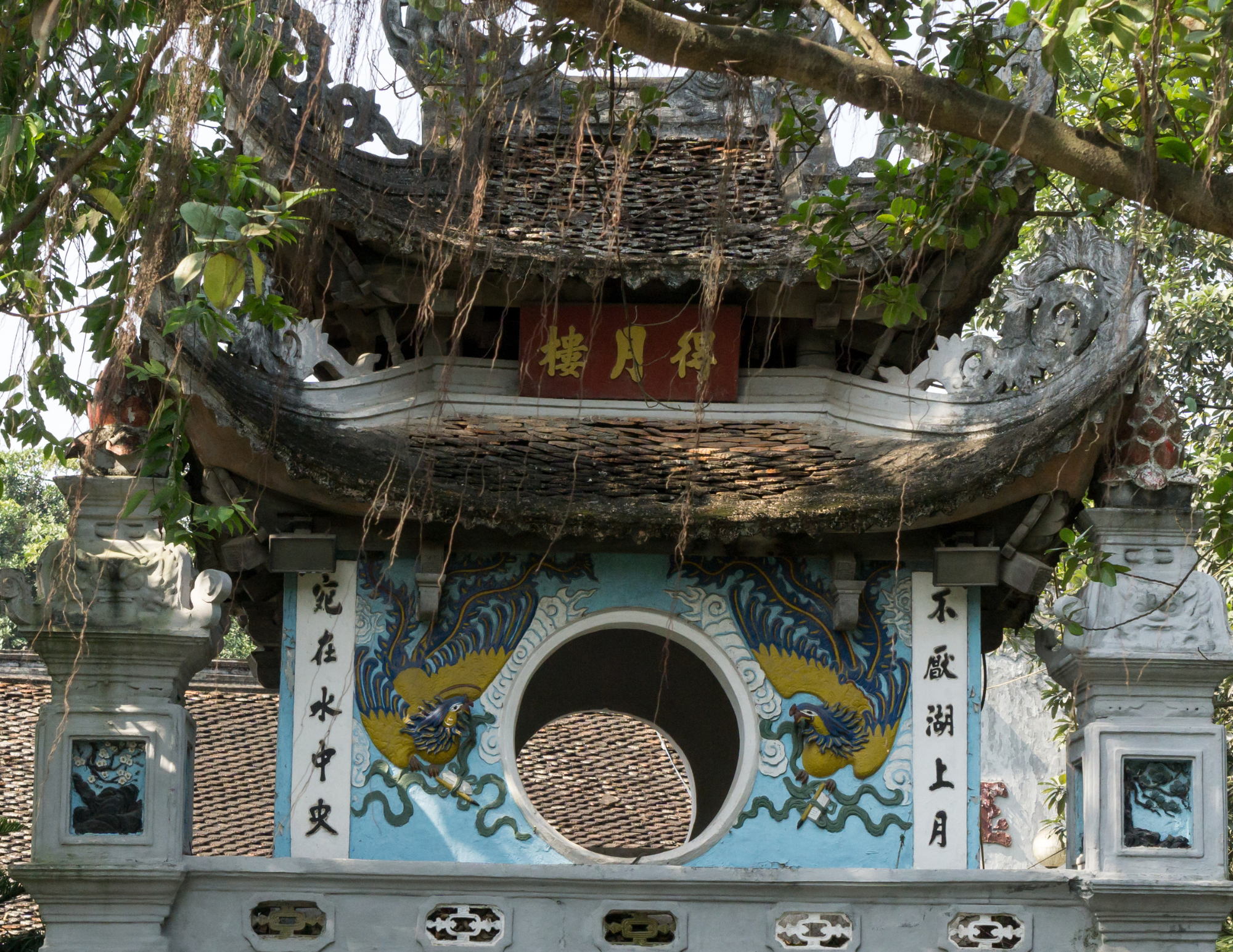
The Meaning and History
Ngoc Son means “Temple of the Jade Mountain.”
The temple was built in the 19th century and dedicated to multiple figures including a national hero, a scholar associated with literature and learning, and spiritual guardians. Over time it became closely connected with the legend of Hoan Kiem Lake and the sacred turtle believed to inhabit the water.
Because of this connection, the temple is not only religious but symbolic. It represents wisdom, courage, and the protection of the nation.
Inside you will even find preserved remains of a giant turtle, reinforcing the cultural importance of the legend.
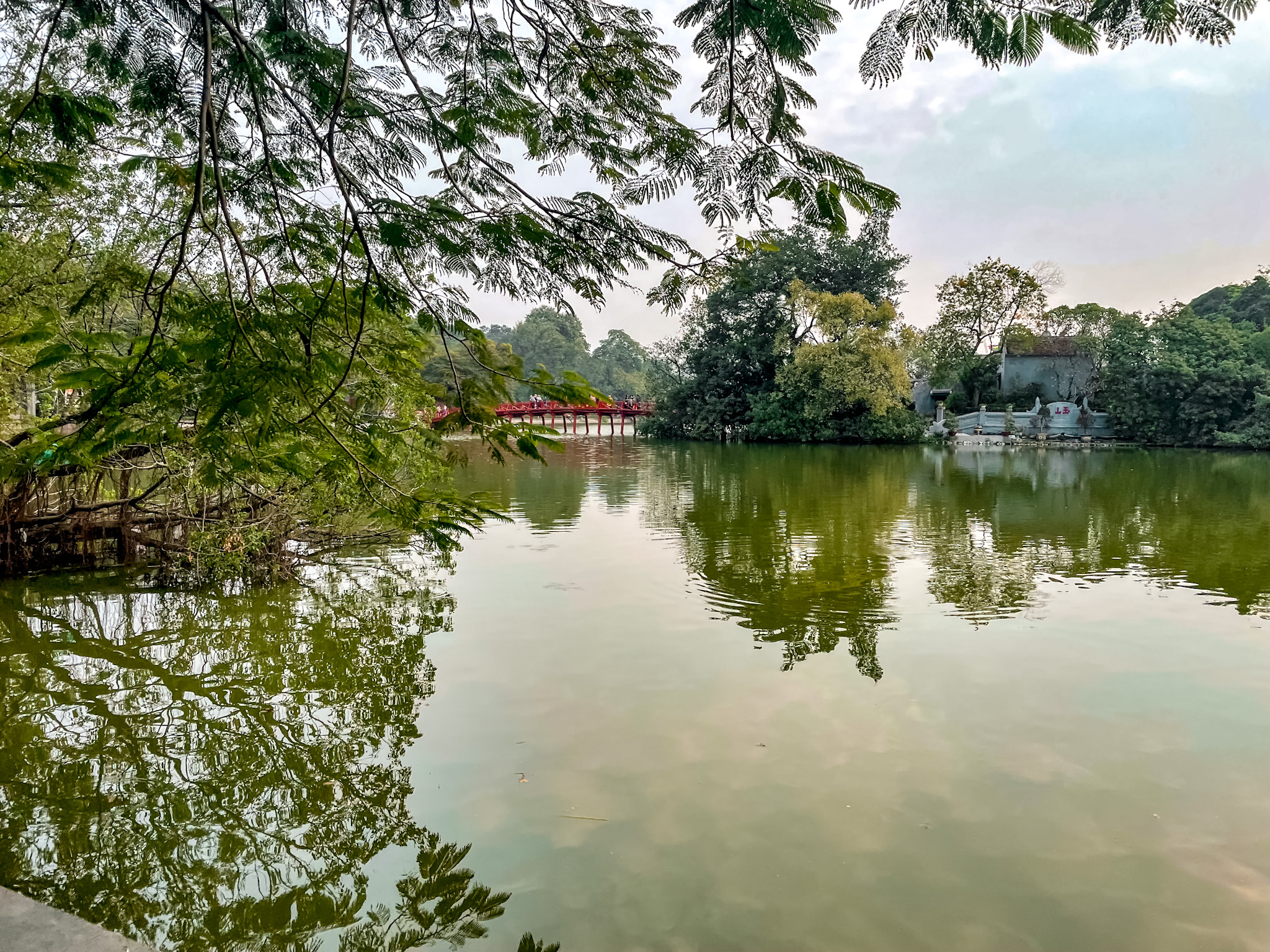
The Red Bridge
The Huc Bridge
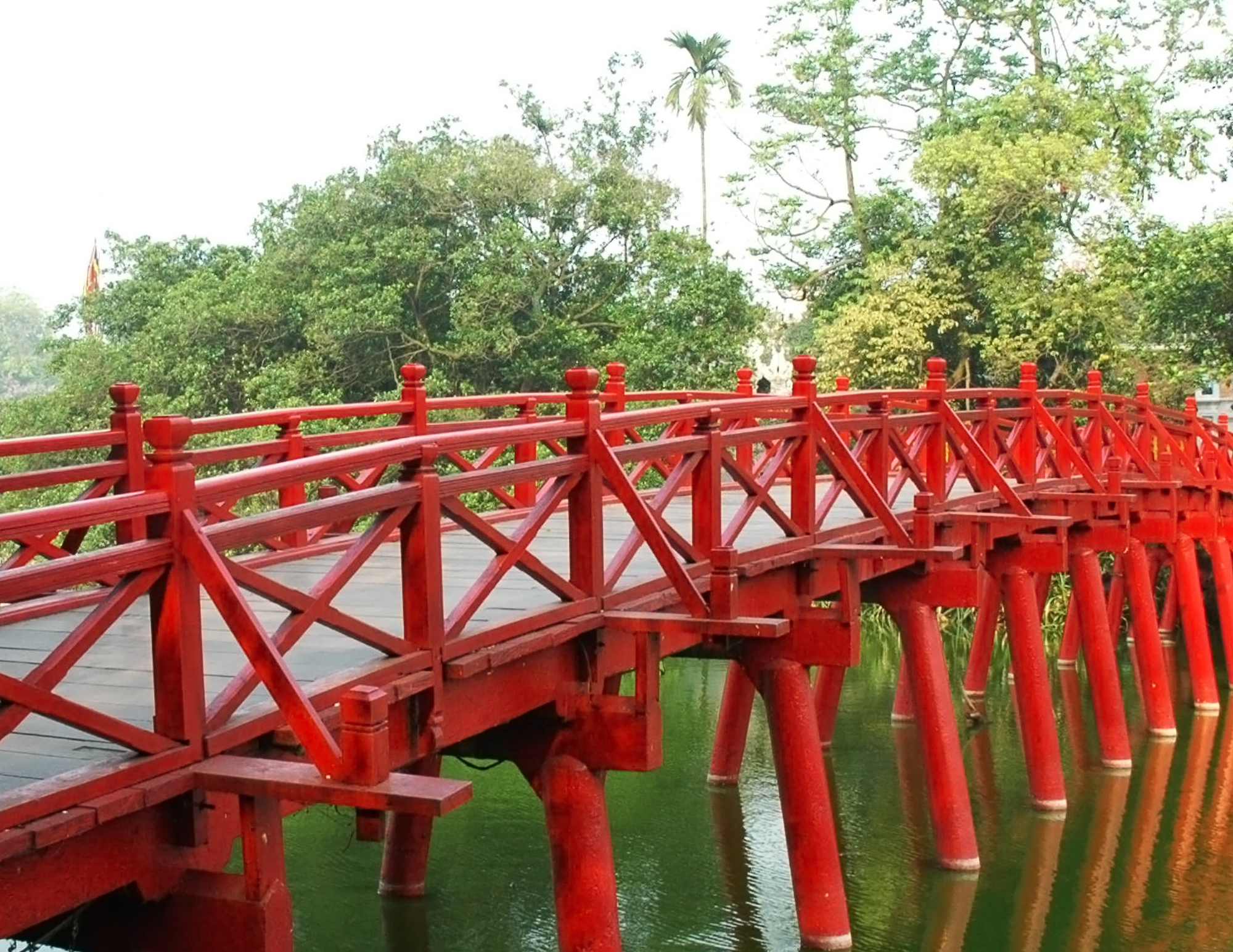
The bridge leading to the temple is called The Huc Bridge. Its red color represents vitality and good fortune. Crossing it is part of the experience rather than just a path.
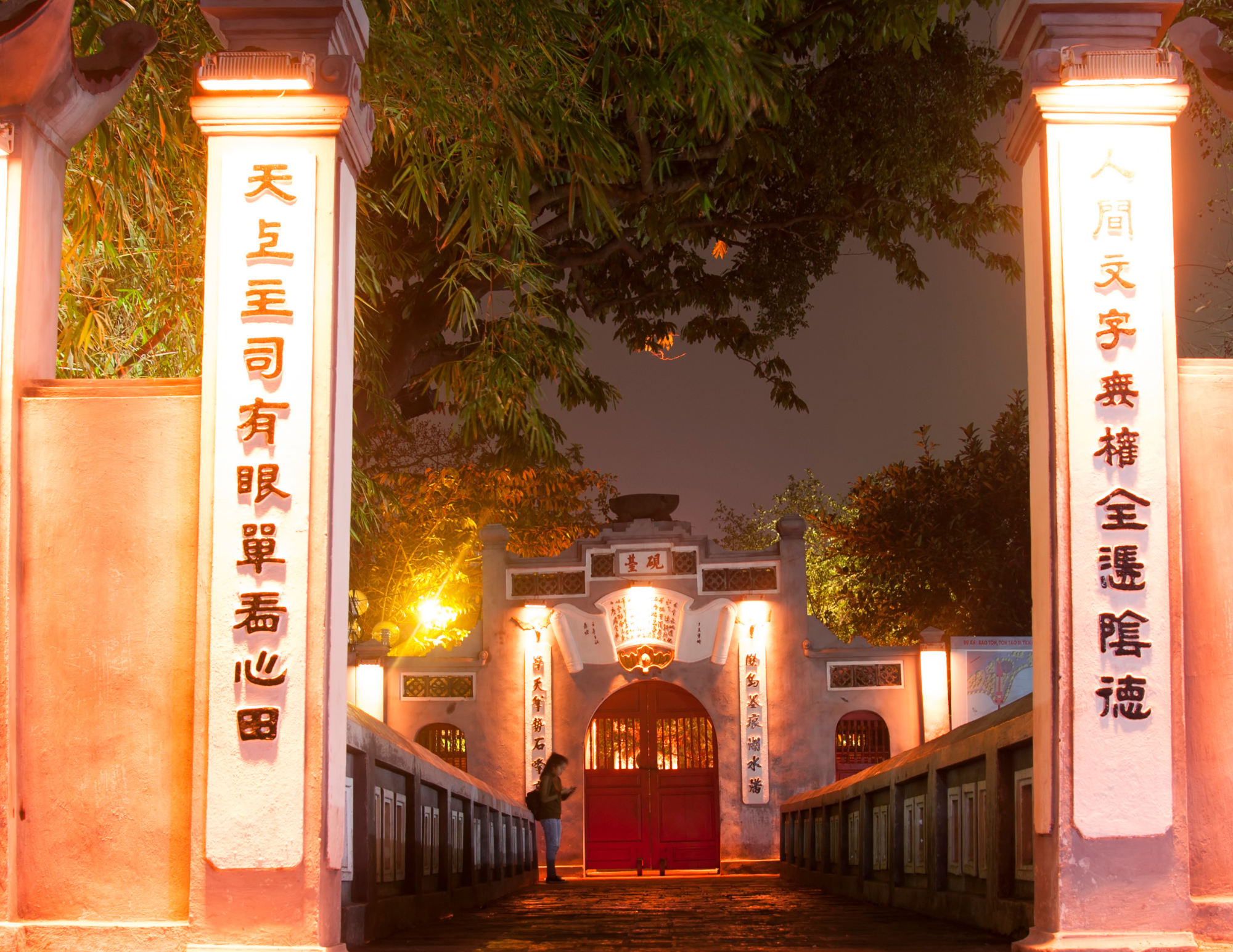
Early in the morning the bridge is calm and quiet. In the evening it becomes one of the most photographed places in the city as lights reflect off the water.
What You See Inside
The temple complex is small but layered.
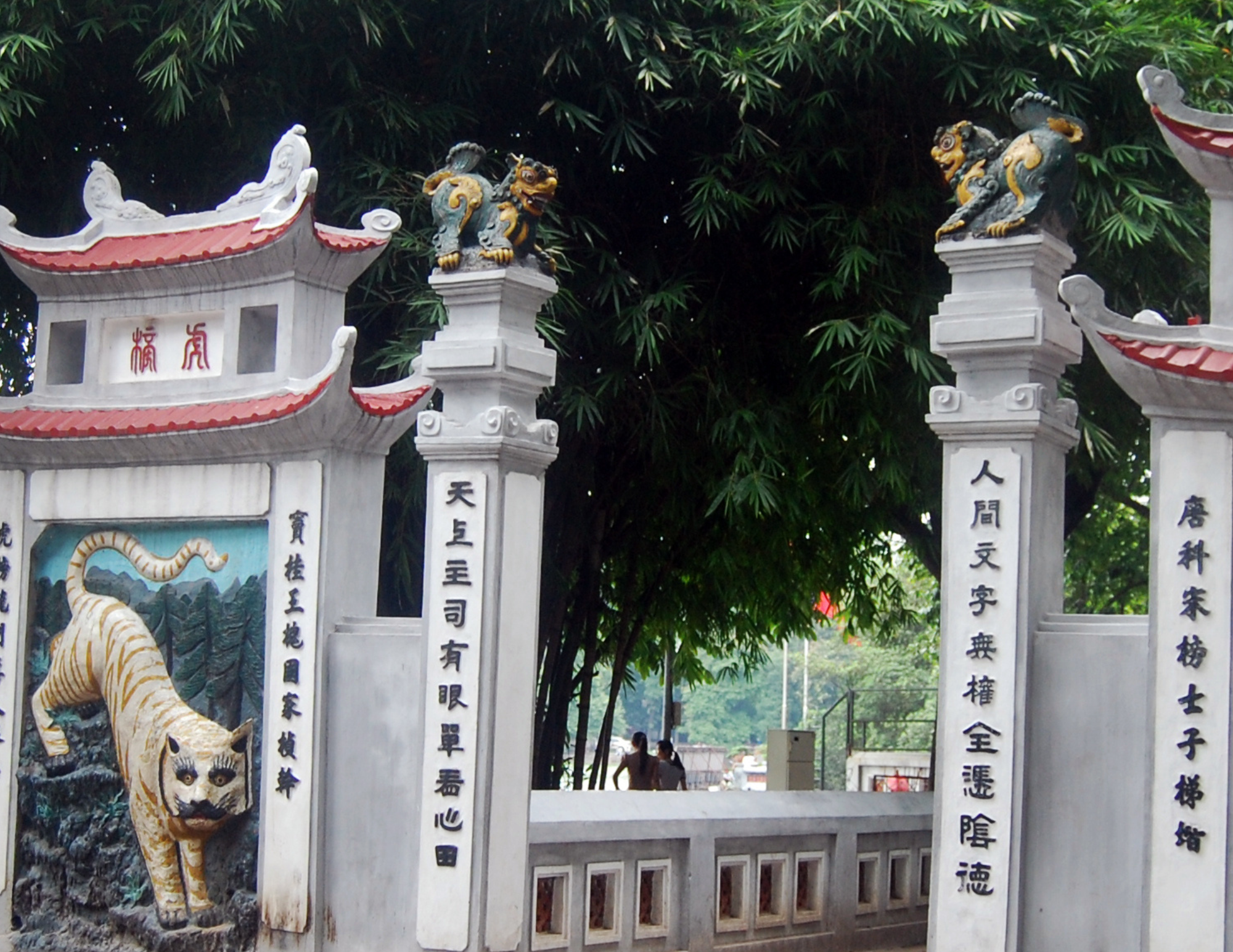
You pass through entry gates and courtyards before reaching the main shrine rooms. Inside are altars, incense offerings, and historical displays. The preserved turtle display is one of the most talked about features because it connects the legend to something physical.
Because of the compact size, you move slowly rather than wandering long distances, which gives it a more intimate feeling than large temple complexes.
Ticket Price and Opening Hours
Entrance requires a small ticket.
Typical ticket price
Approximately 30,000 VND
Typical hours
Morning until evening daily
Times can change slightly, but the temple generally opens earlier than most attractions and stays open until after sunset.
Best Time to Visit
Morning
Peaceful, cooler, and best for photos without crowds.
Late afternoon
Nice light and still manageable crowds.
Evening
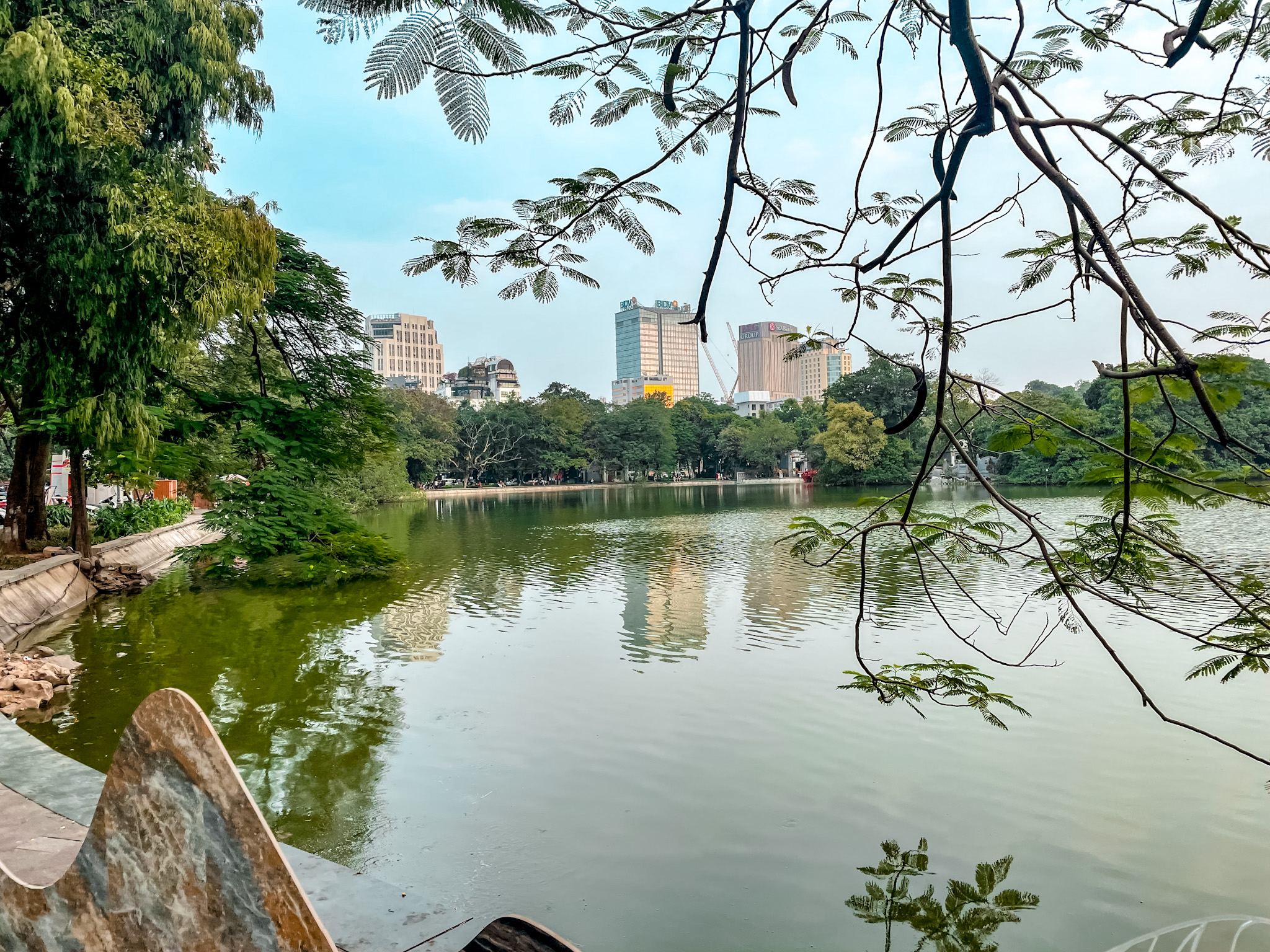
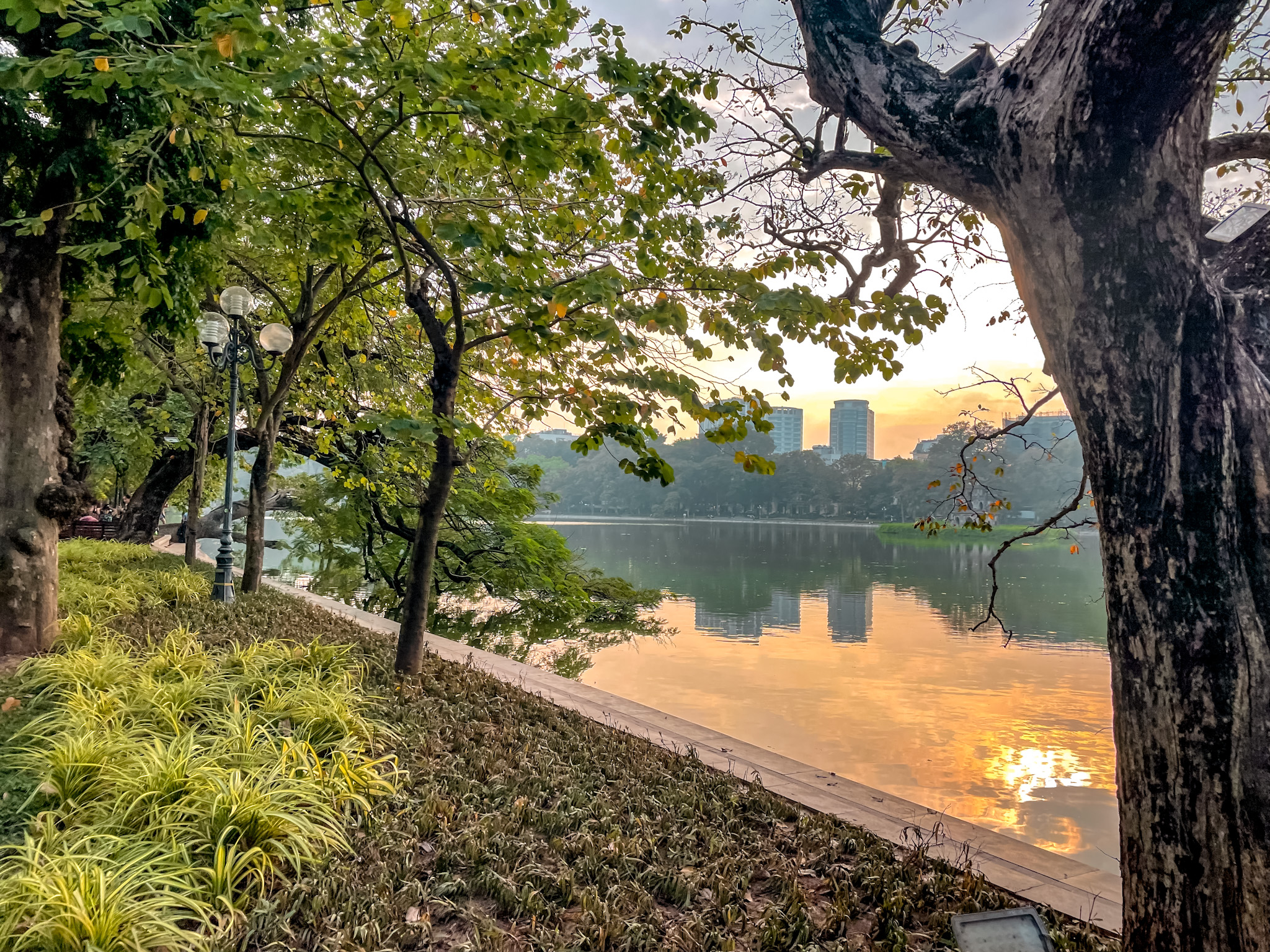
Most atmospheric with reflections and activity around the lake, though busier.
Because the temple is in the center of the city, you can visit multiple times at different hours and get completely different experiences.
Etiquette and Visiting Tips
Dress modestly since it is an active place of worship
Keep voices low inside shrine areas
Photography is fine but avoid blocking walkways
Allow about 30 to 45 minutes for a full visit
Many people combine the visit with a full walk around Hoan Kiem Lake.
Why It Is Worth Visiting
Ngoc Son Temple is not impressive because of its size. It matters because of its location and symbolism. It sits at the center of Hanoi both physically and culturally.
The temple ties together legend, history, and everyday life in a way that helps visitors understand why the lake is so important to locals.
Final Thoughts
You may arrive planning to cross the bridge, take a photo, and leave. Most people slow down once inside. The setting, the water, and the connection to the city’s story make it more meaningful than expected.
Ngoc Son Temple works best as part of a walk around the lake, where the experience builds gradually instead of all at once.
