
.png)
How to Get from Lisbon to Sintra (And How to Actually Move Around Once You’re There)
Getting to Sintra from Lisbon is one of the easiest parts of the entire trip.
It’s quick, inexpensive, and very straightforward once you know what you’re doing. But like most things with Sintra, what looks simple at first can still go wrong if you’re not paying attention.
And getting there is only half the story.
Because once you arrive, that’s when the real logistics start.
This guide walks through both parts. How to get to Sintra from Lisbon, and how to move around once you’re there so your day actually flows instead of feeling rushed.
If you’re still deciding whether Sintra is worth adding to your trip, start with my Sintra Day Trip from Lisbon, then come back to this to plan the details.
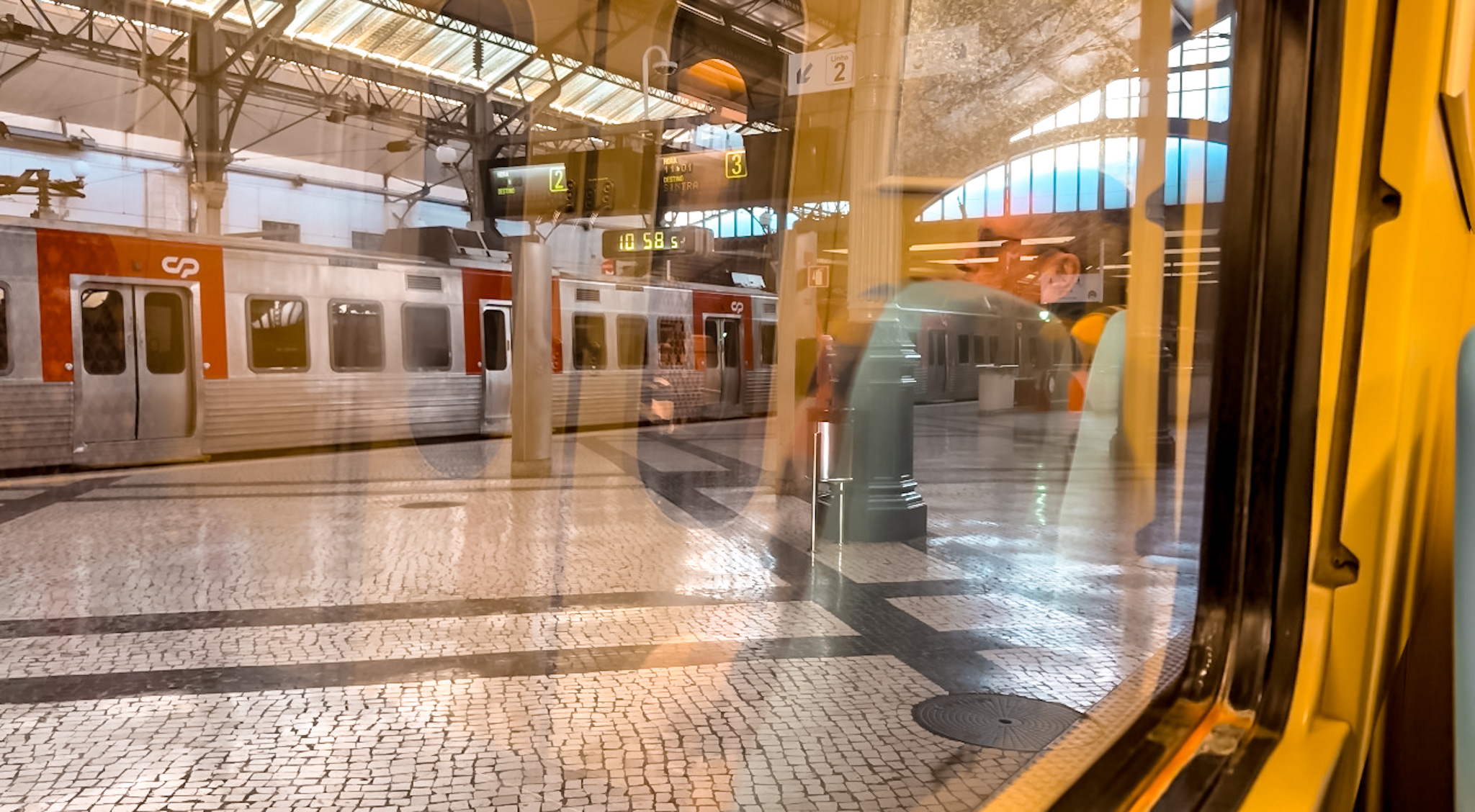
Quick Answer: Best Way to Get from Lisbon to Sintra
The easiest and most popular way to get from Lisbon to Sintra is by train from Rossio Station.
The journey takes about 40 minutes, trains generally run every 20 to 30 minutes, and it is one of the simplest and most affordable day trips from Lisbon. It cost €5.10 round trip.
Once in Sintra, most travelers use Uber or Bolt to reach the main attractions quickly and avoid waiting for crowded buses.

Taking the Train from Lisbon to Sintra
Most travelers take the train, and for good reason.
It’s the easiest, cheapest, and most efficient way to get there.
Trains leave from Rossio Station, right in Lisbon’s historic center near Baixa. The ride takes about 40 minutes, and trains run frequently throughout the day, usually every 20 to 30 minutes.
When we went, it was simple.
We showed up at Rossio, bought our tickets, and got on the next train heading to Sintra. No stress, no complicated planning, no need to book anything far in advance.
The cost is one of the best parts.
A one-way ticket is usually around €2.55, which means a round trip comes out to €5.10 total. It’s easily one of the cheapest day trips you can take from Lisbon.
Tickets are loaded onto a Viva Viagem card, which costs about €0.50 the first time you buy it. After that, you can keep reusing it. If you already have a Lisboa Card, the train to Sintra is included, which makes this even easier.
One simple thing I recommend is buying the round trip ticket at the start so you don’t have to deal with it again later when you’re tired and ready to go back.
And that part matters more than people think.
Because at the end of the day, when you’re done walking hills and moving between sites, the last thing you want to do is stand in another line trying to figure out tickets again.
.png)
The Easy Mistake on the Way Back
This is small, but it’s exactly the kind of thing that can throw you off if you’re not paying attention.
On the way back, we were tired.
We saw a train that said Lisbon and just got on without thinking too much about it.
But not all trains go to the same station.
We ended up on one heading toward Oriente instead of Rossio, which meant having to get off and wait for the correct train.
It wasn’t a big deal. We just got off and waited for the correct train, which came shortly after. But it’s an easy mistake to make, especially when you’re not fully paying attention.
If you’re staying in central Lisbon, make sure you check which return train makes the most sense for where you actually need to end up instead of just jumping on the first one marked Lisbon.
It saves you that extra step at the end of an already long day.
Should You Drive to Sintra?
You can drive.
But I wouldn’t recommend it.
On paper, it might seem like a good idea. More flexibility, your own pace, no waiting on trains.
In reality, it comes with more stress than it’s worth.
Parking is limited, roads are narrow and winding, and traffic builds quickly, especially during peak times. On top of that, access around some of Sintra’s most famous sights is restricted, so even if you drive in, you may not be able to use your car as easily as you expect once you get there.
For most travelers, the train is simply easier and usually ends up being the less stressful option overall.

Taking a Guided Tour (When It Actually Makes Sense)
This is something a lot of people consider, especially if they don’t want to deal with the logistics.
A guided tour can be a really good option depending on how you like to travel.
Everything is handled for you.
Transport, timing, route, sometimes even entry tickets depending on the tour. You don’t have to think about which train to take, how to get between stops, or how to structure your day.
You just show up and follow along.
For some people, that takes the pressure off completely.
It’s also helpful if you want context while you’re there. History, stories, explanations, things you might miss if you’re exploring on your own.
The trade-off is flexibility.
You’re moving on someone else’s schedule, not your own. And in a place like Sintra, where energy and pacing really matter, that can make a difference.
If you prefer a more structured experience and want everything handled, a guided tour can be a great option. If you want full control over your day, the train plus your own plan is usually better.

What Happens When You Arrive in Sintra
This is where things shift.
Once you arrive at the Sintra train station, you’re not at the main attractions yet.
That’s one of the biggest things people don’t fully realize when planning.
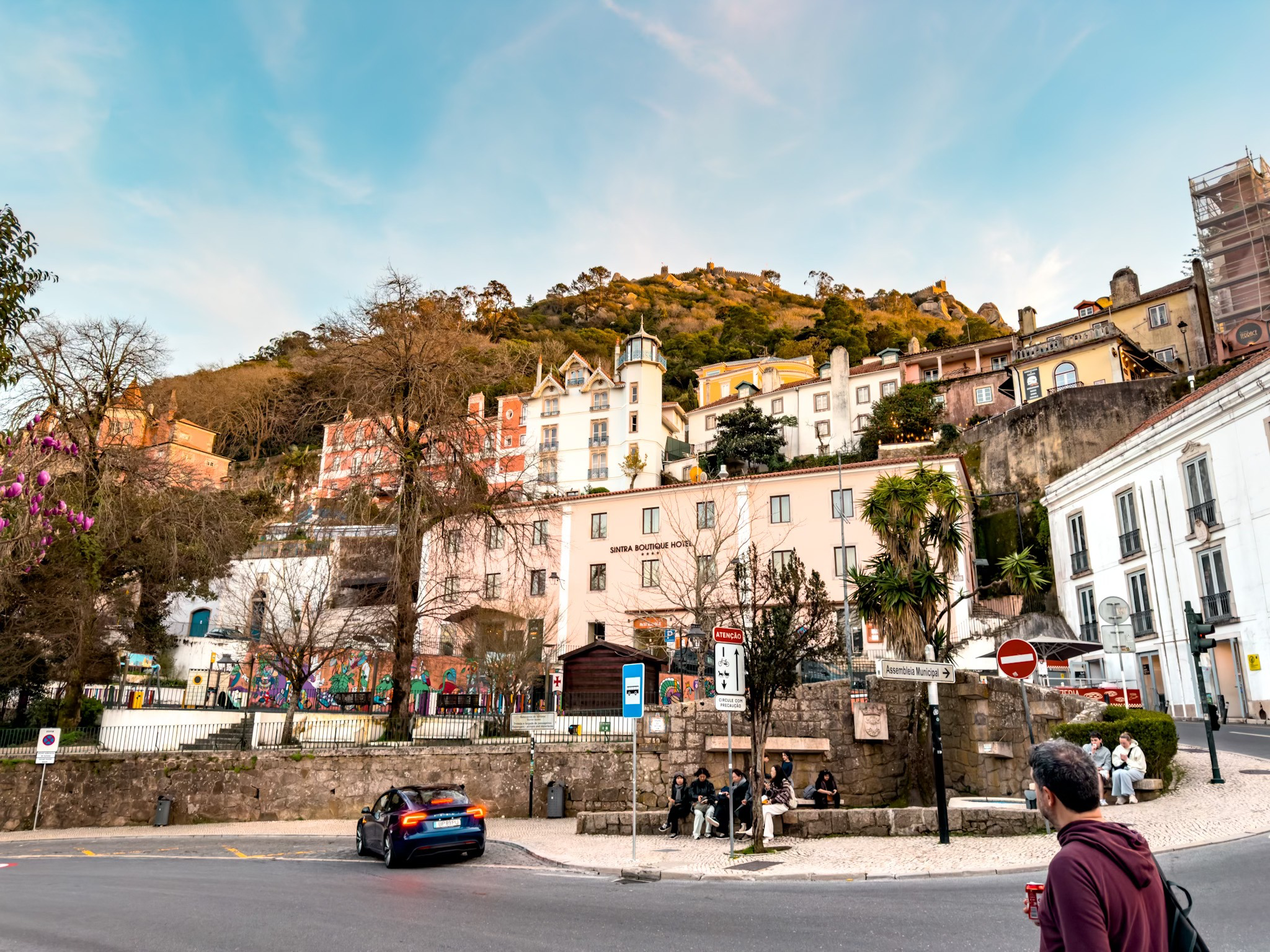
The palaces and castles that make Sintra famous are not located in the center of town. They’re spread out across the hills of the Sintra mountains, surrounded by forest, winding roads, and elevation that you will definitely feel throughout the day.
So getting there is easy.
Getting around is the part that really shapes how your day feels.
.png)
The Biggest Mistake People Make Getting Around Sintra
The biggest mistake people make is assuming everything is close together.
It’s not.
What looks like a short distance on the map can easily turn into a 30 to 45 minute uphill walk or a long wait for transport.
That is why how you move between stops matters just as much as what you choose to see.
-1.png)
Getting Around Sintra (This Will Affect Your Whole Day)
You have several options for getting around once you arrive.
Walking, taxis, rideshare, tuk-tuks, and the tourist buses.
At first glance, the Scotturb tourist buses seem like the obvious choice.
The two main routes are Bus 434 and Bus 435.
Bus 434 runs in a loop from the train station to the historic center and then up toward the Moorish Castle and Pena Palace before returning back down.
Bus 435 connects the train station with Quinta da Regaleira and Monserrate.
On paper, this sounds perfect.
And for some people, it works.
But what many travelers realize once they are there is that the buses can take longer than expected. They fill up quickly, especially during busy times, and because they follow looped routes with multiple stops, you are not always moving as directly as you think.
That is where time starts slipping away, which is why Uber or Bolt often ends up feeling like the easier option.
Rideshare services are widely available and can usually take you directly from the train station up to the palaces in about 10 to 15 minutes depending on traffic.
If you’re traveling with two or more people, it often ends up being comparable in price to the bus, and significantly faster.
That difference adds up over the course of the day.
Taxis and tuk-tuks are also easy to find, especially near the station and in the historic center.
Tuk-tuks are popular for the experience and the scenic ride, but they are usually more expensive than rideshare options.
Walking is possible.
And if you enjoy hiking, the trails through Sintra-Cascais Natural Park can actually be beautiful.
But this is where you need to be honest with yourself.
The climbs are real.
The routes to places like Pena Palace and the Moorish Castle are steep, and after a full day of exploring, it can feel like a lot.
For most people, the best approach is a mix.
Walking through the historic center, and then using Uber or taxis to move between the hilltop sites.
That balance keeps the day manageable.
.png)
Why Getting Around Matters More Than You Think
This is one of the biggest factors in how your Sintra day feels.
If you are constantly waiting, backtracking, or trying to figure out transport in the moment, the day starts to feel more rushed and tiring. If your movement is smooth, everything else feels easier.
This is something I break down more in my Sintra Travel Tips guide, because small decisions here make a bigger difference than most people expect.
.png)
How This Fits Into Your Sintra Day
Getting to Sintra and getting around Sintra are the foundation of your entire day.
If this part is smooth, everything else flows.
If it’s not, even the best itinerary can start to feel off.
If you still need help structuring the day itself, start with my 1 Day Sintra Itinerary. If you are still deciding what to prioritize, read Best Things to Do in Sintra. And if you need help planning the most time-sensitive stop of the day, head next to my Pena Palace Sintra Guide.
All of it connects.

Final Thoughts
Getting to Sintra is easy.
Staying organized once you get there is what actually matters.
The train is simple, inexpensive, and reliable.
But once you arrive, how you move between the palaces and castles will shape your entire experience.
Plan that part intentionally.
Start early.
Keep things simple.
And don’t underestimate how much the logistics affect the day.
Because in Sintra, the logistics are not separate from the experience.
They are part of the experience.

Cavetta is the creator of LifeWithVetta.com and has been traveling the world full time since 2020. She has visited more than 60 countries while worldschooling her son and documenting what it really takes to live abroad. Her guides focus on travel, moving abroad, digital nomad life, and designing a life beyond the traditional path.
