
.png)
Sacré-Cœur and Montmartre are some of my favorite places to revisit in Paris, but let me be honest from the start.
Those hills will try to take you out.
Every time I go back to Montmartre, I am reminded that Paris is not all flat romantic walks by the Seine. Montmartre is beautiful, charming, artsy, historic, and full of postcard-style corners, but it is also uphill, downhill, stairs, cobblestones, and more uphill when you think you are finally done.
Still, I think it is worth it.
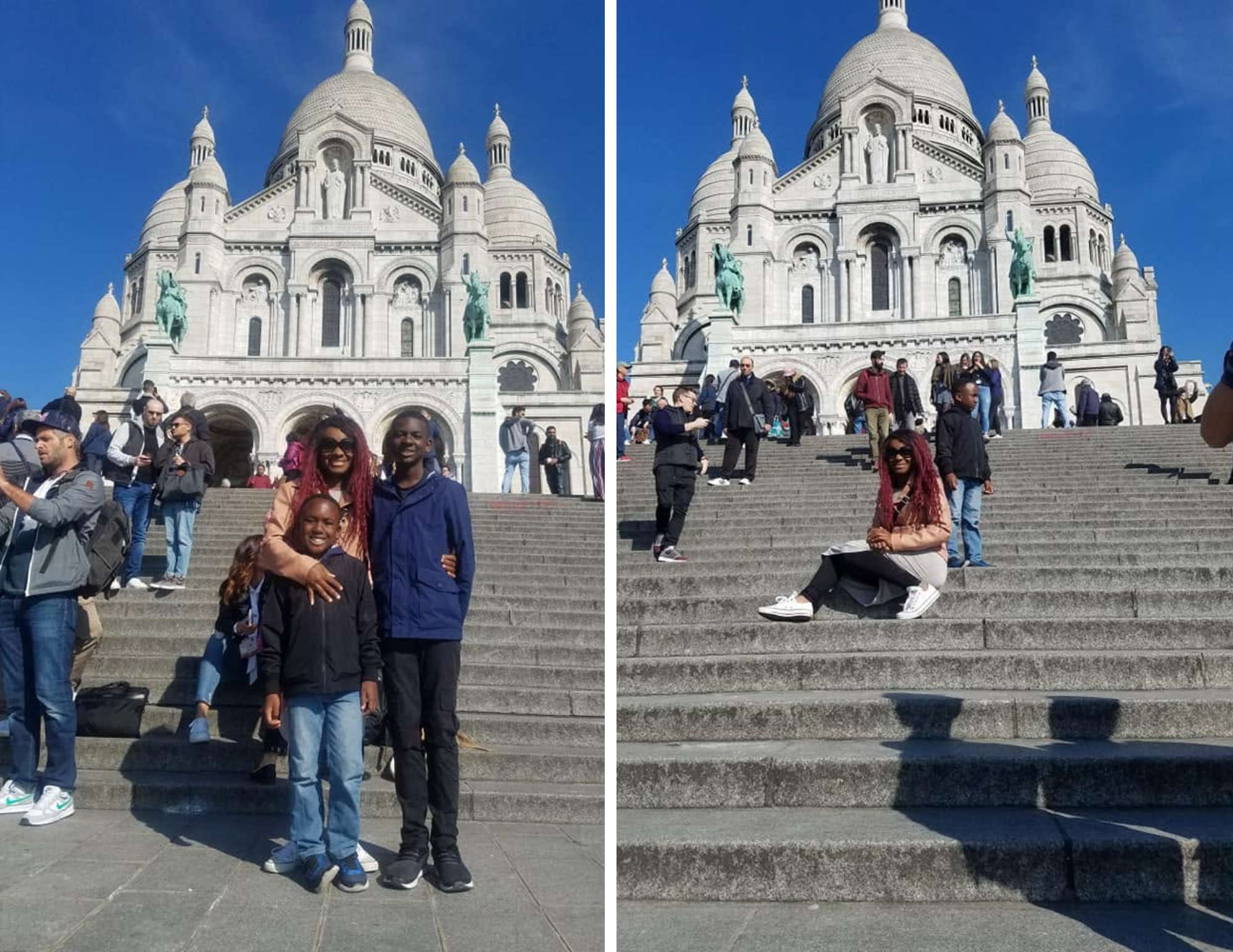
I have been to Paris three times now, in March 2019, July 2021, and April 2026, and Sacré-Cœur has been one of those places I returned to across different seasons of life. The first time, I visited with my sons during our first Europe trip. The second time, we were already full-time traveling. The last time, my mom was also in Paris, so she got to see it too.
That is one of the things I love about returning to the same Paris places. The landmark may be the same, but the people, the timing, and your life are different.
Sacré-Cœur is beautiful. Montmartre is one of the most interesting neighborhoods to wander. The views over Paris are amazing. The little carousel below the basilica is iconic. The area has souvenir shops, cafés, artists, pretty streets, and that classic Paris feeling that a lot of people are hoping to find.
But it is also crowded, touristy, hilly, and one of the areas where you need to watch your belongings.
So yes, visit Sacré-Cœur and Montmartre. Just come prepared.
Is Sacré-Cœur Worth Visiting?
Yes, Sacré-Cœur is absolutely worth visiting.
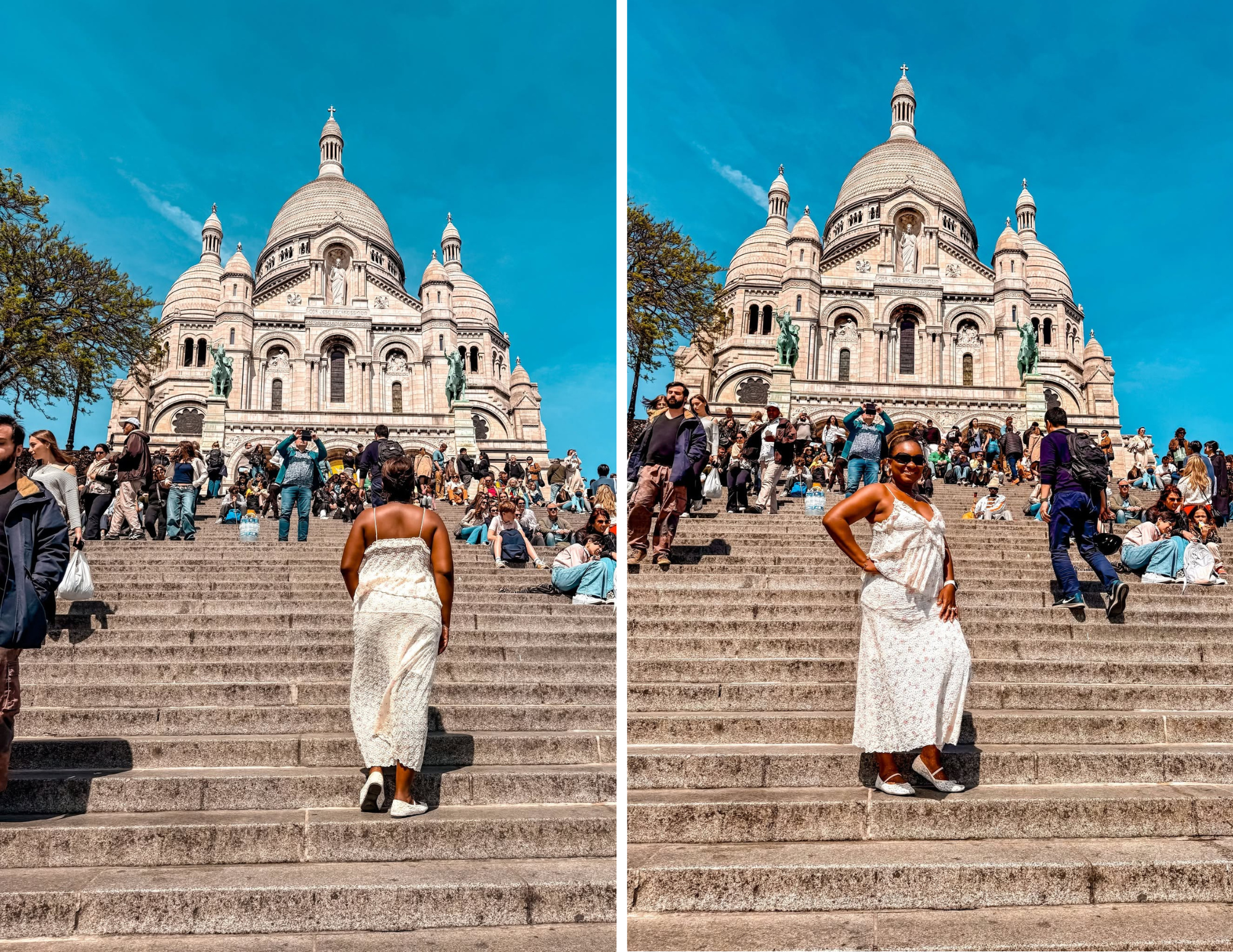
The basilica itself is beautiful, but the location is what makes the visit feel extra special. Sacré-Cœur sits at the top of Montmartre, so once you make it up there, you get one of the best free views over Paris.
That is one of the reasons I think it belongs on a first-time Paris itinerary. You get the basilica, the view, the neighborhood, the artists, the carousel, the cafés, the souvenir shops, and the atmosphere of Montmartre all in one area.
It is also free to enter the basilica, which makes it one of the best free things to do in Paris. The basilica as open every day from 6:30 AM to 10:30 PM, with free admission for everyone.
That said, this is not a calm hidden gem. Sacré-Cœur is popular. Montmartre is popular. Expect crowds, especially around the steps, viewpoint, and main streets.
For more free Paris ideas, read my Free Things to Do in Paris France: Beautiful Places That Do Not Cost Anything Guide.
-5.png)
My Experience Visiting Sacré-Cœur and Montmartre
The first time I visited Sacré-Cœur was in March 2019 with my sons, during our first trip to Europe.
That trip was the classic first-time Paris experience for us. We were doing the big landmarks, seeing the places we had always heard about, and trying to fit in as much as possible. Sacré-Cœur was one of those stops that felt different from the Eiffel Tower, Louvre, and Notre-Dame because it sat above the city and gave us this wide view over Paris.
The second time, in July 2021, we were full-time traveling. Paris was not just a vacation anymore. It was part of a different life, and going back to places like Montmartre felt different because I was not experiencing the city the same way.
The third time, in April 2026, I was in Paris again with my youngest while Schengen shuffling through Europe. My oldest was in college by then, and my mom came to visit us in Paris too. I went back to Sacré-Cœur with her, and that made it feel new again.
That is one of the reasons I do not mind revisiting famous places. Sometimes it is not about whether you have already seen it. Sometimes it is about who you are seeing it with this time.
And with Sacré-Cœur, even though I know the hills are waiting for me every single time, I still think the area is worth the effort.
For more on returning to Paris, read my Visiting Paris Again: Why I Liked It More the Second and Third Time Guide.
-8.png)
The Hills in Montmartre Are No Joke
Let me say this clearly.
Montmartre is hilly.
Not cute little hill hilly. More like “why did I think this was a casual walk?” hilly.
The walk up to Sacré-Cœur can feel like a mini workout, especially if you are already tired from a full day of sightseeing. There are stairs, sloped streets, and cobblestone areas, and depending on which route you take, it can feel like Paris is personally testing your stamina.
The hills nearly took me out more than once.
If you are visiting with kids, older family members, or anyone who struggles with hills or stairs, plan this area carefully. Do not schedule Montmartre after an already exhausting day unless you are prepared to move slowly.
The good thing is that you do have options. The Montmartre funicular can help you avoid the steep stair climb up to Sacré-Cœur. It costs the same as a metro ticket and runs daily from 6 AM to 12:45 AM.
If you have a Navigo pass, Paris Visite pass, or valid transit ticket, check if it works for the funicular before you buy anything extra.
I still think walking through Montmartre is part of the experience, but there is no shame in using the funicular. Save your legs when you need to.
For more transit help, read my Paris Public Transportation Guide: Getting Around by Metro, Train, and RER Guide.
Visiting Sacré-Cœur Basilica
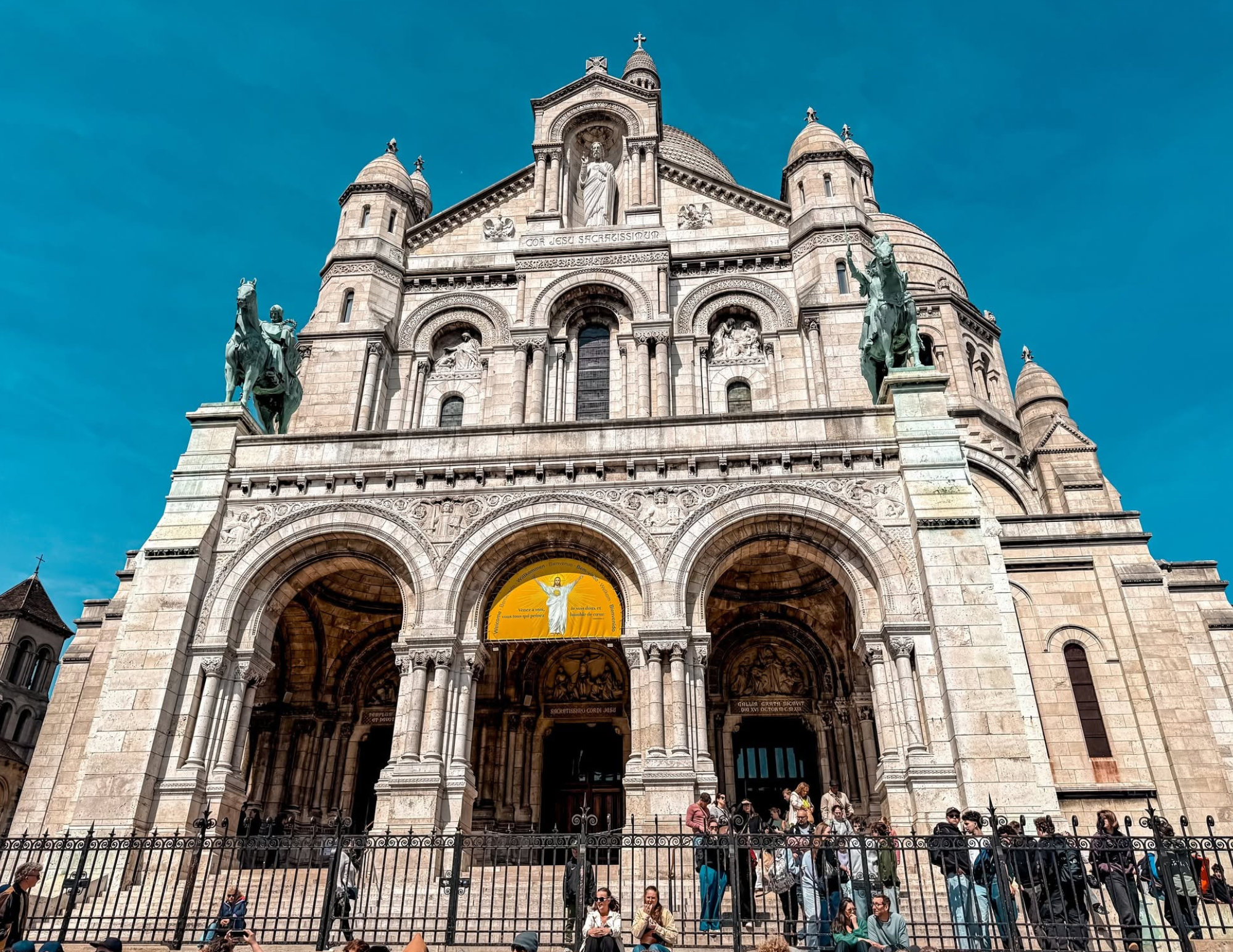
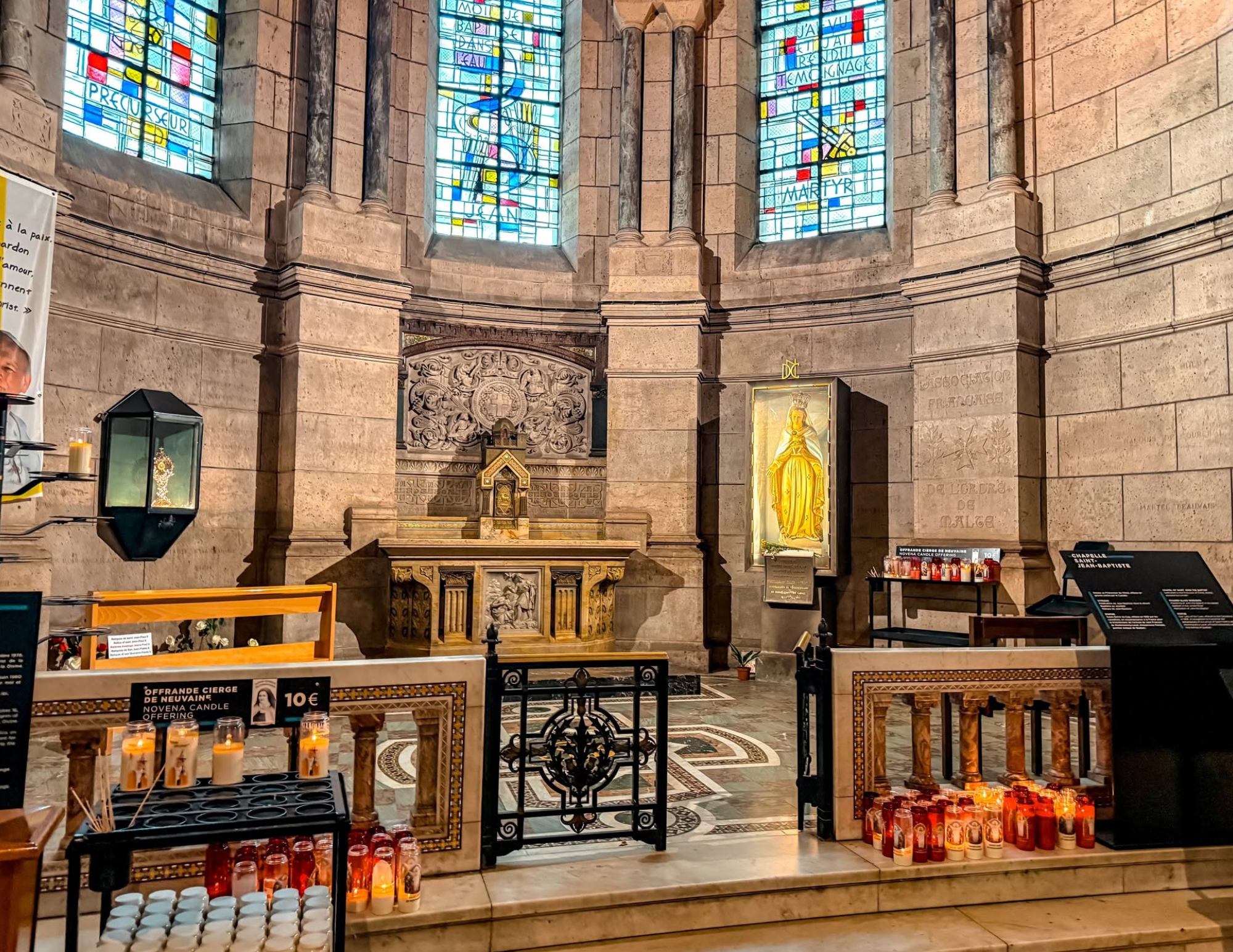
Sacré-Cœur is free to enter, and it is still an active basilica, so the inside feels different from visiting a regular tourist attraction.
You can walk in, look around, sit quietly, and take in the space, but you need to be respectful. This is a place of worship, so keep your voice low, avoid being disruptive, and remember that some people are there to pray.
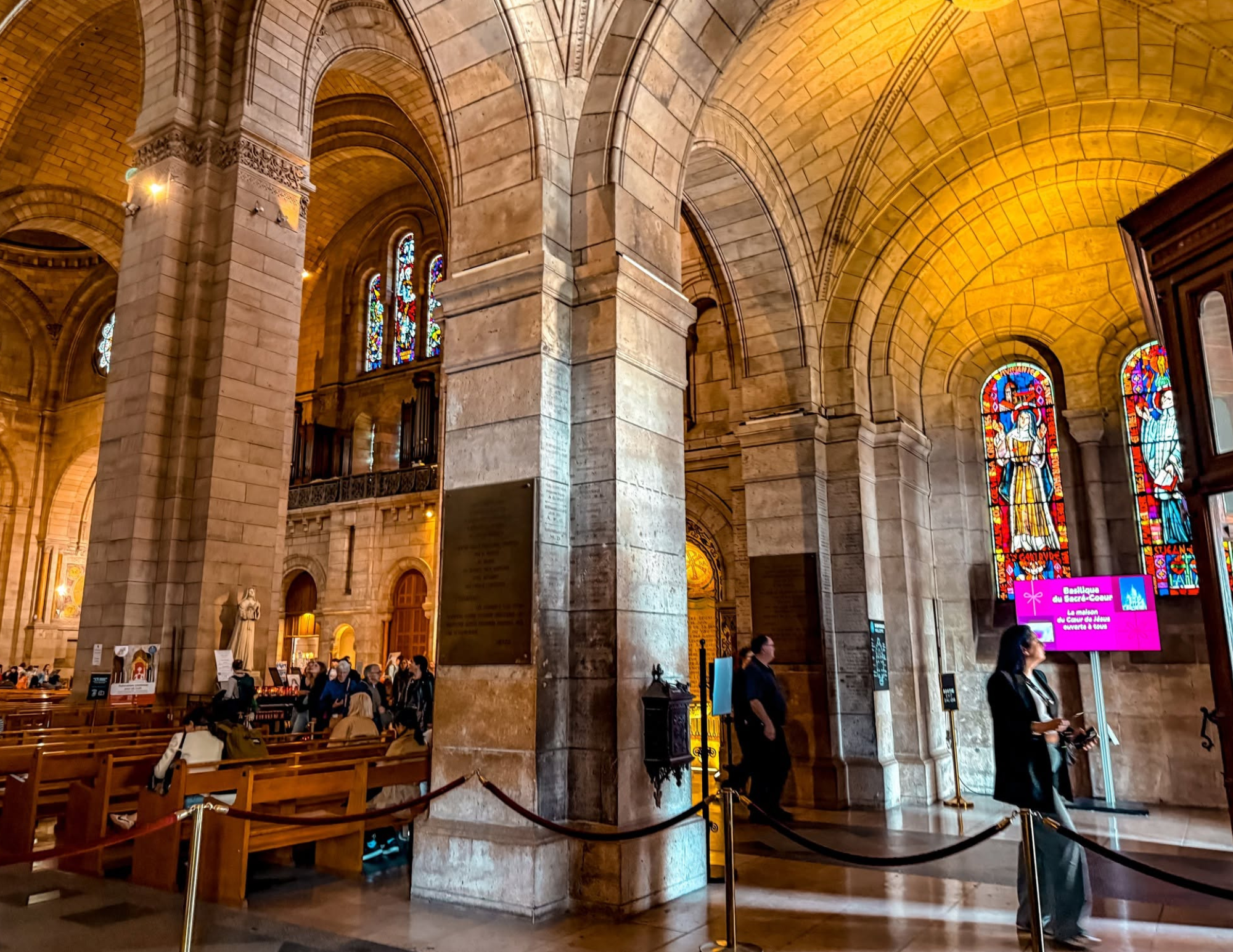
There can also be a bag check before entering. When we visited, there was a security check before going inside the basilica, so do not bring anything unnecessary. Keep your bag simple, zipped, and easy to open if needed.
The inside of Sacré-Cœur is beautiful, but I think the full experience is the basilica plus the location. The white exterior, the steps, the view over Paris, the carousel below, and the Montmartre streets around it all make the visit feel complete.
If you only go inside and leave immediately, you miss part of what makes this area special.
Take your time outside too.
-6.png)
Can You Climb the Sacré-Cœur Dome?
Yes, you can climb the Sacré-Cœur dome, but know what you are signing up for.
The dome gives you one of the highest viewpoints in Paris, but there are a lot of stairs. The dome’s current opening hours from 10:30 AM to 9:45 PM, with last admission at 9:15 PM, although hours can vary by season, weather, and maintenance.
It is noted that the dome climb involves around 300 steps, with access from outside the basilica.
There is no easy elevator-style experience here. If you struggle with stairs, tight spaces, or getting out of breath, think carefully before doing it.
After the hills of Montmartre, I personally do not think everyone needs to climb the dome. The free view from the steps and surrounding area is already beautiful. But if you love viewpoints and want a higher panoramic view, the dome can be worth considering.
For more Paris viewpoints, read my Eiffel Tower Guide: Visiting the Most Famous View in Paris Guide and my Galeries Lafayette Paris Guide: Rooftop Views, Shopping, and Why It Is Worth a Stop Guide.
-5.png)
The View From Sacré-Cœur
The view from Sacré-Cœur is one of the best free views in Paris.
Because the basilica sits at the top of Montmartre, you get this wide view over the city from the steps and the area outside. It is not the same as seeing Paris from the Eiffel Tower or Arc de Triomphe, but it has its own feeling.
You are standing above the city, looking out over rooftops, streets, and Paris stretching into the distance. It is a great place to pause, take photos, and catch your breath after the climb.
And trust me, you may need to catch your breath.
This is also one of the reasons I think Sacré-Cœur is worth visiting even if you do not go inside or climb the dome. The outside experience alone is strong.
If you are visiting on a clear day, give yourself time to sit for a bit. Do not just take one photo and leave. The view is part of the reward after those hills.
-3.png)
The Carousel Below Sacré-Cœur
The carousel below Sacré-Cœur is one of those classic Paris photo spots.
It sits near the bottom of the hill with the basilica rising behind it, and it gives the whole area that postcard feeling. Even if you do not ride it, it is worth noticing because it adds to the charm of the scene.
This is one of those small Paris details that makes the area feel memorable. You have the white basilica above, the steps, the views, the tourists, the street activity, and then this pretty carousel sitting below it all.
If you are visiting with kids, this can be a fun little moment before or after going up to the basilica. If you are visiting without kids, it is still worth a photo.
Montmartre has a lot of these little visual moments. The carousel, the staircases, the cafés, the artists, the old streets, the shops, and the views all work together.
That is why I think this area deserves more than a quick stop at Sacré-Cœur.
-5.png)
Exploring Montmartre
Montmartre is more than just Sacré-Cœur.
The basilica is the main landmark, but the neighborhood around it is what makes the visit feel fuller. Montmartre has cobblestone streets, cafés, souvenir shops, artists, staircases, small squares, and that village-like feel people often imagine when they think of old Paris.
Place du Tertre is one of the most famous areas, known for artists and portrait painters. It is touristy, yes, but still part of the Montmartre experience. You can walk through, browse, people-watch, and take in the atmosphere.
Rue de l’Abreuvoir is one of the prettiest streets in the area and is often photographed. La Maison Rose is also nearby and is one of those recognizable Montmartre spots people like to see.
The Wall of Love, or Le Mur des Je t’aime, near Abbesses, is another popular stop if you are already exploring the neighborhood.
Montmartre is also a good area for souvenir shopping. I think it is one of the better areas in Paris to look for souvenirs because there are lots of shops, and it can feel easier than trying to buy everything around the Louvre or Eiffel Tower areas. I go deeper into that in my Where to Buy Souvenirs in Paris: Why Montmartre Is One of the Best Areas Guide.
The best way to experience Montmartre is to wander, but with comfortable shoes.
Do not underestimate the hills.
-3.png)
Best Time to Visit Sacré-Cœur and Montmartre
Morning is usually the best time to visit if you want fewer crowds.
Sacré-Cœur and Montmartre get very busy, especially in the middle of the day and around sunset. If you want calmer photos, easier walking, and a less chaotic feeling, go earlier.
Late afternoon and evening can also be beautiful because the light is pretty and the area has more atmosphere, but it will likely be more crowded.
Sunset from Sacré-Cœur can be gorgeous, but it is not exactly a quiet secret. Expect lots of people sitting on the steps, taking photos, and hanging out.
If it is your first visit and you want the classic atmosphere, late afternoon into evening can be worth it. If you want a calmer visit, go in the morning.
For me, the best time depends on what kind of experience you want. Morning is easier. Evening is prettier and busier.
-6.png)
How to Get to Sacré-Cœur and Montmartre
The easiest metro stations for Sacré-Cœur and Montmartre include Anvers, Abbesses, Pigalle, and Jules Joffrin, depending on where you want to start.
Anvers is one of the most common stops if you are heading toward the basilica and funicular. From there, you can walk through the busy streets toward the hill and either climb the stairs or take the funicular.
Abbesses is good if you want to explore more of Montmartre, but be prepared because that station itself has a lot of stairs unless you use the elevator.
The Montmartre funicular is useful if you want to avoid the steep climb up to Sacré-Cœur. It costs the same as a metro ticket and runs daily from 6 AM to 12:45 AM.
If you are visiting with older family members, kids, or anyone who does not want the hill struggle, take the funicular up, then wander down through Montmartre afterward.
Walking down is much easier than walking up.
-4.png)
What to Do Near Sacré-Cœur and Montmartre
Sacré-Cœur and Montmartre can easily fill a half day if you slow down and explore.
You can visit the basilica, enjoy the view, see the carousel, walk through Place du Tertre, browse souvenir shops, find La Maison Rose, stop by the Wall of Love, and wander the small streets.
If you want more structure, a Montmartre walking tour can be a good idea because the neighborhood has a lot of history, artists, and hidden details that are easy to miss if you are just wandering.
A Paris food tour in Montmartre can also work well because the area has bakeries, cafés, wine bars, and classic French food stops.
A hop-on hop-off bus tour can be useful if you are connecting Montmartre with other major Paris sights. Montmartre is a little separate from places like the Eiffel Tower, Louvre, and Notre-Dame, so having an easy sightseeing route can help on a first trip.
If you are building a full Paris itinerary, I would not pair Montmartre with too many far-apart attractions unless you are comfortable using transit. It works better as a focused neighborhood block.
For more itinerary ideas, read my Paris Itinerary: How to Spend 3, 4, or 5 Days in Paris Guide.
-6.png)
Where to Eat in Montmartre
Montmartre has plenty of cafés, restaurants, bakeries, and quick food options, but it is also touristy in parts, so I would not just sit at the first place beside the biggest crowd.
For a classic Montmartre meal, places to consider include Le Relais Gascon, Le Poulbot, La Maison Rose, Le Consulat, Bouillon Pigalle, Hardware Société Paris, Soul Kitchen, and Grenouilles Paris.
-3.png)
For something sweet or simple, look for bakeries, crêpe stands, casual cafés, or a quick supermarket stop if you want to keep the day budget-friendly. I also think Montmartre is a good area to grab something small and keep walking because the neighborhood itself is part of the experience.
If you are heading down toward Pigalle, Bouillon Pigalle can be a good option for a more affordable classic French meal in a lively setting.
For budget Paris food ideas, read my How to Eat on a Budget in Paris Without Feeling Like You Missed Out Guideand my Franprix in Paris: My Favorite Budget Food Hack Guide.
-4.png)
Where to Stay in Montmartre
Staying in Montmartre can be a good choice if you want a neighborhood that feels charming, artsy, and different from the most central tourist areas.
Montmartre is especially good if you like cafés, views, pretty streets, and a more village-like feel. It can also be more affordable than staying right near the Louvre, Eiffel Tower, or Saint-Germain.
But there are tradeoffs.
Montmartre is hilly, and depending on where you stay, you may deal with stairs, sloped streets, and slightly longer transit times to some major attractions. It is also close to Pigalle, which has nightlife and a different feel depending on the street, so location matters.
Hotels to consider in Montmartre include Hôtel des Arts Montmartre, Terrass” Hotel, Hôtel Monsieur Aristide, Hôtel Basss, Le Relais Montmartre, Hôtel Rochechouart, Maison Souquet, and Manolita Paris.
For a more budget-friendly stay, options like The People Paris Marais are not in Montmartre but can work if you want a social hostel-style stay elsewhere in the city. In Montmartre itself, compare smaller boutique hotels and guesthouses near Abbesses, Lamarck-Caulaincourt, or Anvers depending on your comfort with hills.
If you want to be central for a first Paris trip, Montmartre may feel slightly out of the way. But if you want atmosphere and do not mind transit, it can be a lovely base.
For more area advice, read my Where to Stay in Paris: Why Staying Outside the Center Changed My Trip Guide.
-6.png)
Safety Tips for Sacré-Cœur and Montmartre
Montmartre is beautiful, but this is one of the areas in Paris where I would stay alert.
Around Sacré-Cœur, the steps, crowded streets, metro stations, and tourist-heavy areas can attract pickpockets and scams. Keep your bag zipped, keep your phone secure, and do not let anyone distract you.
One common issue around this area is people trying to approach tourists with bracelets, petitions, games, or other distractions. If someone gets pushy, keep walking. You do not owe anyone your time or attention.
-6.png)
I would also be careful taking your phone out too casually in crowds. Get your photos, but stay aware of who is around you.
The first time I visited Paris, I bought a Travelon anti-theft bag, and I liked having a secure crossbody in areas like Sacré-Cœur, the Eiffel Tower, the Louvre, and busy train stations.
Before entering Sacré-Cœur, expect security and possible bag checks. Keep your bag simple and avoid bringing anything unnecessary.
Having phone data also helps when moving through Montmartre because the streets can feel winding if you do not know the area. Airalo eSIM is useful for maps, transit, tickets, and staying connected without relying only on Wi-Fi.
For broader trip protection, I like having SafetyWing travel insurance while traveling abroad. Paris is not a city to fear, but it is always better to have coverage before you need it.
-6.png)
Visiting Sacré-Cœur and Montmartre With Kids, Teens, or Older Family Members
Sacré-Cœur and Montmartre can be great with kids, teens, or older family members, but you need to plan around the hills.
If you are visiting with kids, the carousel below Sacré-Cœur can be a fun little stop. The views are also exciting because they get to see Paris from above without needing to climb a paid tower.
If you are visiting with teens, Montmartre can be a good area because it has more movement and atmosphere than some quieter museum stops. There are artists, shops, food, views, and streets to explore.
If you are visiting with older family members, use the funicular when needed. Do not make everyone climb the stairs just because it seems like the classic way to arrive. The hill is real, and Paris sightseeing is already tiring enough.
When my mom visited, I wanted her to see Sacré-Cœur, but I also had to think about pacing. Paris is beautiful, but it can wear people out quickly if you try to do too much in one day.
For more family tips, read my Paris With Kids and Teens: What Worked, What Did Not, and What I’d Do Again Guide.
-6.png)
Sacré-Cœur, Montmartre, and the Paris Museum Pass
Sacré-Cœur is free to enter, so you do not need the Paris Museum Pass for the basilica.
The dome is separate and ticketed, and the pass does not usually matter for that either. If you are visiting Sacré-Cœur only, do not buy the Paris Museum Pass for this stop.
The pass is more useful for a Paris trip if you are also visiting places like the Louvre, Musée d’Orsay, Sainte-Chapelle, Arc de Triomphe, the Conciergerie, and other included museums and monuments.
For a museum-heavy itinerary, compare the pass to individual tickets before you buy. It can be useful, but only if you actually visit enough included places.
For more details, read my Best Museums in Paris: Famous Museums, Free Museums, and Ones Worth Making Time For Guide.
My Honest Tips for Visiting Sacré-Cœur and Montmartre
Wear comfortable shoes.
Do not underestimate the hills.
Use the funicular if you do not want the stair climb.
Go early if you want fewer crowds.
Expect a bag check before entering the basilica.
Remember that Sacré-Cœur is free to enter.
Check dome hours before planning to climb because access can vary.
Take time to enjoy the view from the steps.
See the carousel below the basilica because it is one of those iconic Montmartre details.
Wander beyond Sacré-Cœur into Montmartre’s streets.
Keep your bag secure because this area is busy and touristy.
Use Airalo eSIM or another data option so maps and transit are easy.
Have SafetyWing travel insurance in place before your trip.
Consider a Montmartre walking tour if you want more history and context.
Do not try to do Montmartre at the end of an exhausting day unless you are ready for those hills.
Final Thoughts: Is Sacré-Cœur and Montmartre Worth It?
Yes, Sacré-Cœur and Montmartre are worth visiting.
Even with the hills. Even with the crowds. Even with the touristy parts.
There is something about this area that feels different from the rest of Paris. Sacré-Cœur gives you the big landmark moment, the view gives you the reward, and Montmartre gives you the atmosphere.
I have visited this area across different Paris trips, from our first Europe vacation with my sons, to our full-time travel years, to returning with my youngest and my mom during our 2026 Paris stay. Every time, it felt familiar but still worth seeing again.
The hills still nearly took me out, but I would still go back.
That says enough.
If you are planning a Paris trip, make time for Sacré-Cœur and Montmartre. Go inside the basilica. Look out over the city. Take the carousel photo. Wander the streets. Grab something to eat. Buy your souvenirs. Sit for a minute if your legs need it.
This is one of those areas where Paris feels busy, beautiful, touristy, local, chaotic, and charming all at once.
And honestly, that is very Paris.

Cavetta is the creator of LifeWithVetta.com and has been traveling the world full time since 2020. She has visited more than 60 countries while worldschooling her son and documenting what it really takes to live abroad. Her guides focus on travel, moving abroad, digital nomad life, and designing a life beyond the traditional path.
