
.png)
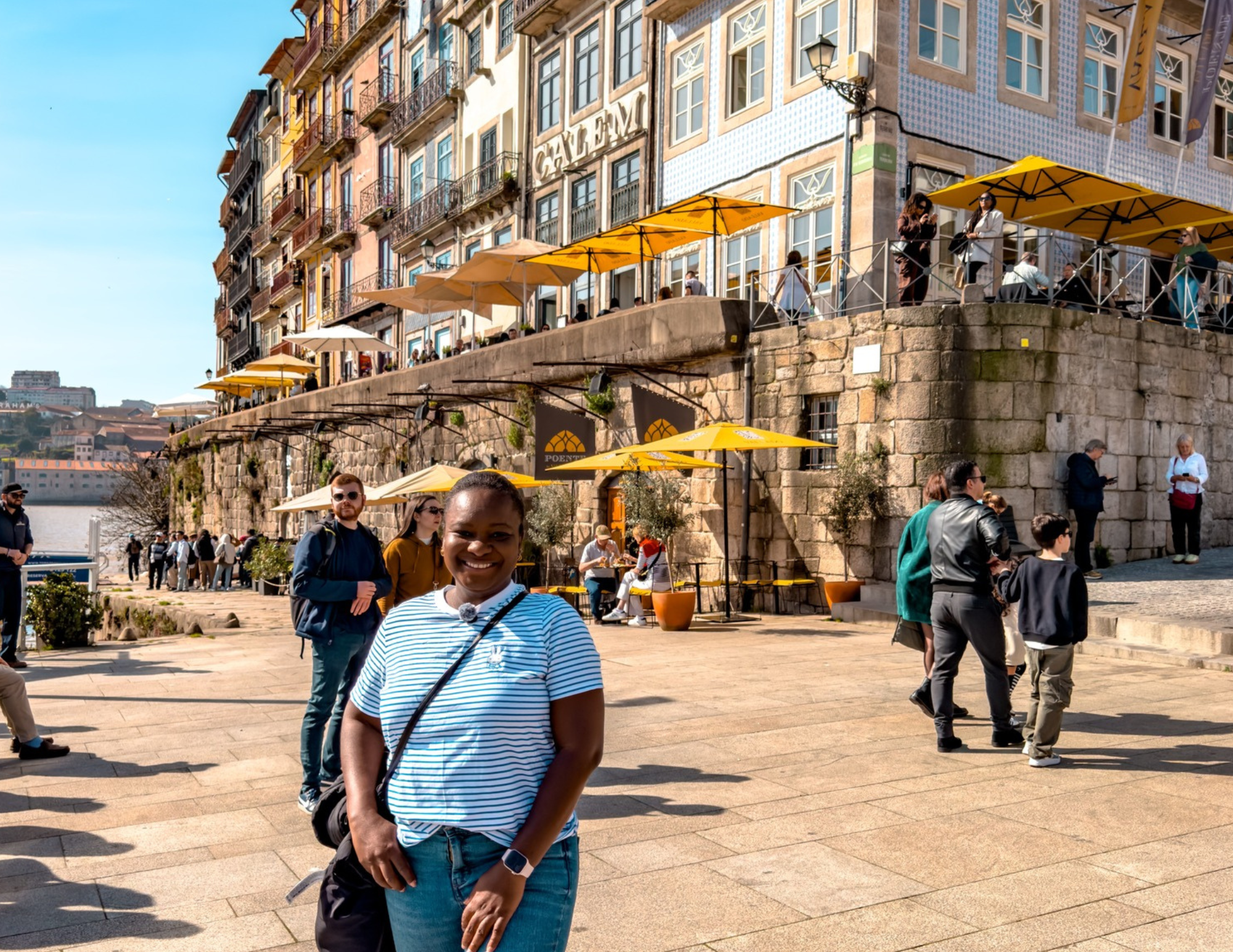
If there is one part of Porto that people picture before they arrive, it is usually Ribeira. This is the side of the city with the stacked facades, the riverfront energy, the view toward the Dom Luís I Bridge, and that instantly recognizable Porto feeling that shows up in so many photos. And yes, it really is beautiful. But what I liked most about Ribeira is that it felt better in person than in the postcard version of it. It is not just a scenic strip along the water. It feels like one of the places where Porto’s atmosphere lands most clearly.
That is also why it fits so well into a real Porto route, especially with Porto Cathedral, Rua das Flores, and the walk toward the bridge and Gaia.
If you are planning your trip,my Porto Travel Guide, 3 Days in Porto Itinerary, 4 Days in Porto Itinerary, and Dom Luís I Bridge Walk Guide will walk you through it.
.png)
Is Ribeira Worth Visiting?
Ribeira is one of the most visited parts of Porto, and sometimes that alone makes people wonder whether it is actually worth it or just one of those places everyone goes because they feel like they should.
I do not think that is the case here. Ribeira really does live up to the hype. The setting is strong enough on its own, but what makes it land is how much of Porto you can feel at once when you are there.
.png)
What Is Ribeira in Porto?
Ribeira is Porto’s historic riverfront district along the Douro.
It is one of the oldest and most emblematic parts of the city, with narrow streets, colorful buildings, restaurants and cafés along the waterfront, and one of the best views toward the bridge and the Gaia side.
What makes Ribeira stand out is that it still feels active. It does not feel like an old quarter that only exists to be photographed. Even with all the visitors, it still feels like part of the living city instead of a stage set.
.png)
Why Ribeira Stands Out
What makes Ribeira stand out is how much of Porto you can take in from one place. You have the river, the bridge, Gaia across the water, and the old city rising behind you all at once.
That is why I do not think Ribeira works best as a quick walk-through. It is one of the parts of Porto where even a short pause makes the whole area land better.
.png)
What to Do in Ribeira
The most obvious thing to do in Ribeira is simply walk it, and honestly, that is enough to justify going. The waterfront is the point. Walking along it, looking up at the facades, watching the river, and letting the bridge and Gaia stay in view is part of what makes the area work.
It is also one of the easiest parts of Porto to use as a real break in the day. You can sit for a while, have a drink, book a boat trip, or just let the atmosphere do the work.
.png)
Is Ribeira Too Touristy?
It is definitely one of the more touristy parts of Porto, but I do not think that ruins it.
That is the thing with Ribeira. Yes, it is popular. Yes, a lot of visitors end up here. But there is a reason for that. The setting is genuinely one of the best in the city. Sometimes a place is popular because it is overhyped. Sometimes it is popular because it is actually beautiful. Ribeira falls into the second category.
The key is just not expecting it to feel hidden or quiet. It is one of Porto’s biggest draws. If you go in knowing that, it is much easier to appreciate it for what it is instead of wishing it were something else.
.png)
Best Time to Visit Ribeira
Ribeira works at almost any time of day, but I especially like it later in the afternoon and into the evening.
That is when the whole area starts to glow a little differently. The bridge becomes even more dramatic, the facades catch the changing light, and the riverfront energy feels a little softer and more atmospheric. It is also a really natural time to pair Ribeira with the walk across the Dom Luís I Bridge and eventually Jardim do Morro if you want one of the best endings to a Porto day.
Earlier in the day works too, especially if you are using Ribeira as part of a route down from the cathedral area. The main thing is that Ribeira does not need to be done quickly. It is one of those parts of Porto that rewards you more when you let it breathe.
.png)
What to Pair With Ribeira
Ribeira is one of the easiest parts of Porto to pair with other major stops.
The most natural route is to start higher up in the city, spend time at Porto Cathedral, wander through Rua das Flores, and then descend into Ribeira. That progression works so well because it lets Porto unfold gradually. First you understand the city from above. Then you move through the streets. Then you arrive at the river and see everything come together.
From Ribeira, it also makes perfect sense to continue across the Dom Luís I Bridge toward Gaia. That is why these stops all work so naturally together in my 3 Days in Porto Itinerary and 4 Days in Porto Itinerary. They are not random pairings. They are part of the same rhythm.
.png)
Where to Eat in Ribeira
If you want one meal in Porto to feel especially atmospheric, Ribeira is one of the best places for it.
The setting does a lot of the work here. Eating near the river, with the bridge in view and the facades rising around you, makes even a simple stop feel more memorable. That said, I would not make every meal in Porto a Ribeira meal. Part of what makes Porto feel layered is eating in different versions of the city, not only the most scenic one.
That said, I would not make every meal in Porto a Ribeira meal. Part of what makes eating in Porto interesting is trying more than one version of the city, not only the most scenic one. My Where to Eat in Porto guide goes deeper into how I would balance that.
.png)
Should You Stay in Ribeira?
If you want the most atmospheric base in Porto, Ribeira is a very strong choice.
This is the part of the city that feels the most cinematic right outside your door. If the emotional side of a trip matters to you just as much as convenience, staying here can be really rewarding. At the same time, it is not the quietest or most practical part of the city, and the uphill walking becomes more obvious once you start leaving the river.
That is why I think Ribeira is best for travelers who want charm first and do not mind a little extra effort in exchange for it. My Where to Stay in Porto guide breaks that down more fully.
.png)
How Long Do You Need in Ribeira?
You do not need a huge block of time to see Ribeira, but I do think it deserves more than a quick pass-through.
That is really the difference. You can absolutely walk through it in a short amount of time. But if you want it to actually feel like part of your Porto experience instead of just a backdrop, it is worth sitting there for a while, taking photos, stopping for a drink, or letting it lead naturally into the bridge walk.
That is usually how the area works best.
.png)
Practical Tips for Visiting Ribeira
The biggest tip I would give is not to treat Ribeira like a checklist stop.
Yes, go for the views. Yes, take the photos. But give yourself enough time to actually be there too. Ribeira is one of the parts of Porto that helps the city feel most alive, and that comes through more when you slow down.
It is also a good place to think ahead about what comes next. You can use Ribeira as a stopping point, a meal stop, a boat-trip area, or the lead-in to crossing the bridge. It works well in all of those ways, which is part of what makes it so useful in a Porto itinerary.
Final Thoughts on Visiting Ribeira in Porto
Yes, Ribeira is worth visiting.
Not just because it is famous. Not just because it is photogenic. It is worth visiting because it is one of the clearest places where Porto feels like Porto. The river, the facades, the slope of the city, the bridge, and the movement all come together in a way that makes the whole city feel more connected.
That is what stayed with me most. Ribeira did not just look good. It made Porto make more sense.
If you are planning the rest of your Porto trip, read my Porto Travel Guide, 3 Days in Porto Itinerary, 4 Days in Porto Itinerary, Dom Luís I Bridge Walk Guide, and Where to Eat in Porto next.

Cavetta is the creator of LifeWithVetta.com and has been traveling the world full time since 2020. She has visited more than 60 countries while worldschooling her son and documenting what it really takes to live abroad. Her guides focus on travel, moving abroad, digital nomad life, and designing a life beyond the traditional path.
