
.png)
After exploring the palaces high up in the hills, we slowly made our way back down toward the town center to grab lunch.
By that point we were definitely feeling the miles of walking and the steep climbs that come with visiting Sintra. Between the Moorish Castle and Pena Palace alone, there is a surprising amount of uphill walking, and by the time we reached the center of town, a break and a proper meal were very welcome. That is one of the things I think people underestimate about Sintra. People focus so much on the castles and palaces that they forget the historic center is part of the experience too. After spending the first half of the day climbing hills and moving between major landmarks, the town center felt like the part of the day where everything finally slowed down.
That is part of what makes Sintra’s historic center worth slowing down for.
Most people arrive, rush straight toward Pena Palace, the Moorish Castle, or Quinta da Regaleira, then treat the center like nothing more than the place where the train station happens to be. But once you are actually there, wandering through the streets, looking up at Sintra National Palace, stopping for lunch, and discovering little things you never planned for, you realize the center is not just a pass-through. It gives the day balance. It still feels layered with history rather than built purely for tourism.
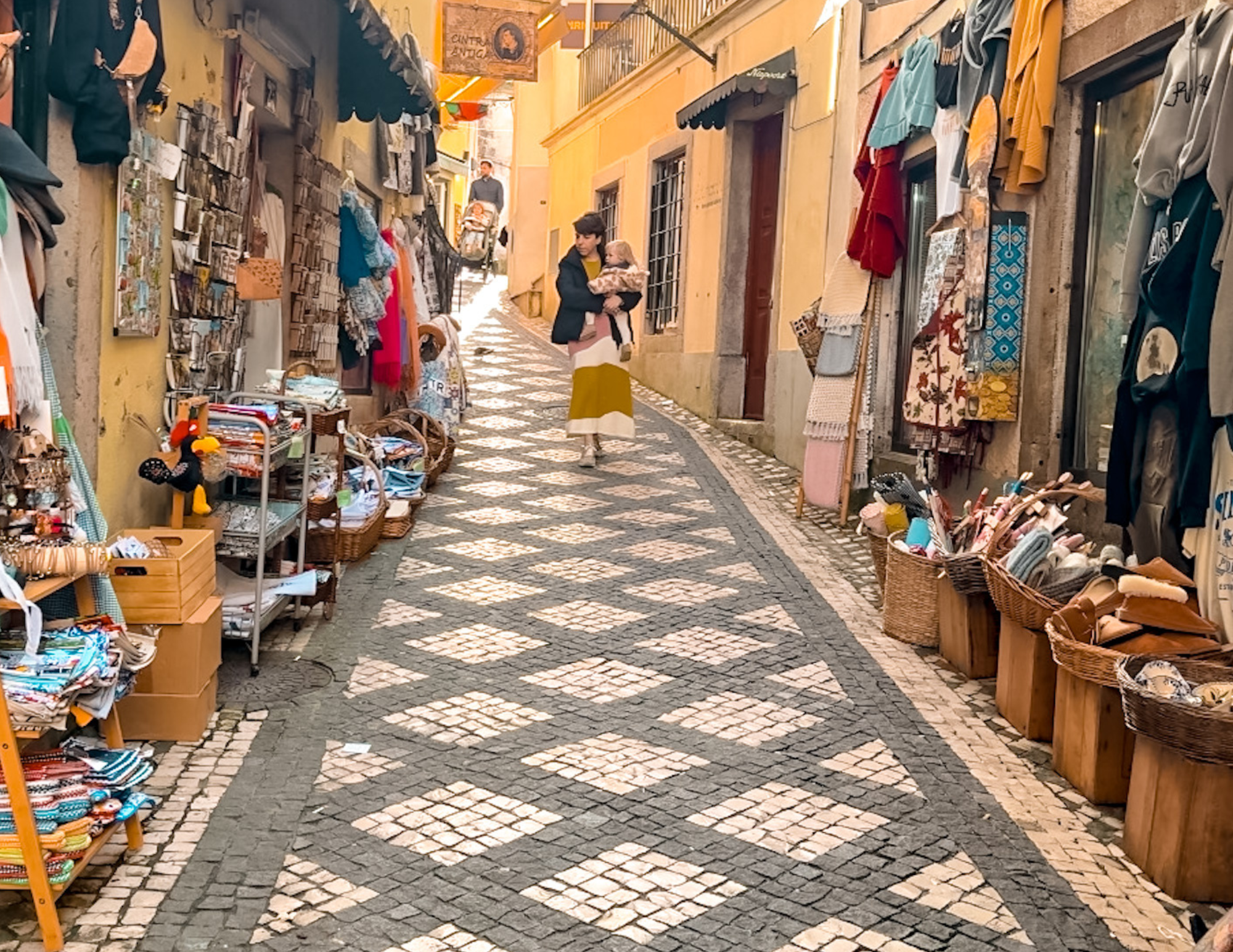
What Sintra’s Historic Center Feels Like
Sintra’s historic center does not feel polished in the way some other European old towns do.
It feels older, tighter, more tucked into itself. The streets curve instead of stretching out neatly. Buildings press close together. Small shops and cafés seem to appear almost suddenly between stairways and stone walls. And because the town sits in the hills, even the flatter parts still feel shaped by the landscape around them.
There is also a different kind of rhythm here compared with Lisbon.
Lisbon feels brighter, busier, and more open. Sintra’s center feels cooler, greener, and quieter in a way that makes sense once you remember how long it served as a retreat from the city. Even now, once you come back down from the mountaintop attractions and start walking through the village, that slower energy is still there. It feels like a place that was meant to be wandered, not rushed.
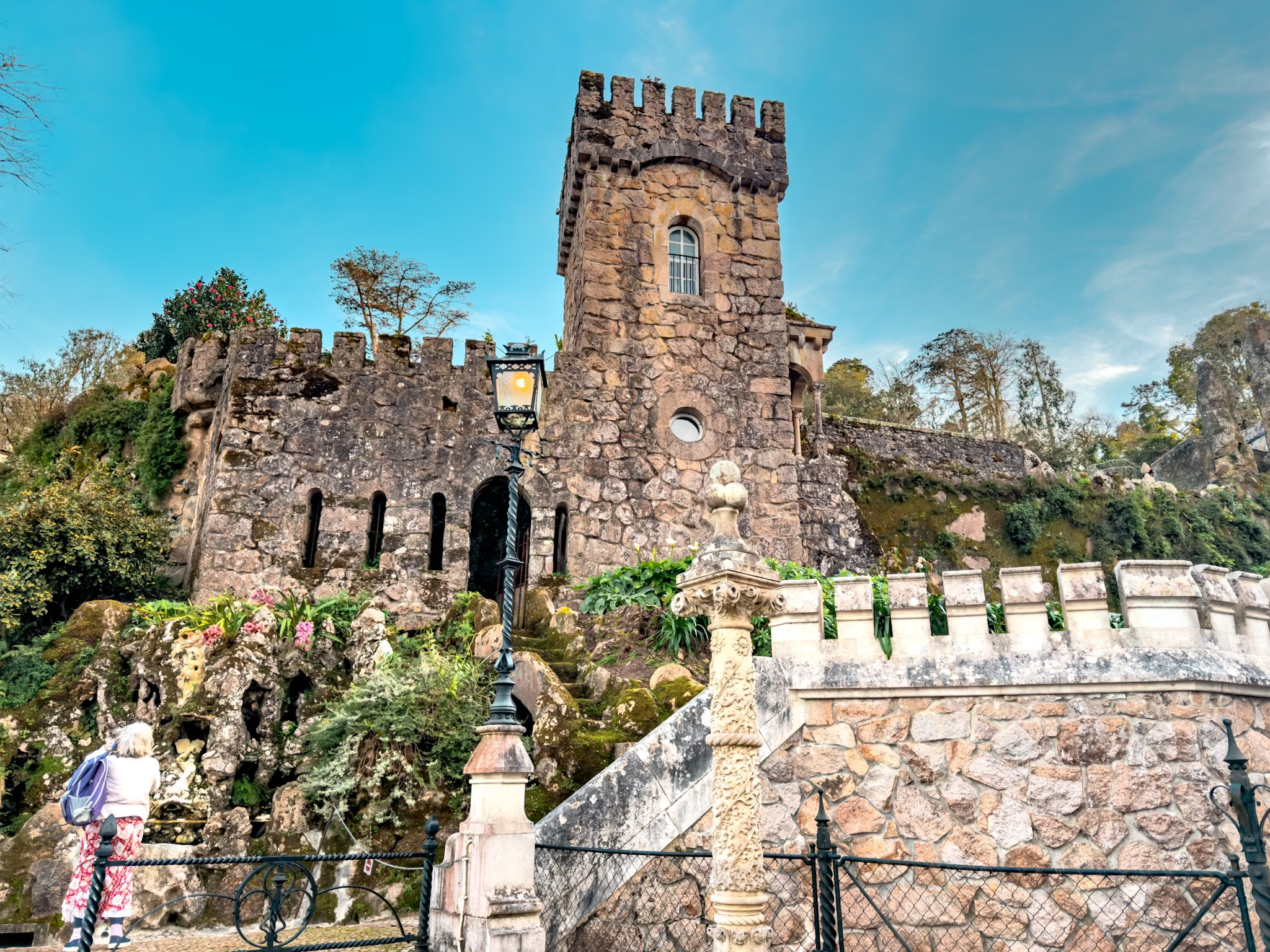
Best Things to See in Sintra’s Historic Center
One of the things I like most about the center is that not everything here needs to be approached like a major attraction.
Some of it is just about walking.
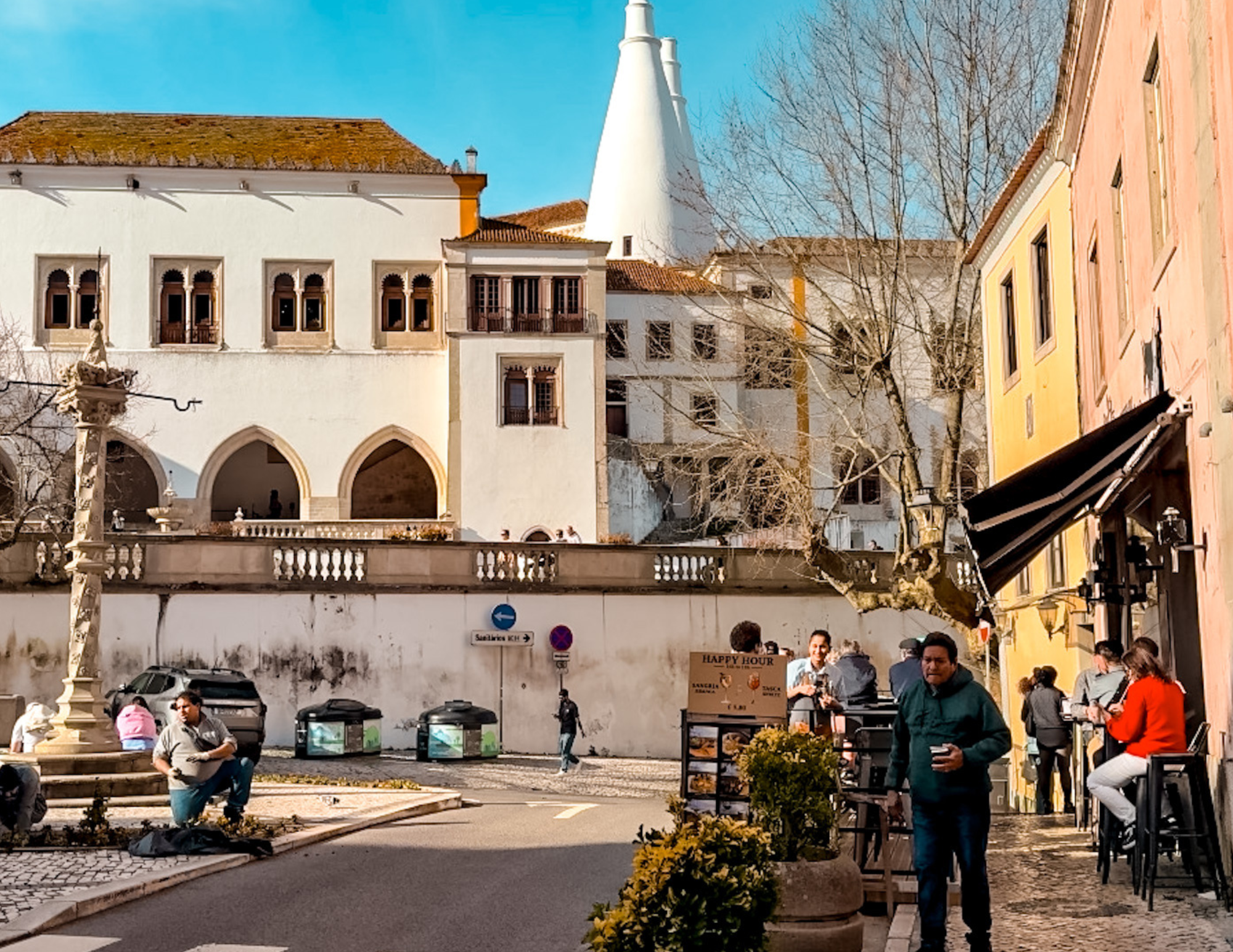
You look up and notice the two giant conical chimneys of Sintra National Palace defining the silhouette of the village. You pass through narrow streets lined with shops and cafés. You find little corners that feel like they were made for pausing rather than powering through. That is what makes this part of Sintra different from the bigger monument stops. It is less about entry tickets and more about letting the place unfold.
Still, there are some things worth paying attention to while you wander.
The biggest landmark in the center is the National Palace of Sintra, which sits right in the village and has more than 1,000 years of history behind it. It is one of the oldest palaces in Portugal, and because it is located right in the historic center, it is also one of the easiest Sintra sites to add into your day if your energy is running low or you do not want another major climb. Even if you do not go inside, it is hard to miss. Those chimneys are one of the most recognizable features in town, and seeing them rise above the rooftops makes the whole center feel even more tied to Sintra’s royal history.
Beyond that, what you are really seeing is the village itself.
The stone lanes, staircases, shopfronts, small plazas, and the in-between spaces are the point. This is why I think people who only treat Sintra as a list of monuments miss something. The center gives context to everything else. It is where the day softens. It is where the scale feels human again after the dramatic views and long walks on the mountain.
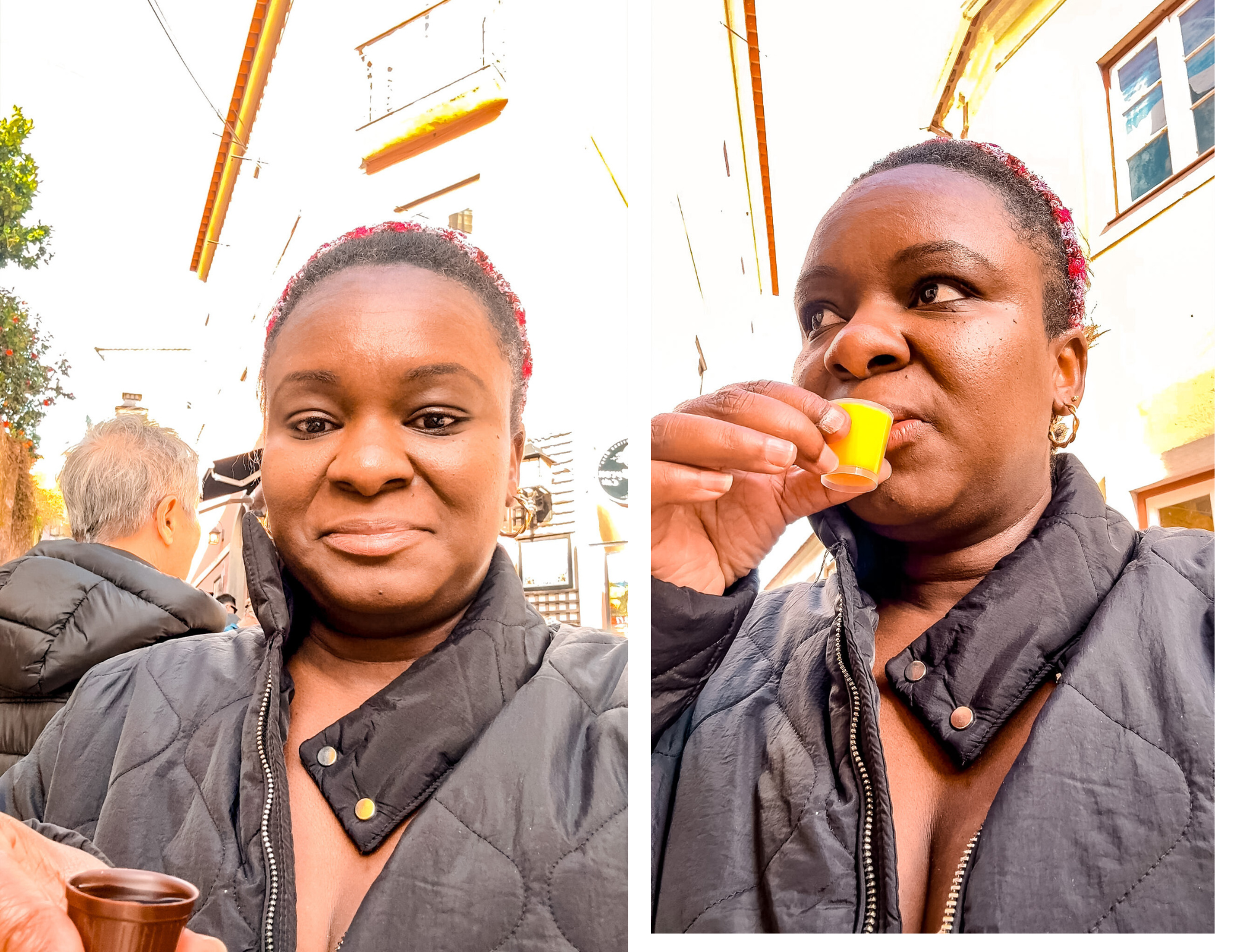
The Ginjinha Stop I Was Not Expecting
Before we even sat down for lunch, something caught my eye.
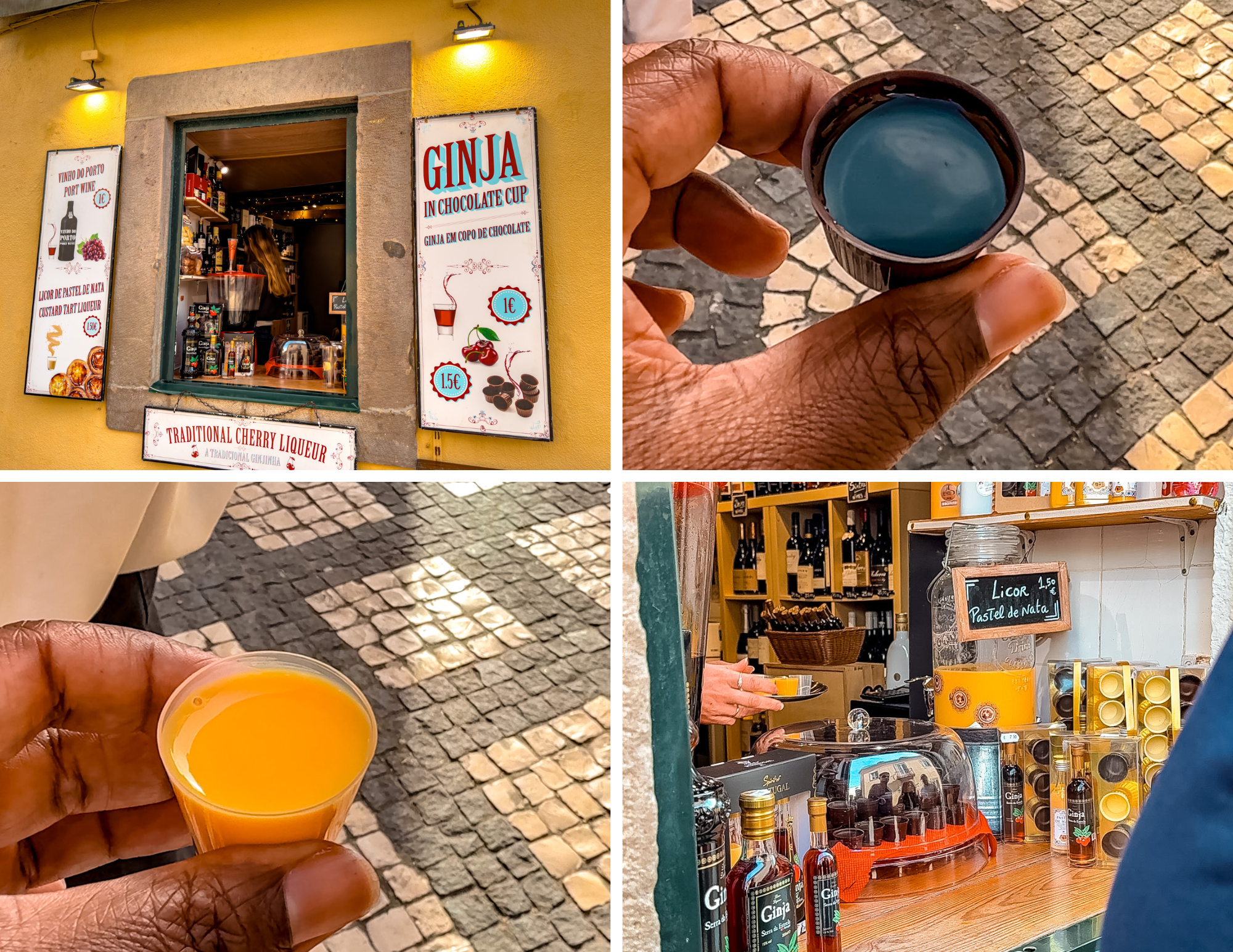
Along one of the small streets in the historic center was a tiny shop serving ginjinha in chocolate cups.
If you have spent any time in Lisbon, you have probably already heard of ginjinha, the traditional Portuguese cherry liqueur that locals often drink as a quick shot. I had already tried it earlier in Lisbon, so I knew what to expect from the drink itself. But seeing it served in a chocolate cup was something completely different.
Of course I had to try it.
And honestly, it was exactly the kind of small, unexpected stop that makes a place stick with you. The ginjinha itself was sweet with that slightly tart cherry flavor, but the chocolate cup made it even better. Once you finished the drink, you just ate the cup. Simple, touristy in the best way, and still fun.
They were also serving pastel de nata flavored liqueur, which I absolutely had to try too. If you have been following our travels, you already know pastel de nata became one of my favorite Portuguese treats, so there was really no chance I was walking away from that without tasting it. At around €1 to €1.50 per tasting, it was one of those tiny travel moments that cost almost nothing but stays with you anyway.
That stop alone made the center feel more memorable.
Not because it was some major attraction.
But because it was one of those unplanned moments you stumble into while walking around and end up talking about later.
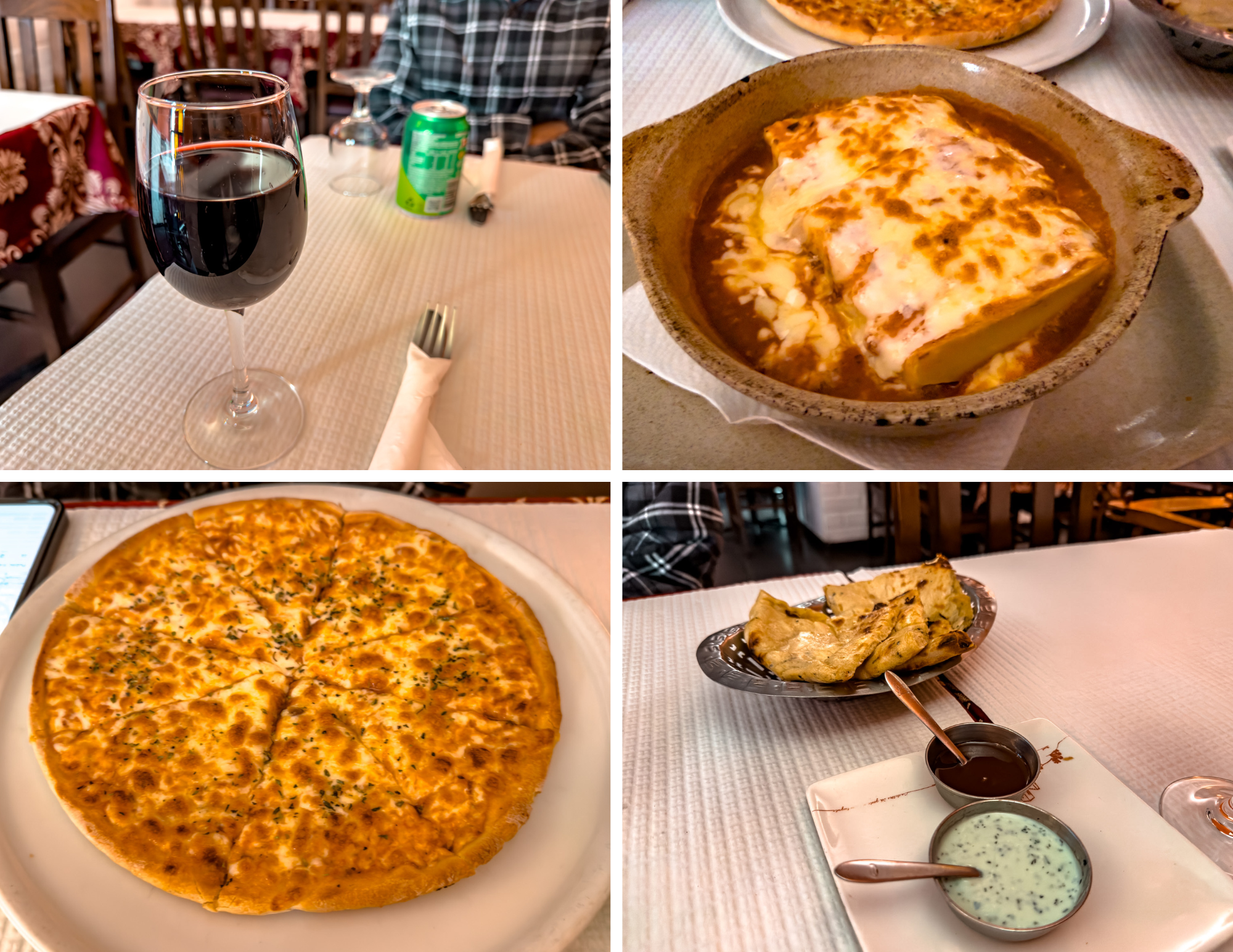
Finding Food in the Historic Center
After that, we kept wandering through the historic center looking for somewhere to eat.
Because we were visiting in the off-season, a lot of restaurants were either closed for the day or operating on more limited hours. That is something worth keeping in mind if you go outside the busiest months. A place that looks lively online may feel much quieter in person depending on the season and time of day.
Eventually we found a small Indian restaurant in the center and decided to stop there for lunch.
It was not somewhere we had researched ahead of time. It was not famous, not a “must eat” place, not anything I would tell someone to cross town for. It was just what we came across while walking, and after several hours of climbing hills and moving between castles, it felt exactly right.
The restaurant itself was simple and unassuming, the kind of place you might walk right past under normal circumstances. But that is part of what made it work. The food was decent, not spectacular, but warm and filling, and at that point that was all we needed. More than anything, it gave us a place to sit down, reset, and catch our breath before continuing the day.
And honestly, sometimes that is exactly what travel looks like.
Not every meal becomes a highlight. Not every stop needs to be researched to death. Sometimes you simply follow your feet, step into a place that looks welcoming, and enjoy the fact that you made it there at all.
Sintra is also known for its traditional pastries, especially travesseiros and queijadas, and if you have even a little room left after lunch, they are worth trying while you’re in town. These are the kinds of small food stops that make wandering the historic center feel like more than just a break between monuments. If food is a big part of how you experience a place, my Lisbon Food Guide is a good starting point for the kinds of local flavors that made this whole part of Portugal so memorable for me
What to Eat in Sintra’s Historic Center
Even if you are not planning a full meal, the historic center is the best place in Sintra to slow down and eat something. This is where most of the cafés, pastry shops, and more casual restaurant options are concentrated, and it is also where you are more likely to stumble into the small food moments that make a place memorable.
Sintra is especially known for travesseiros and queijadas, so if you are wandering through the center, it makes sense to leave room for something small even if you already had lunch.
.png)
Is It Worth Staying Overnight in Sintra?
I think this is one of the smartest questions to ask before planning your trip.
Sintra is one of the most popular day trips from Lisbon, and that is exactly how most people experience it. That works. It is close enough, easy enough, and if your schedule is tight, a day trip absolutely makes sense.
But there is also a strong case for staying overnight.
A day trip to Sintra can feel rushed, especially if you are trying to fit in multiple major sites. The hills take more energy than people expect, the movement between attractions takes time, and once you add crowds into the mix, the day can start to feel compressed. Staying overnight gives you something a day trip usually does not: breathing room.
It lets you see the center when it is not packed with day-trippers. It gives you time for a slower dinner, an easier morning, or the chance to break up your sightseeing over two days instead of cramming everything into one. If you already know you want to do more than just the highlights, staying overnight can make Sintra feel much more enjoyable.
The historic center is the best area to stay if you want atmosphere, restaurants, and easy access to the village itself. Staying near the train station can make arrival and departure easier, especially if you are traveling with luggage or only staying one night. And areas closer to Regaleira or Seteais can be quieter and more scenic, though they are less convenient without transport.
So should you stay overnight?
If you only want the highlights and are comfortable with a fuller day, a day trip is enough.
But if you want Sintra to feel less rushed, more atmospheric, and more like a place you actually experienced instead of just checked off, then yes, staying overnight is worth considering.
What Not to Do in the Historic Center
The biggest mistake here is treating the center like dead space between attractions.
It is not.
If you rush straight through it, grab the first thing you see, and head back uphill without paying attention, you miss a huge part of what makes Sintra feel like Sintra.
Another mistake is assuming everything will be open exactly when you want it to be, especially in the off-season. We definitely noticed that some places were quieter than expected or closed altogether, and that can affect how easily you find lunch or a snack if you have not thought ahead at all.
And maybe the biggest mistake is planning your Sintra day so tightly that you leave no room for wandering. The historic center works best when you let it breathe a little.
.png)
How the Historic Center Fits Into Your Sintra Day
This is the part of the day where everything softens.
After the bigger monuments, the historic center gives you a place to come down from the hills, literally and mentally. It is where you eat, slow down, reset, and let the day feel like more than just a sequence of ticketed attractions.
That is exactly why it fits so naturally into a full Sintra Day Trip from Lisbon, and why I would not skip it even if you are mostly coming for Pena Palace or the Moorish Castle. When I think about how Sintra actually felt, not just what we saw, this part matters. My 1 Day Sintra Itinerary and Best Things to Do in Sintra both make more sense when you remember the center is not separate from the experience. It helps hold the whole day together.
.png)
Final Thoughts
Wandering Sintra’s historic center ended up being one of those parts of the day that could have been easy to overlook, but ended up mattering more than I expected.
It gave us a chance to slow down, eat, regroup, and take a break from the steep climbs. It also gave me one of those fun, unexpected little travel moments with ginjinha in a chocolate cup and pastel de nata liqueur. And it reminded me that not every memorable part of a trip has to be a major landmark.
Sometimes the thing you remember is the way a place felt when you finally stopped rushing through it.
Sintra’s historic center is that kind of place.

Cavetta is the creator of LifeWithVetta.com and has been traveling the world full time since 2020. She has visited more than 60 countries while worldschooling her son and documenting what it really takes to live abroad. Her guides focus on travel, moving abroad, digital nomad life, and designing a life beyond the traditional path.
