
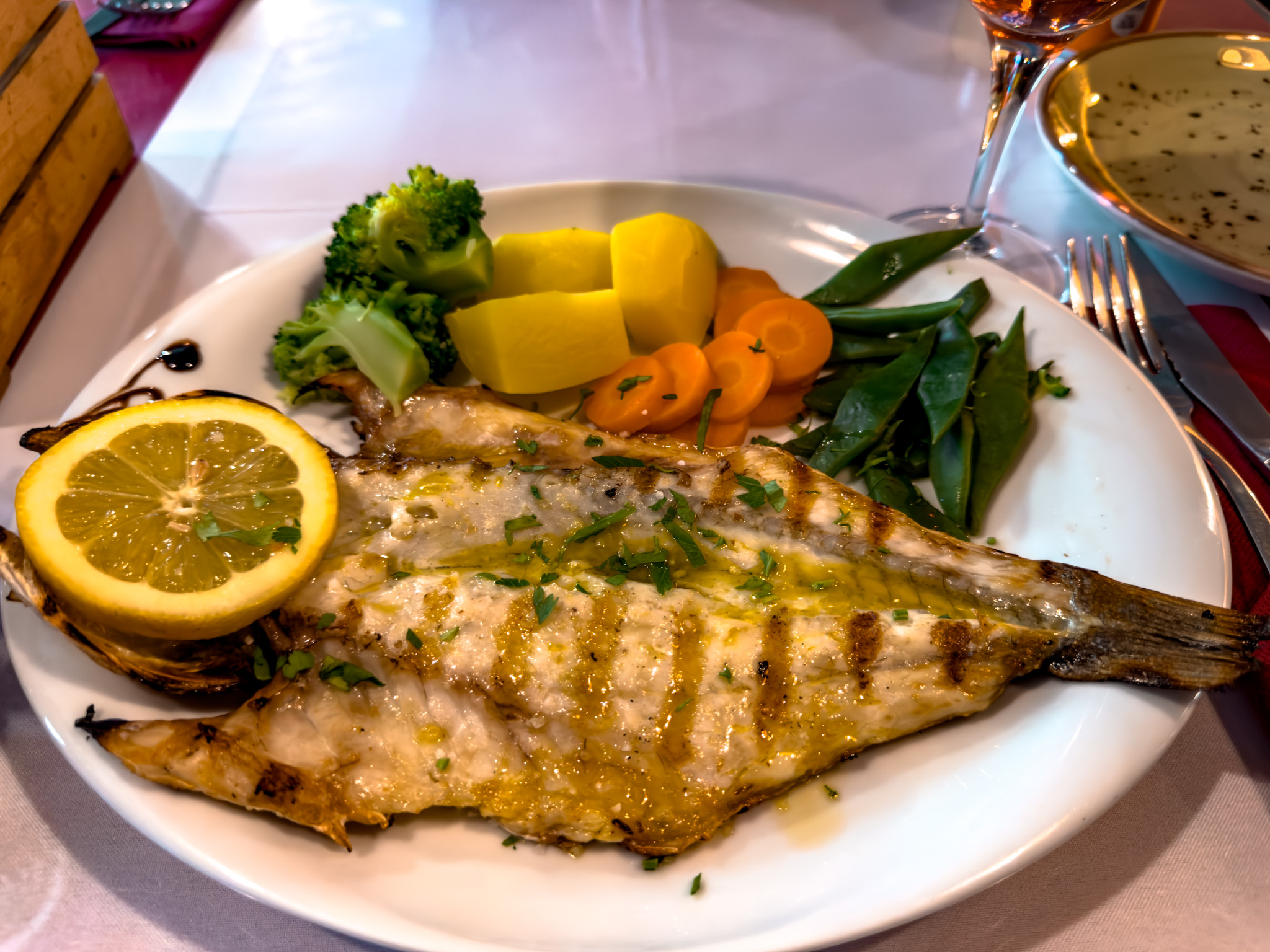
One of the best parts of visiting Lisbon is the food.
From small bakeries selling warm pastries to neighborhood restaurants serving traditional Portuguese dishes, Lisbon offers an incredible mix of flavors. Walking through the city you will constantly pass cafes, bakeries, and local restaurants that make it almost impossible not to stop and try something.
During our time exploring Lisbon we found that food often became part of the experience of wandering through different neighborhoods. A quick pastry break turned into discovering a favorite bakery. A walk through the city led us to try local drinks we had never tasted before.
Lisbon’s food scene is both traditional and relaxed. Many of the most memorable meals happen in simple cafes or small restaurants rather than fancy dining rooms.
If you are planning your trip using my Lisbon Travel Guide, these are some of the foods you should make time to try while exploring the city.
If you are short on time, you can follow this alongside my 3 Day Lisbon Itinerary, which maps out the city’s highlights in a way that flows naturally without feeling rushed. If you have more time to explore, my 5 Day Lisbon Itinerary expands on this with additional neighborhoods, museums, and a day trip to Sintra.
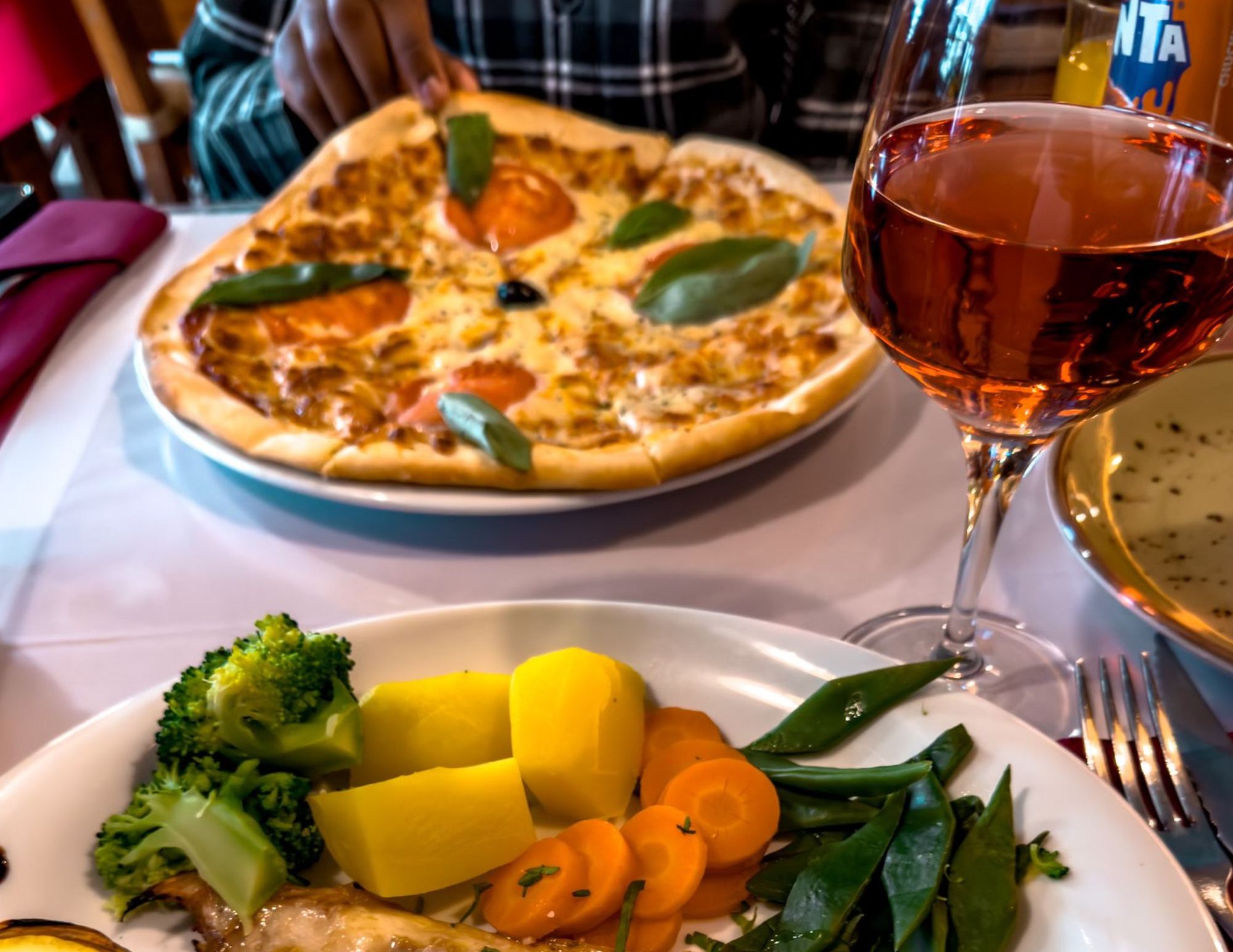
What a Typical Food Day in Lisbon Looks Like
Morning starts slow in Lisbon.
Most people grab a coffee and a pastry, often a pastel de nata, at a small café. It is quick, simple, and part of the rhythm of the city.
Lunch is usually lighter or more relaxed, depending on where you are. You might sit down for a proper meal or grab something casual while exploring.
Dinner happens later than many visitors expect. Restaurants often close after lunch around 3pm and reopen around 7 or 8 PM. Evenings are slower, more social, and often stretch longer than planned.
We found ourselves naturally adjusting to this pace without even trying.
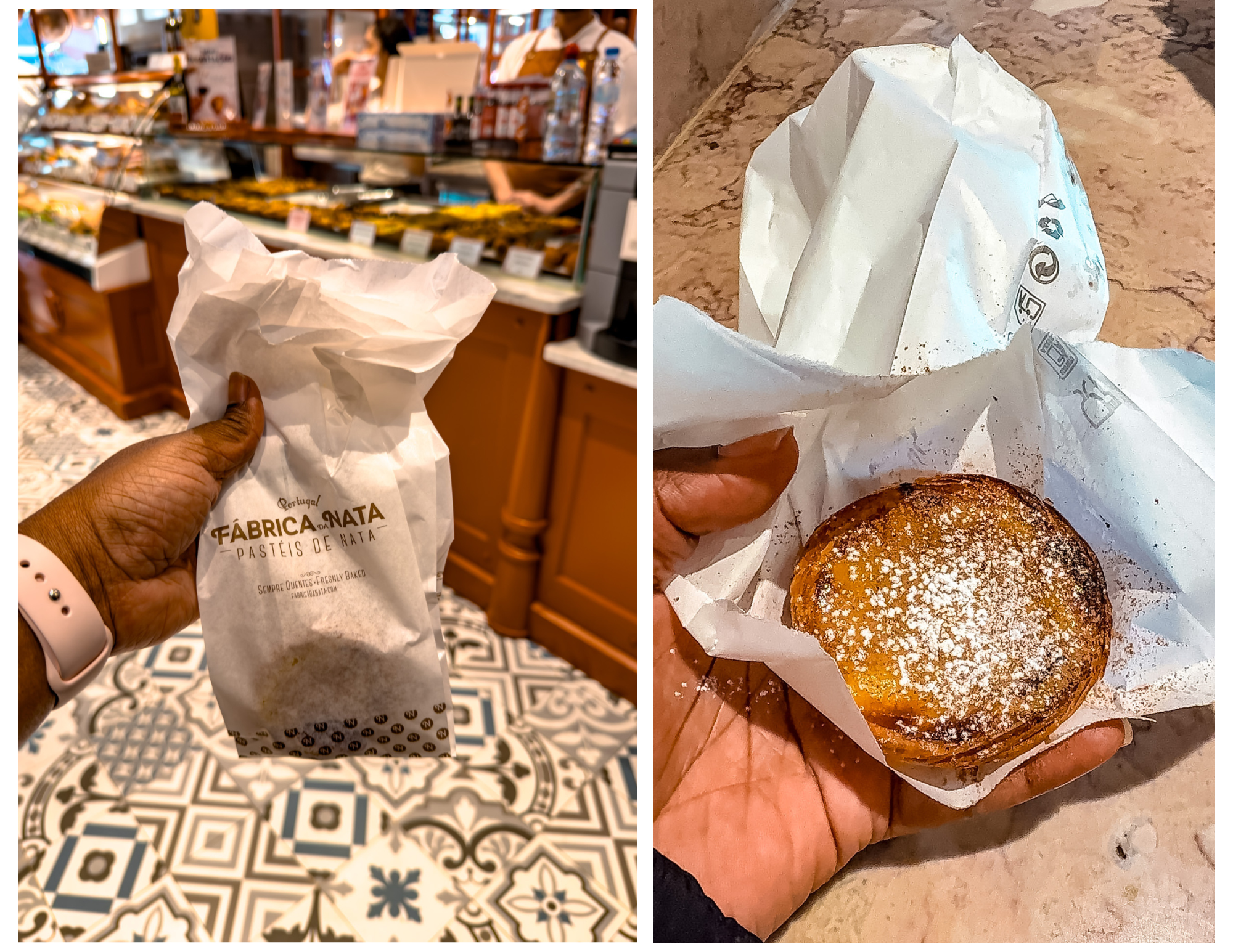
Pastel de Nata
The most famous food in Lisbon is without question the pastel de nata.
Pastel de nata is one of those things you will end up eating more than once without even planning to. The first time we had it, it was fresh out of the oven, flaky, slightly caramelized on top, and still warm in the center. It is rich but not heavy, sweet but balanced, and honestly one of those things that becomes part of your daily routine in Lisbon. You will see locals having one with coffee in the morning, after lunch, and even as an afternoon break.
This small Portuguese custard tart has a flaky pastry shell and a creamy custard filling that is lightly caramelized on top. Many bakeries serve them warm, often sprinkled with cinnamon or powdered sugar.
You will see pastel de nata everywhere in Lisbon, but some bakeries are known for doing them exceptionally well.
One of the most famous places to try them is Pastéis de Belém, which has been baking the pastry using a secret recipe since the 1800s.
You can read more about the best places to try this iconic pastry in my guide to the Best Pastel de Nata in Lisbon.
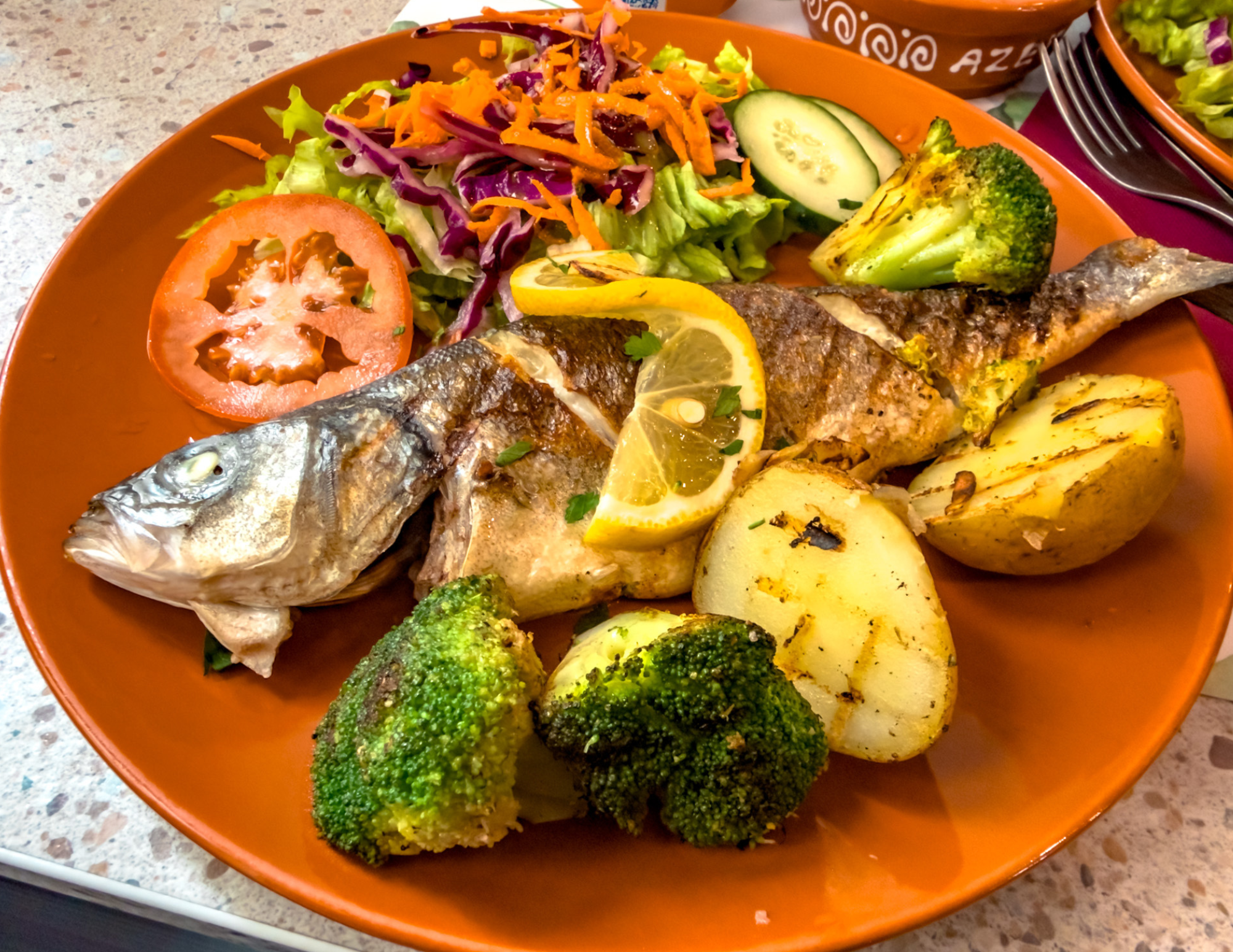
Fresh Seafood
Portugal has a deep connection to the sea, and seafood plays a huge role in traditional Portuguese cuisine.
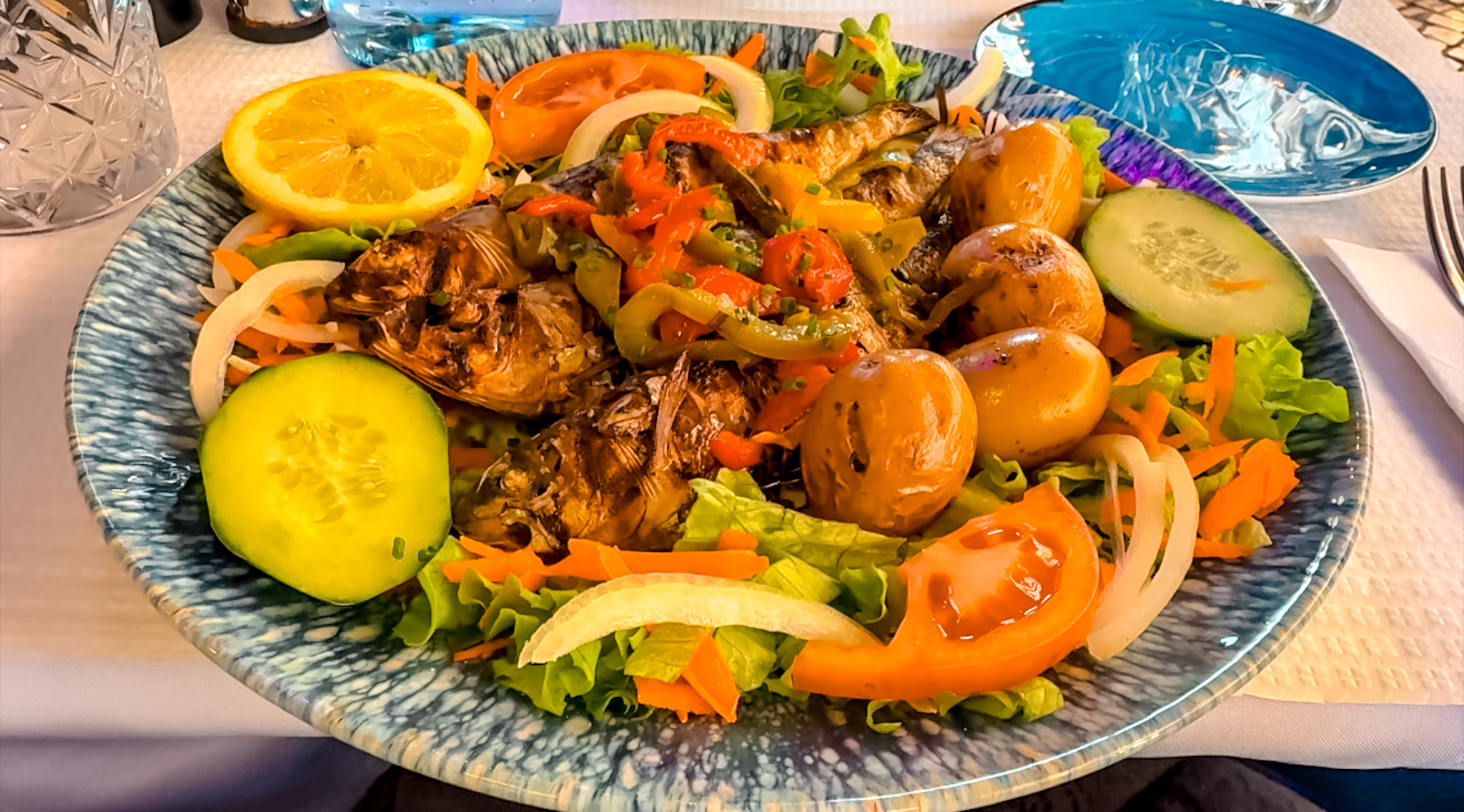
Lisbon restaurants serve everything from grilled fish to seafood rice dishes filled with shrimp, clams, and other fresh ingredients.
Cod, known locally as bacalhau, is one of the most famous ingredients in Portuguese cooking. It is said that Portugal has hundreds of ways to prepare bacalhau, and many restaurants feature it on their menus.
If you are walking through the historic neighborhoods near the Tagus River, especially around Praça do Comércio, you will find many restaurants specializing in seafood.
Exploring the riverfront is also part of my Walking Along the Tagus River and Through Alfama guide, which includes several areas where you can stop for food while enjoying views of the river.
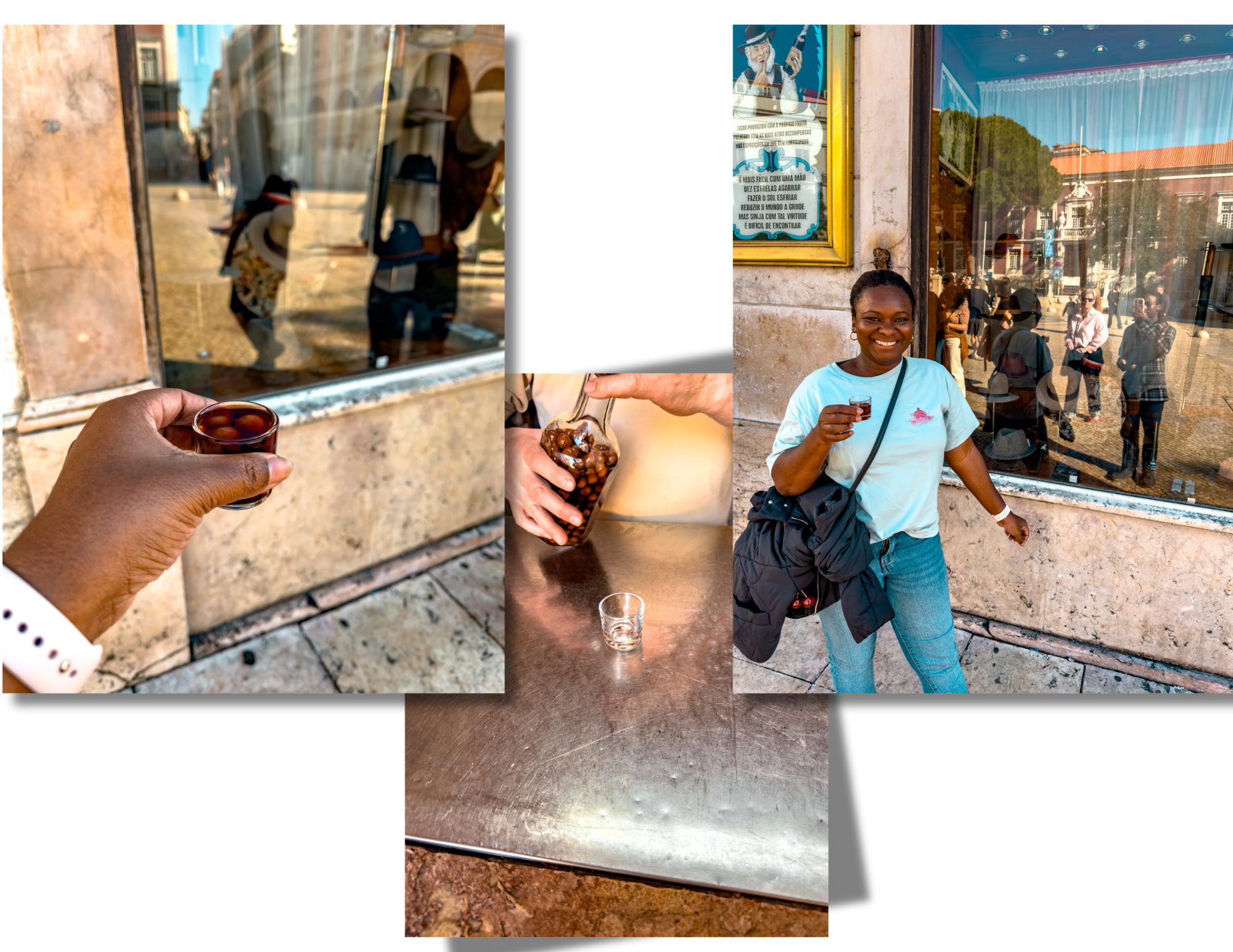
Ginjinha
One of the most traditional drinks in Lisbon is Ginjinha.
This sweet cherry liqueur is usually served in a small shot glass and sometimes includes a piece of the fruit itself at the bottom.
Trying ginginha is less about the drink itself and more about the experience. Many locals enjoy it as a quick stop while standing outside a small bar and chatting with friends.
One of the most famous places to try it is A Ginjinha, located near Rossio Square.
I talk more about the history and experience in my guide to Must Try Ginjinha in Lisbon.
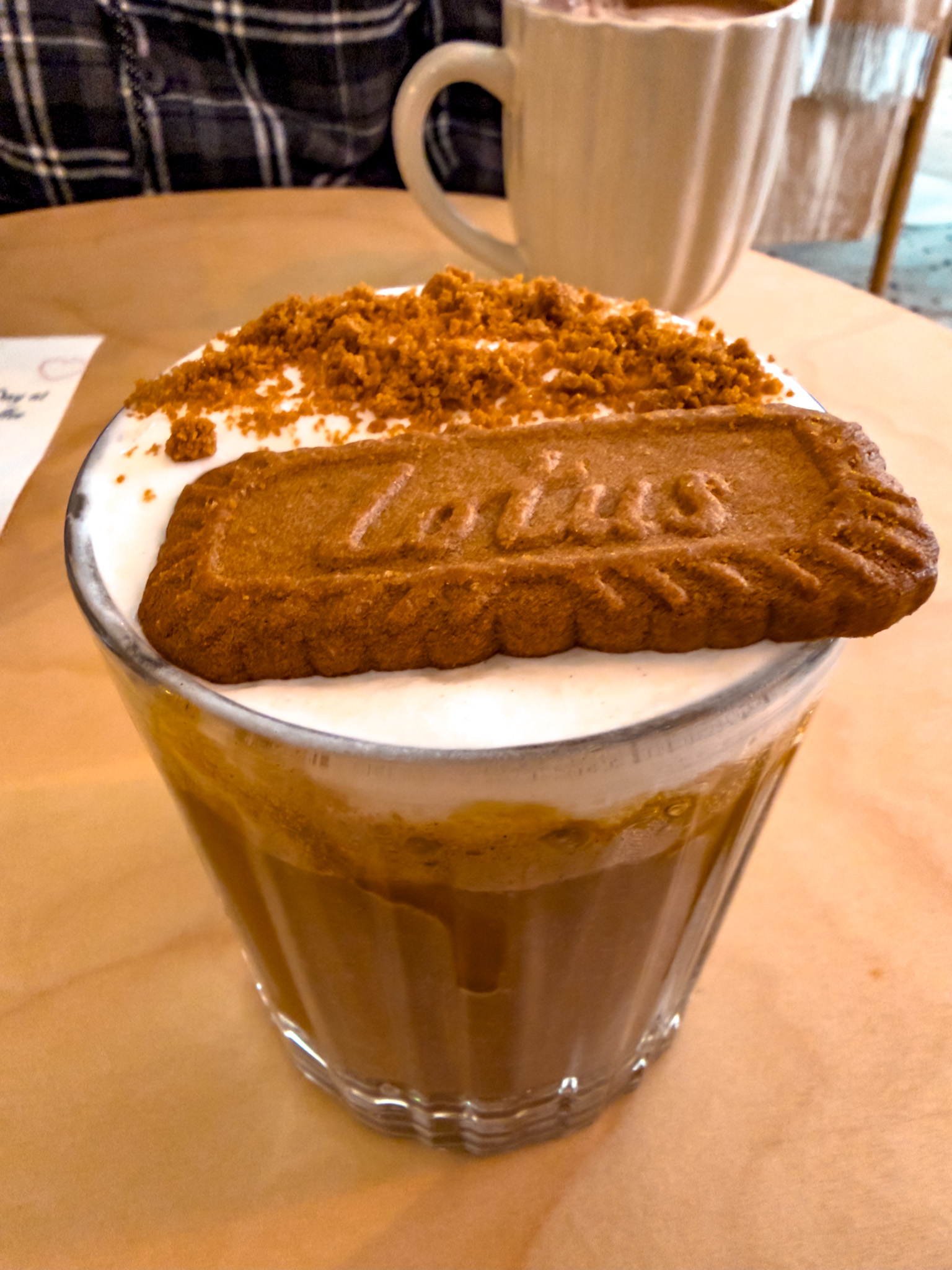
Portuguese Coffee Culture
Coffee is an everyday part of life in Lisbon.
Locals often stop at small cafes for a quick espresso, known as a bica, throughout the day. These stops are usually quick and casual rather than long coffee shop visits.
Lisbon also has a growing cafe scene that blends traditional coffee culture with modern brunch spots and specialty cafes.
Lisbon also has an incredible café culture, with small bakeries and coffee shops around nearly every corner. If you want to find some of the best spots, I share more in my Best Cafes in Lisbon guide
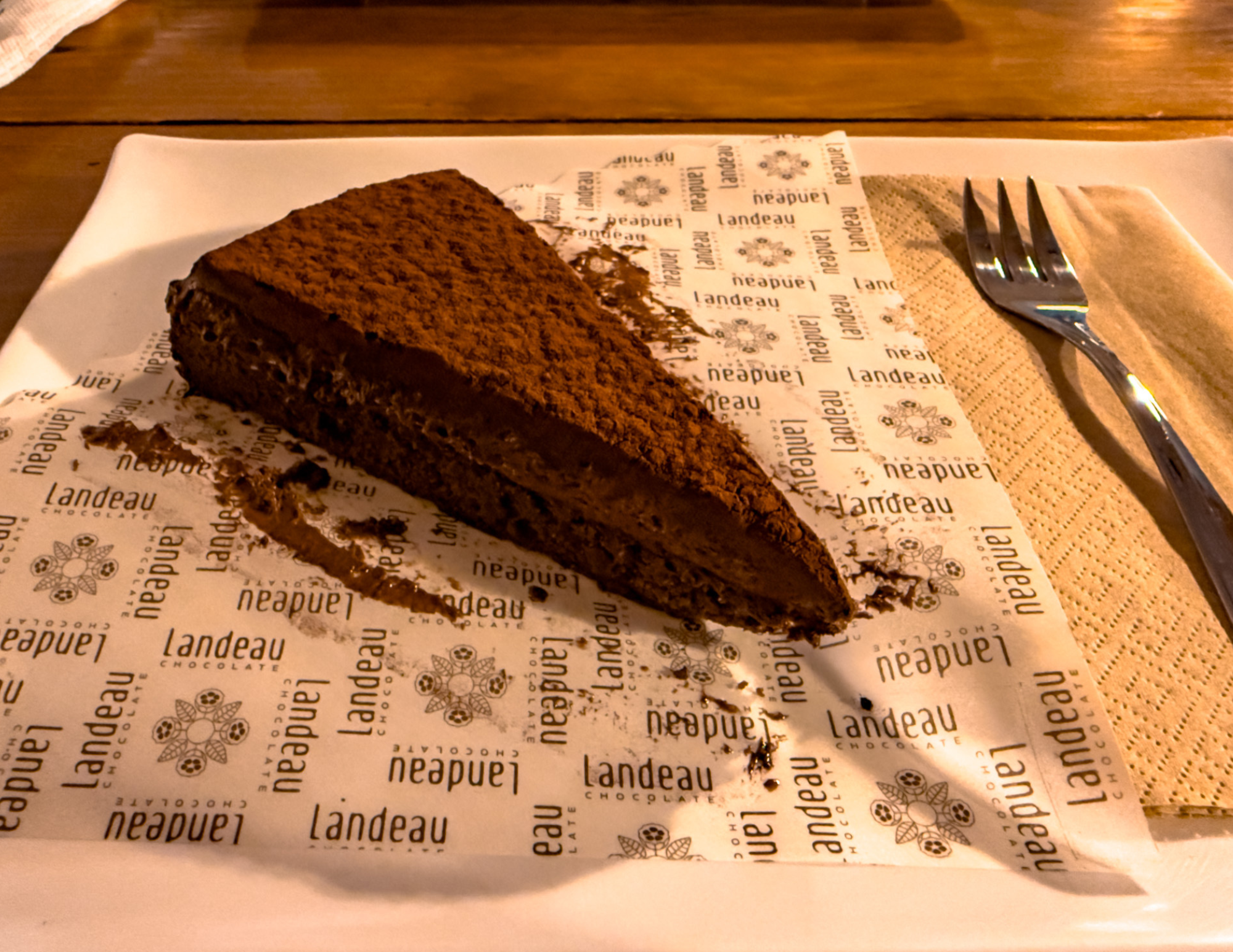
Chocolate Cake at Landeau
One of the most talked about desserts in Lisbon is the chocolate cake at Landeau Chocolate.
This cake has developed a reputation as one of the best desserts in the city. It is rich, smooth, and intensely chocolatey while still being light enough that you will want another bite.
One of the most popular locations is inside LX Factory, the converted industrial complex filled with restaurants, cafes, and creative shops.
Trying the chocolate cake there after wandering around the old factory buildings is one of those small Lisbon experiences that ends up being surprisingly memorable.
I talk more about the cake itself in my article on The Best Chocolate Cake in Lisbon.
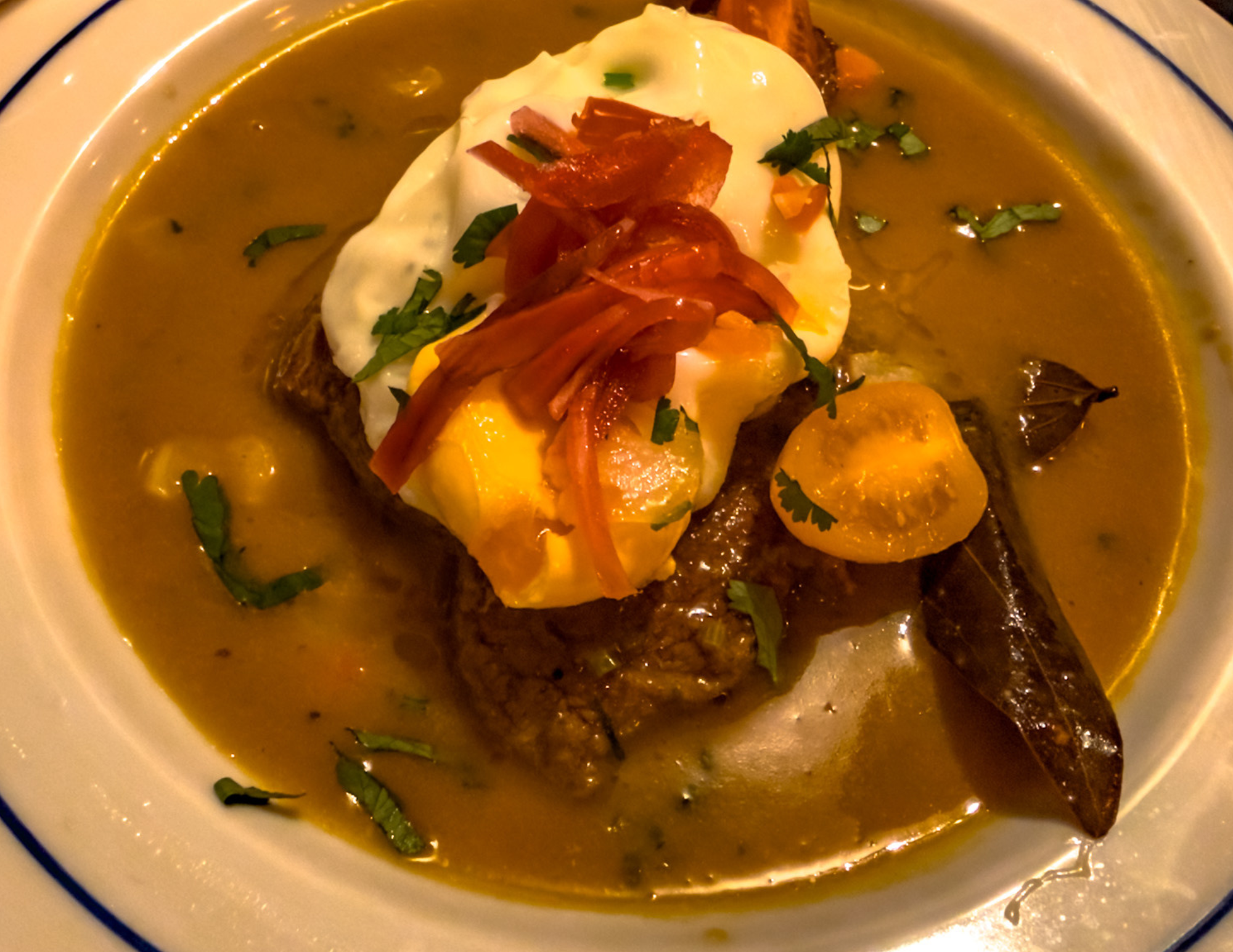
Traditional Portuguese Meals
Beyond pastries and desserts, Lisbon also offers many traditional Portuguese meals that are worth trying.
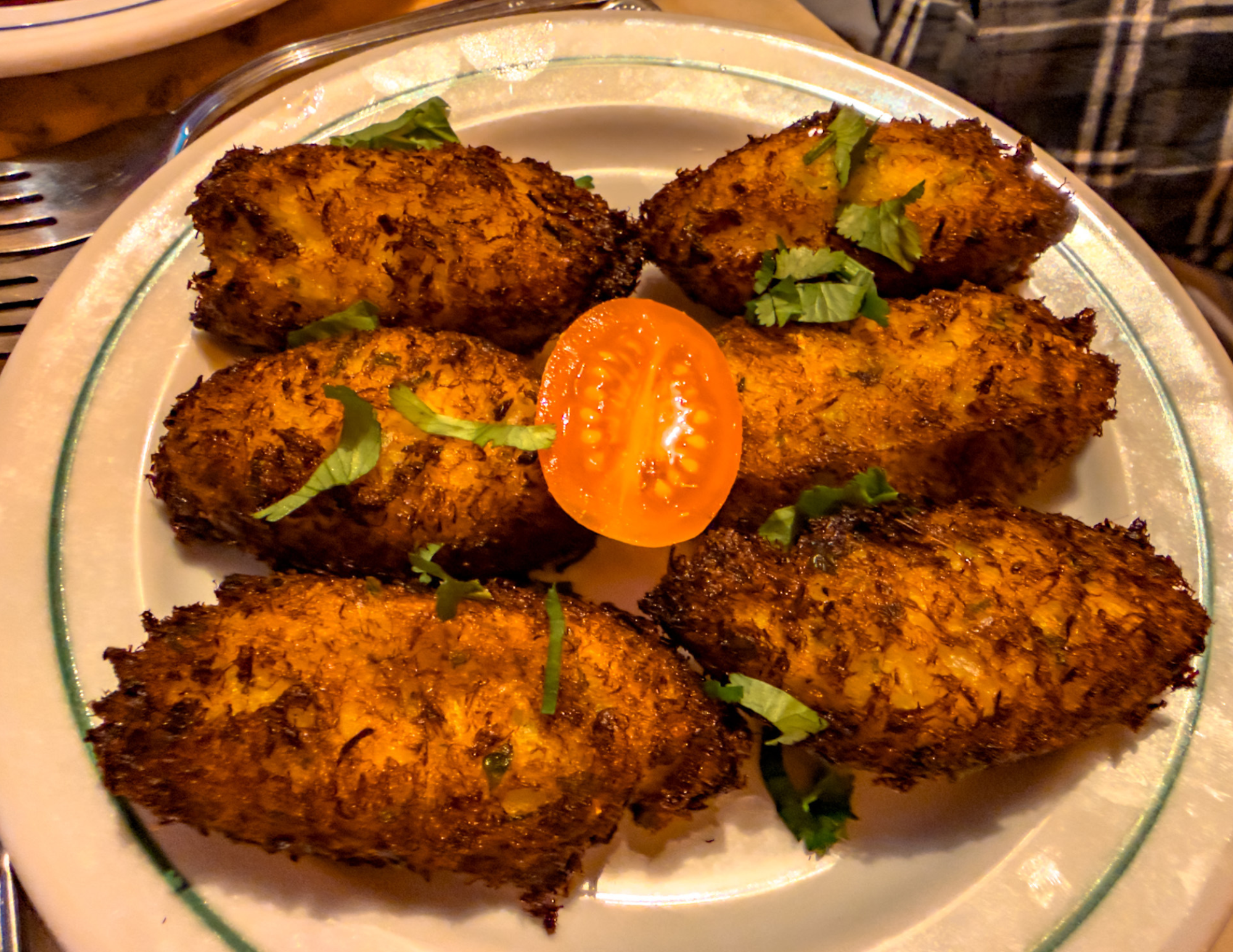
Common dishes include grilled sardines, seafood rice, and hearty stews that reflect Portugal’s coastal traditions.
Many small restaurants across the city serve simple but delicious versions of these dishes. Often the best meals are found in neighborhood spots rather than tourist focused restaurants.
Exploring neighborhoods like Alfama or areas around Castelo de São Jorge often leads to small restaurants serving traditional Portuguese food in a relaxed atmosphere.
Where you stay can also shape your food experience in Lisbon, since different neighborhoods offer completely different restaurant scenes. If you are still deciding, my Where to Stay in Lisbon guide breaks down the best areas depending on your travel style.
Planning Your Lisbon Food Experiences
One of the easiest ways to experience Lisbon’s food scene is simply by exploring different neighborhoods.
A morning might start with a pastel de nata and coffee, followed by a walk through historic streets, a seafood lunch near the river, and a stop for ginginha in the evening.
Food experiences also fit naturally into other parts of the city. For example, you might grab a pastry before heading to the Santa Justa Lift, enjoy lunch after visiting Carmo Convent, or stop for dessert while exploring LX Factory.
For a full overview of attractions and neighborhoods to pair with these food experiences, see my complete Lisbon Travel Guide.
Final Thoughts
Lisbon’s food culture is simple, flavorful, and deeply connected to the city’s history.
From warm custard tarts to traditional seafood dishes and small glasses of cherry liqueur, food becomes part of the rhythm of exploring Lisbon.
Some of the best moments happen when you slow down, sit at a small cafe, and enjoy the experience of the city around you.
If you are visiting Lisbon, make sure to leave plenty of room in your itinerary to eat your way through the city.
Lisbon is a city you experience through its food just as much as its landmarks.
It is in the small cafés, the simple meals, the pastries you grab without thinking, and the dinners that stretch longer than expected.
Some of the best moments we had in Lisbon were not planned around attractions, but around food. Sitting down, slowing down, and just being in the moment.
If you are planning your trip, use this guide alongside my Lisbon Travel Guide and itineraries to build out your days.
And when you get there, do not rush it.
Eat slowly. Try everything. Go back for seconds.
That is how you experience Lisbon properly.
If you are building out your full trip, you can combine this with my Lisbon Travel Guide, along with my 3 and 5 day itineraries, to create a complete Lisbon experience.

Cavetta is the creator of LifeWithVetta.com and has been traveling the world full time since 2020. She has visited more than 60 countries while worldschooling her son and documenting what it really takes to live abroad. Her guides focus on travel, moving abroad, digital nomad life, and designing a life beyond the traditional path.
