
.png)
Museo de Burgos is one of those museums that can be easy to overlook if you are only visiting Burgos for the cathedral. I get it. Burgos Cathedral is the main attraction, and it deserves that attention. It is dramatic, beautiful, and one of the reasons Burgos is worth visiting in the first place. But I also think Burgos becomes more interesting when you give yourself time to understand the city beyond the cathedral square.
That is where Museo de Burgos fits in.
I visited Burgos during winter, and the city had this quiet, historic, stone-built feeling that made museums even more appealing. It was not the kind of trip where every moment needed to be outside. Burgos felt like a city meant for walking, pausing, looking at old buildings, going inside museums, and slowly connecting the pieces. Museo de Burgos helped with that because it gives you a deeper look at the history of Burgos and the province, without feeling overwhelming.
This is not the biggest museum in Burgos, and it does not have the same major science and archaeology pull as the Museum of Human Evolution. But that is part of what makes it work. Museo de Burgos is quieter, more local, and more connected to the historic streets you are already walking through. If you are deciding how to fit it into your time, read my Burgos Travel Guide first for the bigger picture of the city.
-5.png)
What Is Museo de Burgos?
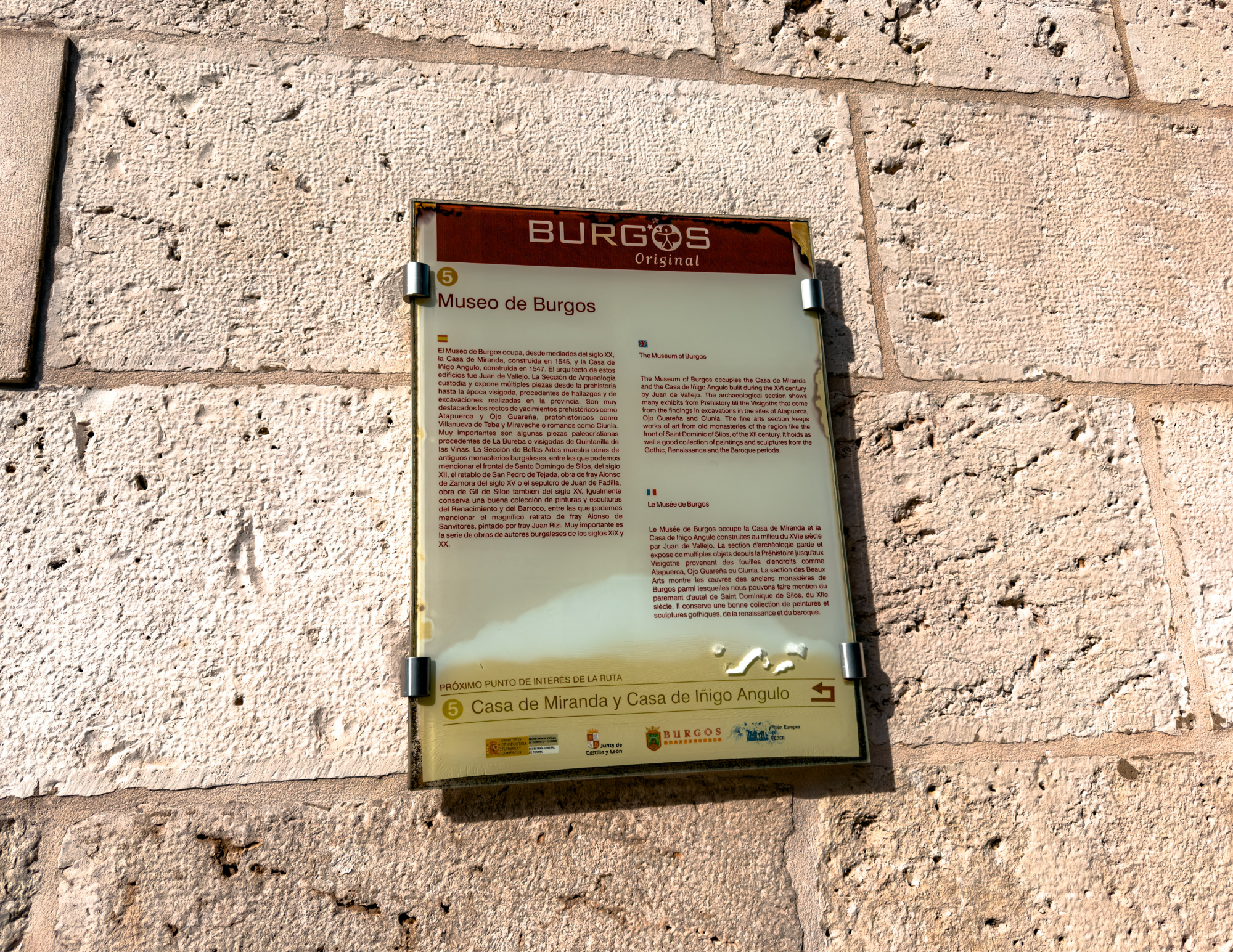
Museo de Burgos is a museum focused on the archaeology, history, and art of Burgos and the surrounding province. It is housed in historic buildings, including Casa de Miranda and Casa de Íñigo Angulo, which already makes the visit feel connected to the city before you even start looking at the collections.
That is one of the things I liked about it. Some museums feel completely separate from the place they are in. Museo de Burgos does not. The building, the collections, and the location all feel tied to the city’s story.
Inside, you move through different periods of Burgos history, from archaeological finds to later art and historic objects. It helps show Burgos as more than just a cathedral city. You start to see the layers behind the streets, plazas, and buildings you have been walking past outside.
If you are visiting Burgos and only want the most famous attraction, this may not be your first stop. But if you like understanding a place through local museums, Museo de Burgos is worth adding.
-4.png)
Is Museo de Burgos Worth Visiting?
Yes, Museo de Burgos is worth visiting if you enjoy local history, archaeology, art, and quieter museums that help explain the city you are already exploring.
I would not describe it as a museum you have to build your whole Burgos trip around. That is not really its role. Burgos Cathedral is the main anchor, and the Museum of Human Evolution is the more unique museum experience because of its connection to Atapuerca. But Museo de Burgos adds something different. It helps connect Burgos as a city and province across time.
This is the kind of museum that works well after you have already walked through the Old Town. Once you have seen Burgos Cathedral, Arco de Santa María, Plaza Mío Cid, Casa del Cordón, and the surrounding streets, Museo de Burgos gives you more context for the place you have been moving through.
I liked that it felt calm. Not every museum needs to be massive or flashy. Sometimes a smaller museum helps you understand a city in a quieter way. That is what Museo de Burgos did for me.
-5.png)
Museo de Burgos vs Museum of Human Evolution
If you are deciding between Museo de Burgos and the Museum of Human Evolution, the best choice depends on what kind of museum experience you want.
The Museum of Human Evolution is the bigger, more distinctive attraction. It focuses on human evolution and the Atapuerca discoveries, which makes it feel very specific to Burgos and important beyond the city itself. If you are traveling with a teen, interested in science, or only have time for one museum, that may be the stronger first choice. I go deeper into that visit in my Museum of Human Evolution Burgos guide.
Museo de Burgos is different. It is quieter and more local. It focuses more on Burgos itself, with archaeology, history, and art that help explain the province and the city’s development. It pairs beautifully with an Old Town walk because it gives context to the historic streets and buildings nearby.
If you have two days in Burgos, I think both museums are worth visiting because they do not repeat each other. One takes you into prehistoric human history. The other brings you back into Burgos as a province and historic city.
If you only have one day, choose based on your interest. Pick the Museum of Human Evolution if you want the more unique, science-focused museum. Pick Museo de Burgos if you want a calmer, more local history stop.
-4.png)
The Museum Buildings
One of the first things to appreciate about Museo de Burgos is the setting. The museum is housed in historic Renaissance buildings, and that gives the visit a different feeling from a modern museum space.
Casa de Miranda is one of the main buildings, and it is a beautiful example of Renaissance civil architecture in Burgos. Before you even get into the collections, the building itself reminds you that Burgos has important history outside of the cathedral.
I always like when museums are housed in historic buildings because the place becomes part of the experience. You are not only looking at objects from the past. You are standing inside a building that has its own history too.
This is one reason Museo de Burgos fits so well into the city. After walking past places like Casa del Cordón and Arco de Santa María, stepping into another historic building feels like a continuation of the Old Town instead of a separate attraction.
-3.png)
What You Can See Inside Museo de Burgos
Museo de Burgos covers a mix of archaeology, history, and art connected to the city and province. That range is what makes it useful for understanding Burgos beyond the major landmarks.
The archaeology sections help show the deeper history of the region. You can see objects and remains that connect Burgos to earlier periods long before the city became known for its cathedral and medieval identity. These kinds of collections remind you that historic cities are never only one period. Burgos did not begin with the cathedral. It has older roots, and the museum helps bring some of that forward.
The art and historical collections move you through later parts of the city’s story. This is where Museo de Burgos becomes especially useful after walking the historic center. You start to connect the objects inside the museum with the streets, buildings, churches, and monuments outside.
I would not rush through it. This is not a museum where I would try to “finish” as fast as possible. It is better when you let it be a slower stop, especially if you enjoy small details and local history.
-5.png)
Why Museo de Burgos Adds Context to the City
Burgos can be easy to simplify from the outside. A lot of people hear “Burgos” and think cathedral. And yes, the cathedral is the main attraction. But the city becomes more interesting when you see the pieces around it.
Museo de Burgos helps with that. It gives you context for the province, the city’s development, and the historical layers behind the streets. After visiting the museum, Burgos feels less like a place with one major monument and more like a city with a long, layered identity.
That matters if you are someone who likes to understand where you are. I love a beautiful cathedral, but I also like knowing what was happening around it. Who lived here? What did the region produce? What came before the medieval period? How did the city change over time?
Museo de Burgos does not answer every question, but it helps open that door.
-4.png)
How Much Time Do You Need at Museo de Burgos?
I would give Museo de Burgos about one hour if you are visiting casually, and closer to an hour and a half if you like archaeology, art, or local history.
It is not the kind of museum that needs half a day for most visitors. That is actually one of its strengths. You can fit it into a Burgos itinerary without feeling like it takes over the whole day.
If you are doing a one-day visit, I would only choose Museo de Burgos if you are more interested in local history than the Museum of Human Evolution. My One Day in Burgos Spain Itinerary explains how to choose between the two without overpacking your day.
If you are staying two or more days, it is much easier to include. You can do the cathedral and Old Town one day, then Museo de Burgos and the Museum of Human Evolution another day, or split them around your walking route.
-2.png)
How to Fit Museo de Burgos Into Your Burgos Itinerary
Museo de Burgos is easy to add because it is close to the historic center. You can pair it with Burgos Cathedral, Arco de Santa María, Paseo del Espolón, and the Old Town without making the day feel scattered.
I think it works best after you have already walked part of the city. Start with Plaza Mío Cid, Casa del Cordón, Paseo del Espolón, and Arco de Santa María. Visit the cathedral area, then add Museo de Burgos when you want something indoors and quieter.
This order makes the museum feel more meaningful. You have already seen the city outside. Then you step inside and get more of the background.
If you are someone who likes walking cities slowly, the museum can fit naturally into the same kind of route I talk about in my Burgos Old Town Walking Guide. You do not need to go far out of your way for it.
-2.png)
Is Museo de Burgos Good for a Winter Visit?
Yes, Museo de Burgos is a good winter stop. Burgos can be cold, and winter travel works better when you balance outdoor walking with indoor places that still feel connected to the city.
This museum is exactly that. It gives you somewhere warm and meaningful to spend time without feeling like you are just hiding from the weather. You are still learning Burgos. You are still in the historic center. You are still adding something real to the day.
I visited Burgos in winter, and I think that season made museums feel more important. The cathedral and Old Town were beautiful in the cold, but I also appreciated having indoor stops that gave the city more depth.
If you are visiting in winter, I would pair Museo de Burgos with a cathedral visit or Old Town walk. Go outside when the weather feels manageable, then use the museum as a slower indoor break.
-2.png)
Who Should Visit Museo de Burgos?
Museo de Burgos is best for travelers who like local museums, history, archaeology, art, and cities with layers.
You will probably enjoy it if you are the kind of traveler who wants to understand a place beyond the most famous attraction. If you like walking through a city and then learning what those streets are connected to, this museum makes sense.
It is also good for people who prefer smaller museums. Not everyone wants a huge museum that takes hours and hours. Museo de Burgos is more contained, which can be a good thing when you are traveling through several cities in a row.
I would especially recommend it if you are staying more than one day in Burgos. With only a few hours, I would prioritize the cathedral and Old Town. With more time, Museo de Burgos is an easy way to make the city feel more complete.
-2.png)
What to Pair With Museo de Burgos
The easiest place to pair with Museo de Burgos is Burgos Cathedral. The two together show very different sides of the city. The cathedral gives you the big Gothic, religious, and artistic drama. Museo de Burgos gives you more local context and historical depth.
Arco de Santa María also pairs well because it is part of the historic center and close to the cathedral area. You can walk through the arch, spend time around the cathedral, and then visit Museo de Burgos as a quieter follow-up.
Paseo del Espolón is another natural pairing because it keeps the day relaxed. Walk the promenade, enjoy the river area, then add the museum when you want an indoor stop.
If you want a more modern and science-focused contrast, pair Museo de Burgos with the Museum of Human Evolution. That gives you the strongest museum day in Burgos because the two museums are so different.
-2.png)
Practical Tips for Visiting Museo de Burgos
Check the current opening hours before you go, especially if you are visiting in winter, on a holiday, or around a Monday. Museum schedules can change, and I would not build your day around any museum without confirming.
Give yourself enough time to actually look at the building, not just the objects. The historic setting is part of the visit.
Do not expect the same experience as the Museum of Human Evolution. Museo de Burgos is quieter and more local. Go in with that mindset, and it makes more sense.
Pair it with a walk through the Old Town. The museum works better when you connect it to the streets and landmarks nearby.
If you are short on time, choose one museum instead of rushing both. Burgos is better when you let the day breathe a little.
-3.png)
Final Thoughts on Museo de Burgos
Museo de Burgos is worth visiting if you want to understand Burgos beyond the cathedral. It is not the loudest attraction in the city, but it adds context, history, and a quieter cultural layer to your visit.
I liked it because it helped Burgos feel more complete. The cathedral gives the city its drama. The Old Town gives it atmosphere. The Museum of Human Evolution gives it a connection to human origins and Atapuerca. Museo de Burgos gives you the local history that ties the city and province together.
If you have more than one day in Burgos, I would add it. If you love smaller museums, I would add it. And if you are visiting in winter, it is a strong indoor stop that still feels connected to the city.
Burgos is not only one beautiful cathedral. It is a city with layers, and Museo de Burgos is one of the places that helps you see them.

Cavetta is the creator of LifeWithVetta.com and has been traveling the world full time since 2020. She has visited more than 60 countries while worldschooling her son and documenting what it really takes to live abroad. Her guides focus on travel, moving abroad, digital nomad life, and designing a life beyond the traditional path.
