
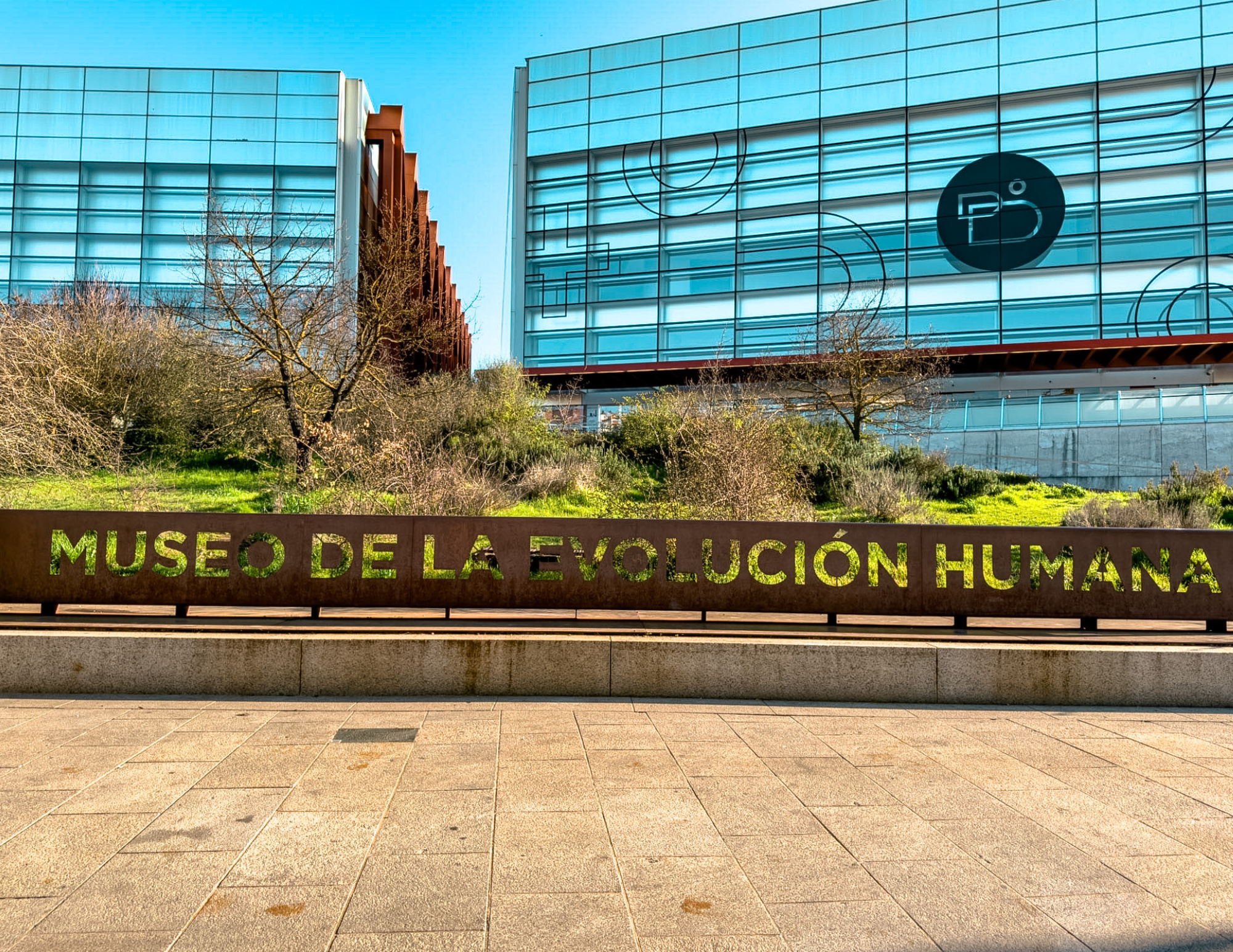
The Museum of Human Evolution was one of the most interesting places I visited in Burgos because it gave the city a completely different layer. Burgos is easy to think of as a cathedral city first. That makes sense because Burgos Cathedral is the landmark everyone talks about, and it really does dominate the historic center. But once I visited the Museum of Human Evolution, Burgos started to feel bigger than just Gothic architecture, medieval streets, and Camino history.
This museum takes you much further back. Not hundreds of years. Not even thousands. It pulls you into the story of early humans, fossils, archaeology, evolution, and the discoveries from Atapuerca, one of the most important prehistoric sites in Europe. That contrast is what made it stand out to me. In one Burgos trip, you can move from a UNESCO cathedral to human origins, and both experiences feel deeply connected to the identity of the city.
I visited Burgos in winter, so having a museum like this also made the city easier to enjoy. Burgos can feel cold and serious during the winter months, and a museum day gives you something warm, educational, and meaningful to do without feeling like you are just filling time indoors. If you are planning your first trip and still deciding how this museum fits into the rest of the city, read my Burgos Travel Guide first for the bigger picture.
-4.png)
What Is the Museum of Human Evolution in Burgos?
The Museum of Human Evolution, or Museo de la Evolución Humana, is a major museum in Burgos focused on human evolution, archaeology, and the discoveries from the nearby Sierra de Atapuerca. It is located in the center of Burgos, close to the Arlanzón River, which makes it easy to combine with the Old Town, Burgos Cathedral, and the rest of the historic center.
The museum is part of what makes Burgos more interesting than people may expect. You do not only come here for medieval streets and cathedral views. You also get a museum that connects the city to some of the most important human fossil discoveries in Europe.
The Atapuerca archaeological sites are located near Burgos and were added to the UNESCO World Heritage List in 2000. The sites contain a rich fossil record of early human beings in Europe, with evidence stretching back nearly one million years. The museum helps bring that story into the city in a way that is much easier to understand than simply reading about the excavations from a distance.
This is why I think Museo de la Evolución Humana is worth taking seriously. It is not a random local museum added to a sightseeing list. It is one of the key cultural attractions in Burgos and one of the best ways to understand why this part of Spain matters beyond the obvious landmarks.
-3.png)
Why the Atapuerca Connection Matters
The Atapuerca connection is the heart of the museum. Without Atapuerca, this would be a very different experience. The museum does not just talk generally about evolution. It is rooted in discoveries from a real archaeological site near Burgos that has changed how researchers understand early humans in Europe.
The Sierra de Atapuerca sites contain fossils, tools, animal remains, and archaeological evidence that help explain human occupation over an enormous span of time. UNESCO describes Atapuerca as an exceptional scientific reserve because of the information it provides about the appearance and way of life of early human ancestors.
Inside the museum, that history becomes more accessible. Instead of thinking of evolution as something abstract or buried in academic research, you see how discoveries from this region connect to bigger questions. Who were the early humans in Europe? How did they live? What did they use? How did their bodies change? What can bones, tools, and fossils tell us about the human story?
That is what made the museum interesting to me. It does not feel disconnected from Burgos. It gives Burgos another identity. The city is medieval, yes. It is Camino-connected, yes. But it is also tied to one of Europe’s most important windows into human prehistory.
-3.png)
Is the Museum of Human Evolution Worth Visiting?
Yes, I think the Museum of Human Evolution is worth visiting, especially if you enjoy museums that combine science, history, archaeology, and big-picture storytelling.
This is not the kind of museum I would only recommend to people who are already obsessed with fossils. It works because the subject is bigger than that. Human evolution is really a story about all of us. Where we came from, how we changed, how early humans lived, and how scientists piece together the past from remains that survived for thousands and thousands of years.
I also think it is a good museum if you are traveling with a teenager. Burgos has a lot of historic and religious sites, which are beautiful, but this museum gives the city a different type of learning experience. It feels more visual, more scientific, and more interactive than a traditional art or history museum.
If you only have one day in Burgos, I would choose between this museum and Museo de Burgos depending on your interests. I compare the two more in my One Day in Burgos Spain Itinerary, but for most first-time visitors who want the more unique museum experience, I would lean toward the Museum of Human Evolution.
-4.png)
What to See Inside the Museum of Human Evolution
The museum includes original fossils and important finds connected to Atapuerca, along with exhibits that explain human evolution in a way that is easier to follow than a textbook. The regional tourism information for Castilla y León notes that the collection includes more than 200 original fossils, including remains of Homo antecessor, the skull known as Miguelón, the pelvis known as Elvis, the hand axe Excalibur, and animal remains such as panthers and hippopotamuses.
Those names alone are memorable, but what makes them matter is the story behind them. These are not just objects behind glass. They are pieces of a much larger puzzle about early humans, how they lived, and how scientists reconstruct the past.
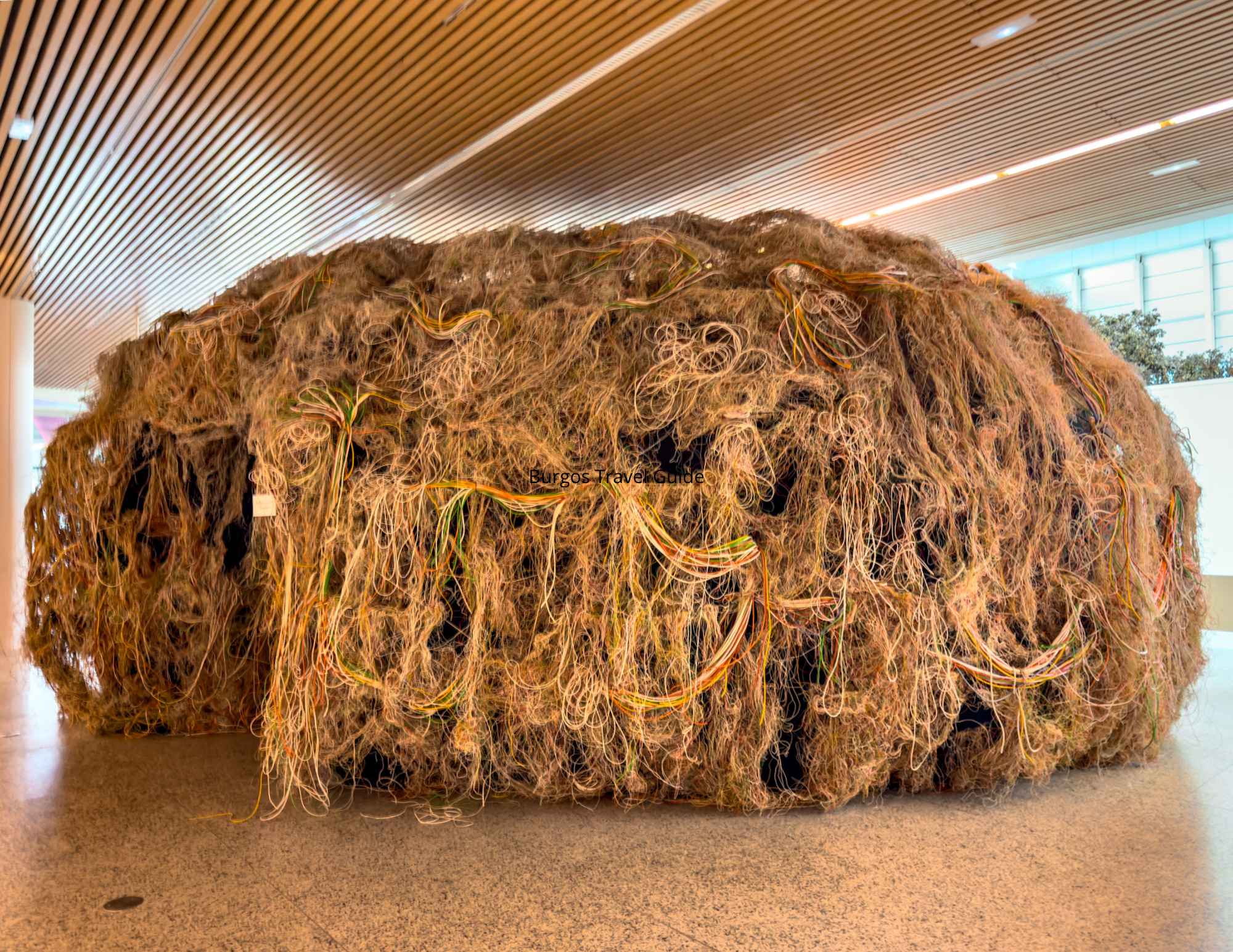
The museum also uses reconstructions, models, displays, and explanations to help visitors understand evolution from different angles. You are not only looking at bones. You are moving through questions about anatomy, survival, environment, tools, intelligence, and human development.
For me, this is the kind of museum where you need to slow down. If you rush, it can become “fossil, fossil, display, display,” and you miss the point. But if you actually read and look closely, the museum starts to feel like a journey through time.
-3.png)
The Museum Building Itself
The museum building has a very different feel from the rest of historic Burgos, and that contrast is part of what makes it interesting. After walking around the cathedral, Old Town, Arco de Santa María, and older stone streets, the Museum of Human Evolution feels modern, open, and bright.
The building was designed by architect Juan Navarro Baldeweg and sits within the Human Evolution Complex in Burgos. The museum’s architecture uses light, glass, and open space in a way that immediately separates it from the medieval atmosphere of the city center.
I liked that contrast. Burgos can feel very old and stone-heavy, especially in winter. Then you walk into this modern museum space, and the whole mood shifts. It still belongs to the city, but it gives Burgos a more contemporary cultural side.
That is one reason I would not skip it if you have enough time. The museum balances the rest of the Burgos experience. You get the cathedral and Old Town, but you also get a space that feels modern, scientific, and designed for learning.
-3.png)
How Much Time Do You Need at the Museum of Human Evolution?
I would allow at least one and a half to two hours for the Museum of Human Evolution. If you like museums, science, or archaeology, you may want longer.
This is not the kind of place I would rush through in thirty minutes. You can technically walk through quickly, but that is not how the museum works best. The value is in understanding the story, not just seeing the objects. Give yourself time to read the explanations, look at the fossils, follow the Atapuerca connection, and let the exhibits build on each other.
If you are visiting Burgos in one day, I would place the museum in the afternoon after seeing the cathedral and Old Town. That creates a nice balance. You spend the morning with Burgos Cathedral, Arco de Santa María, Paseo del Espolón, Plaza Mío Cid, and the historic center, then shift into the museum after lunch.
If you are staying longer, it is even easier. You can give the museum its own block of time and not feel like you are choosing between everything.
-2.png)
How to Fit the Museum Into a Burgos Itinerary
The Museum of Human Evolution is easy to fit into a Burgos itinerary because it is close to the central part of the city. You can pair it with the river area, the Old Town, or a day focused on museums.
For a first-time visit, I would not go there before seeing the cathedral unless you are working around museum hours. Burgos Cathedral is the city’s anchor, so I like experiencing that first. Then the museum adds a second layer to the day.
A simple route could look like this: start around Plaza Mío Cid, walk past Casa del Cordón, continue along Paseo del Espolón, pass through Arco de Santa María, visit Burgos Cathedral, take a break, then spend the afternoon at the Museum of Human Evolution.
That route works especially well because you move through Burgos in a way that makes sense. You are not jumping around randomly. You are seeing the city’s historic center first, then crossing into a completely different time period through the museum.
If you want to keep the day easy, my Burgos Old Town Walking Guide can help you connect the walking part before or after the museum.
-4.png)
Museum of Human Evolution or Museo de Burgos?
If you only have time for one museum in Burgos, this is the choice you will probably make.
The Museum of Human Evolution is the more distinctive museum. It is bigger, more modern, and more tied to a major scientific story. It focuses on Atapuerca and human evolution, so it feels different from the cathedral and Old Town.
Museo de Burgos is quieter and more local. It focuses more on the history, archaeology, and art of Burgos and the province. I liked it because it gave context to the city itself, especially after walking through the Old Town and historic center.
If I had to choose one for a first visit, I would choose the Museum of Human Evolution if you want something unique to Burgos and connected to one of the most important archaeological stories in Europe. I would choose Museo de Burgos if you prefer local history, smaller museums, and a calmer cultural stop.
If you have two days in Burgos, I think both are worth visiting. I go deeper into the second one in my Museo de Burgos guide.
-2.png)
Visiting the Museum in Winter
The Museum of Human Evolution is especially useful if you are visiting Burgos in winter. Burgos can be cold, and while I still enjoyed walking around the city, it helped to have strong indoor stops that did not feel like filler.
This museum gave me a real reason to pause indoors while still feeling connected to the city. That matters because sometimes winter travel can turn into hopping from warm place to warm place without much purpose. Here, the museum adds something valuable to the trip.
I would plan your winter day so you are not outside the whole time. Do the cathedral, Old Town, or river walk when the weather is decent, then use the museum as your longer indoor activity. It keeps the day balanced and makes Burgos easier to enjoy even when the temperature drops.
-3.png)
Is the Museum Good for Families or Teens?
Yes, I think the Museum of Human Evolution is a good Burgos stop for families and teens, especially if your kids are old enough to engage with science, archaeology, fossils, and the bigger questions behind human history.
It is not a playground-style museum, so I would not frame it as pure entertainment. But for older kids and teenagers, it can be much more engaging than another church or historic building if they are starting to get tired of traditional sightseeing.
The subject matter helps. Evolution, early humans, bones, tools, extinct animals, and the question of where we come from can hold attention in a different way. Since I travel with a teenager, I always notice when a city has something that breaks up the usual old-town-and-cathedral rhythm. This museum does that.
If you are building a Burgos itinerary with a teen, I would put the Museum of Human Evolution high on the list.
-1.png)
What to Pair With the Museum
The easiest pairing is the cathedral and Old Town. That gives you the most complete first-time Burgos day because you see the historic heart of the city and then add the human evolution layer.
You can also pair the museum with the river area since the museum sits close to the Arlanzón River. This works well if you want a calmer day with a museum visit and a walk instead of a packed itinerary.
If you are visiting both Burgos museums, I would split them if you have enough time. Do the Museum of Human Evolution on one day and Museo de Burgos on another, or do one in the morning and one in the afternoon if you are museum-heavy travelers. I personally think both museums add something different, but I would not rush through either just to say you did both.
For a more complete route through the city’s main sights, my Best Things to Do in Burgos Spain guide gives you a broader list of what to prioritize.
-1.png)
Tips for Visiting the Museum of Human Evolution
Check the museum hours before you go because opening days and times can change by season, holiday, or special schedule. I would always confirm before building your whole day around it.
Give yourself enough time. This is not a museum where I would show up exhausted at the end of the day and expect to absorb everything. It is better when you still have the energy to read and think.
Visit after seeing some of historic Burgos if you can. I liked the contrast between the cathedral, Old Town, and the museum. It made the city feel more layered.
Do not skip the Atapuerca context. The museum is much more meaningful when you understand that it is connected to major archaeological sites near Burgos, not just general evolution displays.
If you are visiting in winter, use this as one of your indoor anchors. Burgos can be cold, and this museum is one of the best ways to keep the day interesting without staying outside the whole time.
Final Thoughts on the Museum of Human Evolution in Burgos
The Museum of Human Evolution is absolutely worth visiting if you want Burgos to feel like more than a cathedral stop. It gives the city depth, contrast, and a connection to one of the most important prehistoric stories in Europe.
I liked that Burgos had this mix. In the same city, I could walk through medieval streets, stand in front of one of Spain’s most beautiful cathedrals, notice the Camino de Santiago connection, and then visit a museum about early humans and the Atapuerca discoveries. That is not a small range for a city people often underestimate.
For me, the Museum of Human Evolution made Burgos more memorable. It showed another side of the city, one that is scientific, modern, and deeply tied to the human story. If you have time for one museum in Burgos, this is the one I would look at first.

Cavetta is the creator of LifeWithVetta.com and has been traveling the world full time since 2020. She has visited more than 60 countries while worldschooling her son and documenting what it really takes to live abroad. Her guides focus on travel, moving abroad, digital nomad life, and designing a life beyond the traditional path.
