
.png)
Burgos is one of those cities that makes the most sense on foot. You do not need to overplan every single turn, and you do not need to chase attractions all over the map to feel like you saw something meaningful. The historic center is compact, layered, and easy to connect if you give yourself time to walk slowly.
I visited Burgos in winter, and the Old Town had this cold, stone-built beauty that fit the city so well. It was not soft or beachy or colorful in the way some Spanish cities feel. Burgos felt more serious, more historic, and more Castilian. The cathedral towers, the river, the old gates, the plazas, the Camino de Santiago connection, and even the murals I saw along the way all gave the city its own personality.
This is the kind of place where the walk matters as much as the individual stops. You can begin near Plaza Mío Cid, pass Casa del Cordón, continue through Paseo del Espolón, walk through Arco de Santa María, and suddenly Burgos Cathedral is right there in front of you. That is what I liked most. The city unfolds naturally.
If you are still planning your full visit, read my Burgos Travel Guide first. That gives you the bigger picture of why Burgos is worth visiting, how long you need, and how the Old Town fits with the museums, cathedral, Camino history, and wider northern Spain route.
-4.png)
Why Walk Burgos Old Town?
Burgos Old Town is made for walking because so many of the main sights are close together. You do not need a complicated itinerary to see the heart of the city. You just need comfortable shoes, enough time, and a willingness to slow down.
The historic center has that layered feeling I love in older European cities. You are not only walking between pretty buildings. You are moving through different pieces of Burgos history. Plaza Mío Cid connects to El Cid and Castilian identity. Casa del Cordón connects to royal and political history. Arco de Santa María connects to the old city walls and the cathedral approach. Burgos Cathedral gives the city its biggest architectural moment. The Camino de Santiago adds movement and meaning to the streets.
Walking also lets you notice the details that are easy to miss when you are only focused on major attractions. The way the cathedral appears between buildings. The river beside the Old Town. The quiet winter streets. The murals adding color to a stone-heavy city. The pilgrims passing through. The little corners that do not need a ticket or a formal stop.
That is why I think Burgos is better when you experience it as a connected walk, not only as a list of individual sights.
-3.png)
Start at Plaza Mío Cid
I would start a Burgos Old Town walk at Plaza Mío Cid because it places you right inside one of the city’s major historical identities. The square is named for El Cid, the legendary medieval figure connected to Burgos, Castile, and Spanish history.
The equestrian statue of El Cid makes the square feel like more than just a meeting point. It reminds you that Burgos is a city tied to medieval memory, legend, and power. Even before you reach the cathedral, you can feel how much the city leans into its past.
Plaza Mío Cid also works practically as a starting point because it connects easily to the rest of the walk. From here, you can continue toward Casa del Cordón, Paseo del Espolón, Arco de Santa María, and Burgos Cathedral without needing to backtrack.
I like starting here because it gives the day a sense of direction. You are not randomly wandering into the Old Town. You are beginning with one of Burgos’ most recognizable symbols, then letting the city unfold from there.
Continue to Casa del Cordón
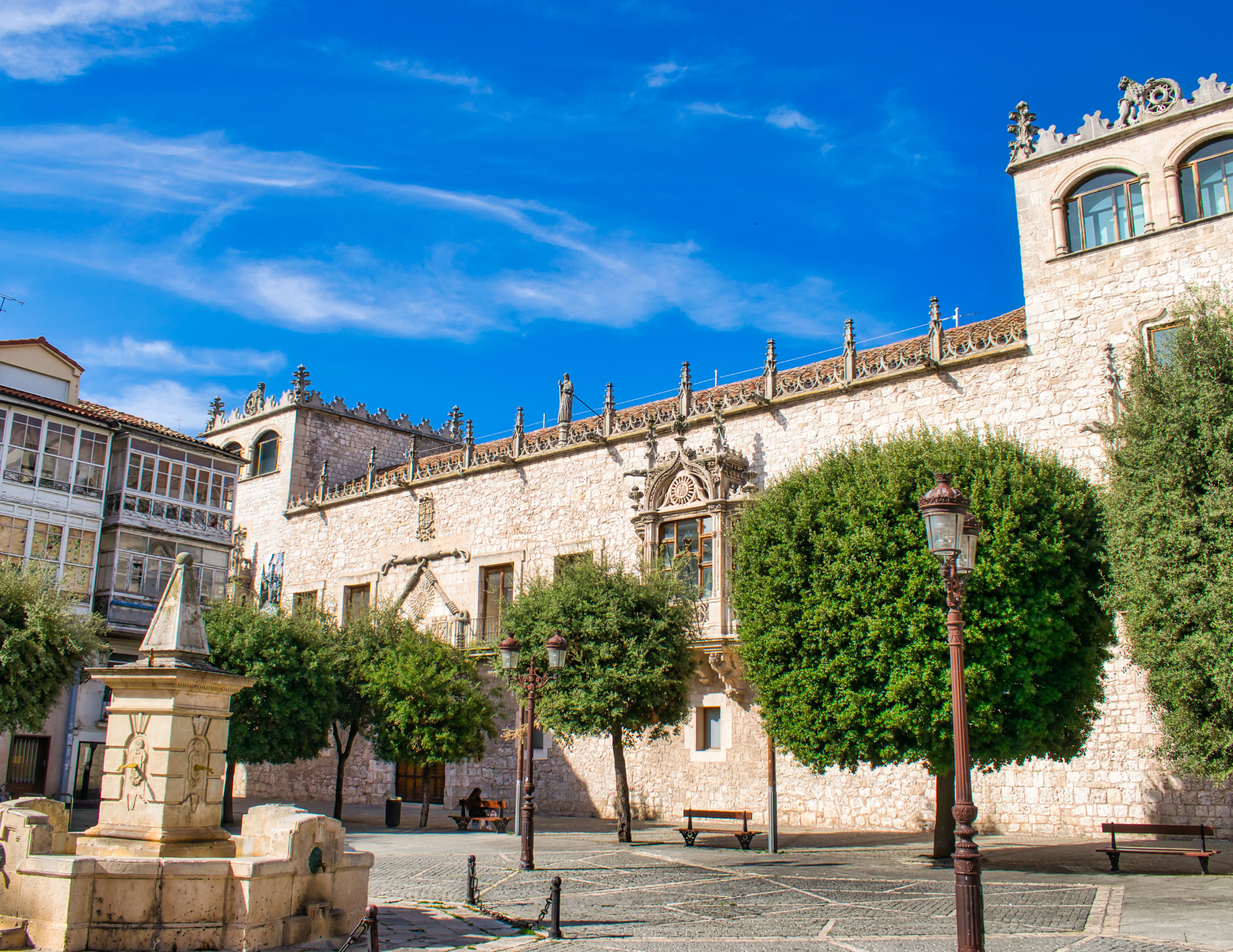
From Plaza Mío Cid, walk toward Casa del Cordón. This is one of those buildings that is easy to pass quickly if you do not know its importance, but once you understand the history, it becomes a much more meaningful stop.
Casa del Cordón was built in the 15th century and became one of the most important civil buildings in Burgos. It is especially known for its connection to the Catholic Monarchs and Christopher Columbus after his second voyage to the Americas. The carved cord around the doorway gives the building its name, and the façade has that serious historic presence that fits Burgos so well.
This stop does not need to take long. You do not have to stand here for thirty minutes to appreciate it. But I would definitely include it in a Burgos Old Town walk because it helps show that the city’s history is not only religious or cathedral-based. Burgos also has royal, political, and civic history woven into its streets.
That is what makes this walking route interesting. You are moving through buildings and spaces that each hold a different part of the city’s story.
-6.png)
Walk Through Paseo del Espolón
After Casa del Cordón, make your way toward Paseo del Espolón. This is one of the prettiest and easiest places to walk in Burgos, especially because it sits near the Arlanzón River and connects naturally with the historic center.
Paseo del Espolón gives the city a softer moment. After seeing stone buildings and historic façades, the tree-lined promenade lets you breathe a little. It is the kind of place where people walk, sit, talk, pass through, and go about their day. I always like including spaces like this because they show a city in motion outside of its monuments.
In winter, Paseo del Espolón had a quieter feeling. The trees, the cold air, the nearby river, and the historic buildings all made it feel atmospheric in a different way. It was not lush and sunny like it might be in warmer months, but it still worked.
This is a good stretch to slow down. Do not rush it just because it is not a ticketed attraction. Paseo del Espolón is part of the feeling of Burgos, and it connects several important places in a way that makes the walk feel natural.
-4.png)
Walk Near the Arlanzón River
One of the things I liked about this part of Burgos is how the river helps open up the city. The Arlanzón River runs close to the historic center, and walking near it gives you a different perspective from the tighter Old Town streets.
The river area pairs well with Paseo del Espolón and Arco de Santa María. You can walk along the promenade, look toward the historic center, cross near the old gate, and then enter the cathedral area. It gives the city a nice rhythm because you move from open river views into one of the most dramatic historic spaces in Burgos.
This is not a part of the walk you need to overthink. Just leave room for it. Sometimes the best city walks are not about stopping at every single marked attraction. They are about giving yourself enough space to notice how the city is laid out.
Burgos from the river feels calmer. Burgos from the cathedral streets feels grander. You need both to understand the city.
-6.png)
Enter Through Arco de Santa María
Arco de Santa María is one of the most beautiful moments in Burgos Old Town. It feels like a proper entrance into the historic center, especially if you approach it from the river side.
This gate was once part of the medieval walls of Burgos, and the version you see today has a grand Renaissance-style façade with sculpted figures connected to the city’s history. It is one of those landmarks that works because of both the architecture and the placement. You do not just look at it. You pass through it.
That moment matters. You walk through the arch, and suddenly the cathedral area is right there. It feels like Burgos is revealing itself in stages, which is exactly why this is one of my favorite parts of walking the city.
Arco de Santa María does not need its own separate plan, but it should absolutely be part of your Old Town route. It is one of the best transitions in the city, moving you from the river and promenade into the historic heart of Burgos.
-3.png)
Spend Time Around Burgos Cathedral
Once you pass through Arco de Santa María, give yourself time around Burgos Cathedral. This is the center of the Old Town experience, and it is the one place in Burgos I would never treat like a quick photo stop.
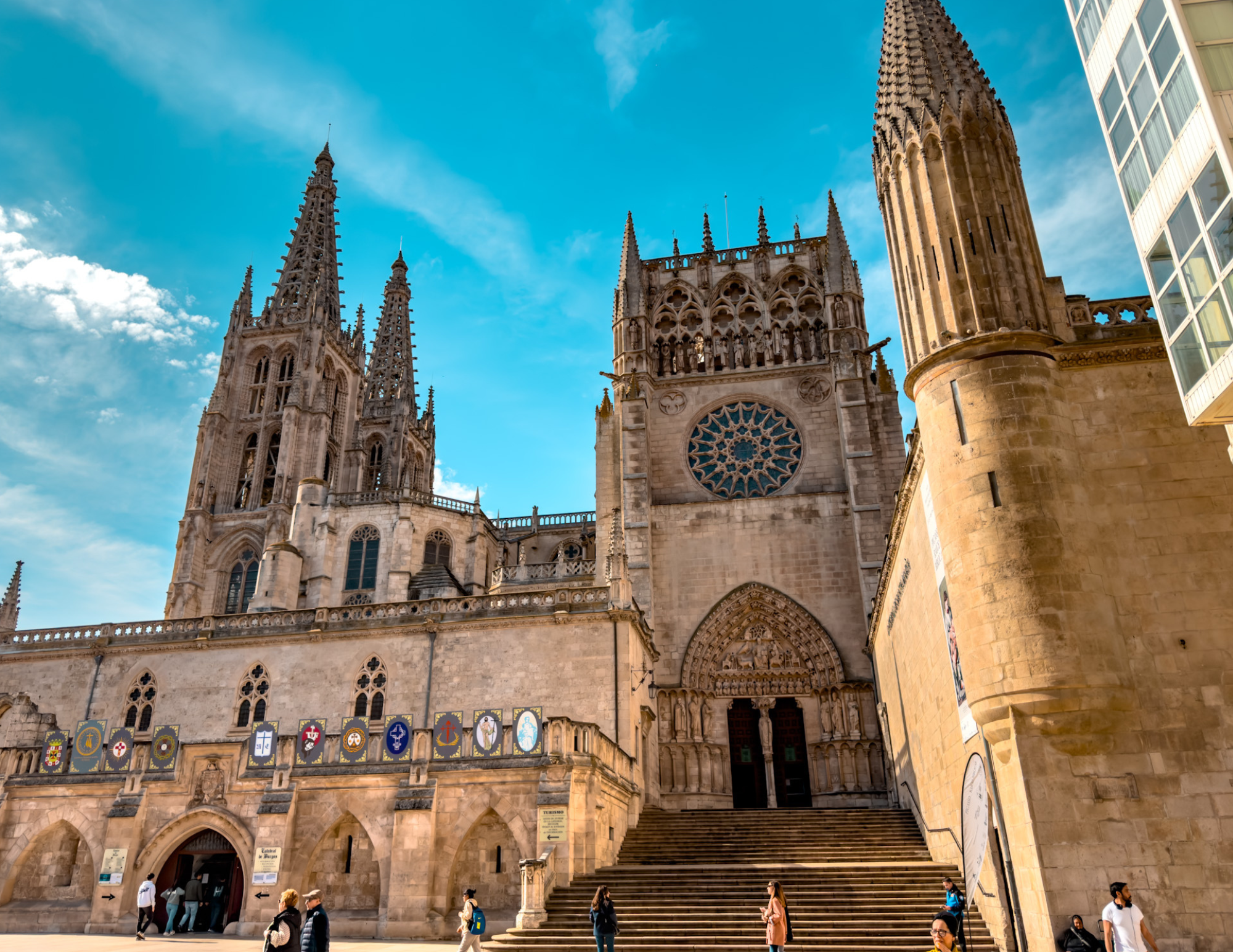
The cathedral is massive, detailed, and beautiful from so many angles. The towers and spires rise above the surrounding streets, and the closer you get, the more there is to notice. Burgos Cathedral was begun in the 13th century and developed over several centuries, which is why it feels so layered. It is one of the great Gothic cathedrals in Spain and became a UNESCO World Heritage Site in 1984.
Even if you are not going inside, walk around the exterior. See it from the main square, from the side streets, from near Arco de Santa María, and from the smaller corners where the cathedral suddenly appears between buildings. It is one of those landmarks that changes depending on where you stand.
If you plan to go inside, make time for it instead of squeezing it into the end of your walk. I go deeper into the interior, free admission windows, El Cid’s tomb, and what to look for in my Burgos Cathedral guide.
Wander the Streets Around the Cathedral
After seeing the main cathedral area, wander the streets around it without being too strict. This is where Burgos Old Town really starts to feel personal. The main sights are important, but the smaller streets are what help you connect them.
I liked how the cathedral kept appearing from different angles. You could turn a corner and suddenly see the towers again, or look down a narrow street and catch part of the façade. That kind of repetition makes the cathedral feel less like one single stop and more like the anchor of the entire city center.
This is also where Burgos feels especially atmospheric in winter. The old stone, the cold air, the quieter streets, and the cathedral views all work together. It felt like the season belonged to the city.
If you only have one day in Burgos, this part of the walk should not be rushed. My One Day in Burgos Spain Itinerary builds the cathedral and Old Town into the heart of the route because this is where the city makes the strongest first impression.
-2.png)
Notice the Camino de Santiago Connection
Burgos is one of the major cities on the Camino Francés, the best-known route of the Camino de Santiago. That Camino connection gives the Old Town a different kind of energy.
After visiting Santiago de Compostela, I found Burgos interesting because it showed another side of the pilgrimage story. Santiago feels like the destination. Burgos feels like one of the major places along the way, where pilgrims arrive, rest, pass through the cathedral area, and keep moving west.
As you walk through the Old Town, pay attention to the signs, the symbols, and the people passing through. The Camino is not only history here. It is still active. That gives the city movement. Burgos is not just preserving the past behind glass. It is still part of a route people walk today.
This is one of the reasons I think Burgos fits so naturally into a northern Spain itinerary. It connects with places like Santiago de Compostela, León, and other Camino cities in a way that makes the region feel linked instead of random.
.png)
Look for Burgos’ Murals
One thing I did not expect to enjoy as much in Burgos was the murals. I saw a few while walking, and they were beautiful. They added this unexpected color to a city that can otherwise feel very stone-heavy, historic, and serious, especially in winter.
That contrast is what made them stand out. You are walking through a city known for its cathedral, medieval streets, Camino history, and old buildings, then suddenly there is a mural bringing something bright and modern into the scene.
I would not turn the murals into a formal checklist unless street art is a major focus for you. For me, they worked better as part of the wandering. Keep your eyes open as you move through the city. Some of the prettiest things you notice while traveling are not the ones you planned around.
The murals reminded me that Burgos is not only a preserved historic place. It is still a living city, with creativity, local expression, and modern details layered into the older setting.
-3.png)
Stop Near Plaza Mayor if You Have Time
If your walk takes you near Plaza Mayor, it is worth passing through. Like many Spanish cities, Burgos has a central square that gives you another place to pause between bigger stops.
Plaza Mayor is not the part of Burgos that stood out most to me compared with the cathedral, Arco de Santa María, or Paseo del Espolón, but it still fits into the Old Town experience. It gives the city that everyday central-square feeling, with people moving through, meeting, sitting, eating, or passing by.
This is the kind of place I would include naturally, not force. If you are already nearby, walk through. If you are short on time, I would prioritize the cathedral route, Arco de Santa María, Paseo del Espolón, and the museum or cathedral interior.
Burgos is walkable enough that you may pass through Plaza Mayor without even trying too hard. Let it be part of the route instead of a separate mission.
-3.png)
Add Museo de Burgos if You Want More Local History
If you want to turn your Old Town walk into a deeper cultural day, Museo de Burgos is one of the easiest museums to add. It is focused on the archaeology, history, and art of Burgos and the province, and it is housed in historic buildings that already feel connected to the city.
This museum works well after walking the Old Town because it gives you context. You have already seen the cathedral, old streets, gates, plazas, and historic buildings. Then the museum helps fill in more of the background.
I liked Museo de Burgos because it felt quieter and more local than the bigger Museum of Human Evolution. It is not trying to be the flashiest attraction in the city, but it adds depth. If you enjoy smaller museums that help explain the place you are visiting, I go deeper into the experience in my Museo de Burgos guide.
For a one-day visit, you may need to choose between museums. But if you have extra .
-5.png)
Add the Museum of Human Evolution for a Different Layer
The Museum of Human Evolution is not exactly an Old Town sight in the same way the cathedral or Arco de Santa María is, but it is close enough to include in a Burgos walking day. It sits near the river and gives the city a completely different layer.
After spending time in the historic center, the Museum of Human Evolution shifts the focus from medieval Burgos to prehistoric human history. It is connected to the Atapuerca archaeological sites near Burgos, which are some of the most important places in Europe for studying early humans.
This is what makes Burgos more interesting than people may expect. In one walkable city, you can move from Camino history and Gothic architecture to human evolution and archaeology.
If you only have one museum slot and want something unique to Burgos, this is the museum I would consider first. I go deeper into what to expect in my Museum of Human Evolution Burgos guide.
-6.png)
Optional Add-On: Mirador del Castillo
If you have good weather and extra energy, Mirador del Castillo is one of the optional add-ons to consider. It is known for views over Burgos, especially the cathedral rising above the historic center.
I did not make it up there during my winter visit, so I would not build a whole guide around it or pretend it was part of my personal route. But it still belongs as an option in a Burgos walking plan, especially if you want a viewpoint and the weather is clear.
For me, the core Old Town route is Plaza Mío Cid, Casa del Cordón, Paseo del Espolón, Arco de Santa María, Burgos Cathedral, and the streets around the historic center. Mirador del Castillo is extra. It can be a beautiful extra, but it is not something I would force if the weather is bad or your day is already full.
That is especially true in winter, when the cold can make uphill add-ons feel less appealing.
-4.png)
Optional Add-On: Monasterio de Santa María la Real de Las Huelgas
Monasterio de Santa María la Real de Las Huelgas is another important Burgos site to consider, but it sits outside the tight Old Town walking route. It is not something I would casually tack onto the same short walk unless you have enough time and really want to go deeper into medieval royal history.
The monastery was founded in the 12th century by King Alfonso VIII and Queen Eleanor of England. It became one of the most powerful royal monasteries in Castile and served as a burial place for members of the Castilian royal family.
This is the kind of place that makes sense if you have more than one day in Burgos or if you especially enjoy monasteries, royal history, and medieval sites. It adds another layer beyond the cathedral, but it takes a little more intention than the central Old Town route.
I would keep it as an add-on, not part of the basic Old Town walk.
-5.png)
My Suggested Burgos Old Town Walking Route
If you want a simple walking route, I would start at Plaza Mío Cid. From there, walk to Casa del Cordón, then continue toward Paseo del Espolón. Take your time along the promenade and the river area before passing through Arco de Santa María into the cathedral zone.
Spend time around Burgos Cathedral, walking the exterior and going inside if you plan to visit. After that, wander the streets around the cathedral, look for Camino signs and pilgrim energy, and keep an eye out for murals as you move through the city.
If you want to add a museum, choose Museo de Burgos for local history or the Museum of Human Evolution for a bigger science and archaeology experience. If you have extra time and good weather, consider Mirador del Castillo for views. If you have more than a day, add Monasterio de Santa María la Real de Las Huelgas separately.
That route keeps Burgos manageable. It lets the city feel connected instead of turning your day into a scattered list.
-4.png)
Tips for Walking Burgos Old Town
Wear comfortable shoes. Burgos is not difficult to walk, but the best way to see the city is by spending hours on foot, moving between plazas, promenades, historic streets, museums, and the cathedral area.
Dress warmly if you visit in winter. Burgos can be cold, and you will enjoy the walk more if you are prepared instead of rushing from indoor space to indoor space.
Do not overpack the route. Burgos is best when you leave room to wander. If you try to force every attraction into one tight schedule, you may miss the quiet details that make the city interesting.
Start near Plaza Mío Cid or the river area if you want the route to unfold naturally. This gives you a nice progression toward Arco de Santa María and Burgos Cathedral.
Leave time for the cathedral. Even if this is an Old Town walk, Burgos Cathedral deserves more than a quick look. It is the center of the experience.
-3.png)
Final Thoughts on Walking Burgos Old Town
Burgos Old Town is not huge, but it has enough history, beauty, and atmosphere to make a slow walk feel worthwhile. This is where the city comes together. Plaza Mío Cid gives you El Cid and Castilian identity. Casa del Cordón gives you royal and political history. Paseo del Espolón gives you the everyday city. Arco de Santa María gives you that dramatic entrance into the historic center. Burgos Cathedral gives you the wow moment.
Then there are the smaller things that make the walk feel personal. The Camino de Santiago signs. The pilgrims. The winter air. The river. The murals. The side streets where the cathedral appears again and again.
That is what I liked about Burgos. It did not need to be loud. It did not need to be overfilled. It was a city that rewarded walking, looking, and paying attention.
If you are visiting Burgos for the first time, make the Old Town walk the center of your day. The museums, monastery, and viewpoints can add depth, but the historic center is where Burgos first makes sense.

Cavetta is the creator of LifeWithVetta.com and has been traveling the world full time since 2020. She has visited more than 60 countries while worldschooling her son and documenting what it really takes to live abroad. Her guides focus on travel, moving abroad, digital nomad life, and designing a life beyond the traditional path.
