
The Shadow of the Pilgrim is one of those small Santiago de Compostela details that proves a city does not always need a huge attraction to stay with you.
Of course, Santiago has the Cathedral. It has Praza do Obradoiro. It has the Old Town, the Camino history, the museums, the parks, and the feeling of watching pilgrims arrive after long journeys. But sometimes the thing that makes a city feel even more memorable is a small detail you find at night, when the streets are quieter and the stone walls start feeling a little more mysterious.
That is what the Shadow of the Pilgrim is.
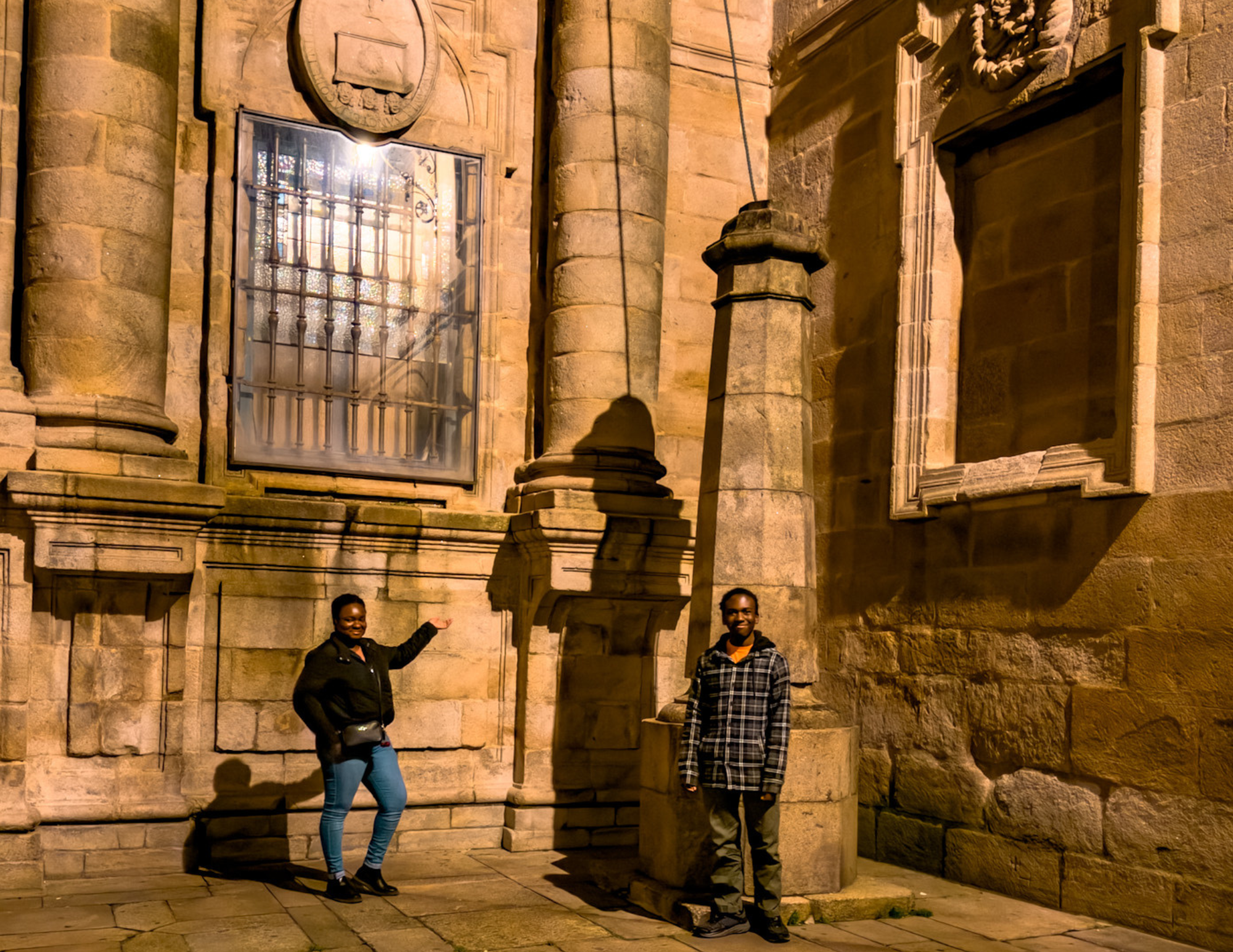
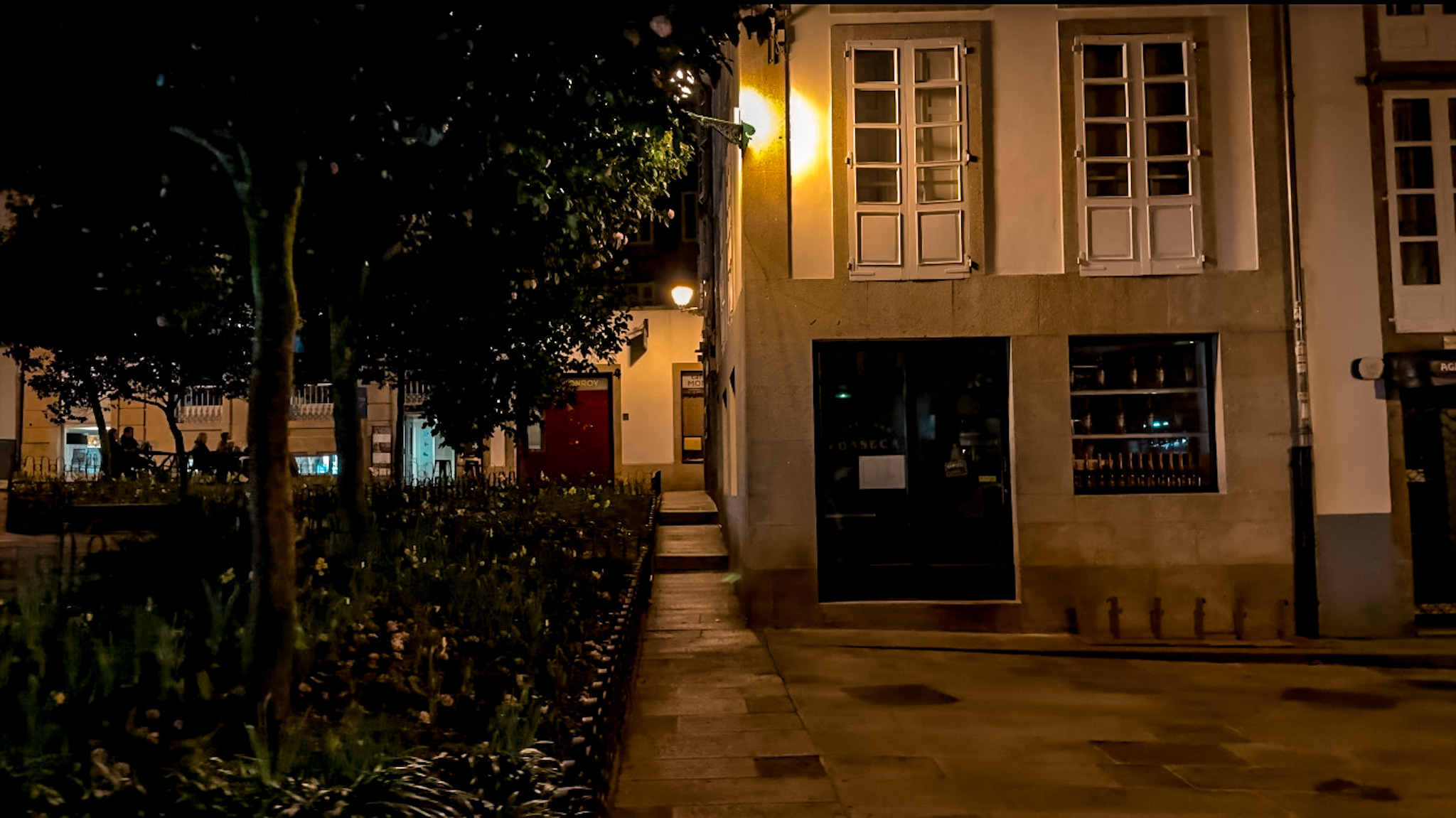
It is a shadow that appears at night near the Cathedral in Plaza de la Quintana, created by the city’s lighting and the architecture around it. The shape looks like a pilgrim standing against the wall, usually described with a hat, cloak, and staff. Once you know what you are looking for, it is the kind of thing you cannot unsee.
Is it a major attraction? No.
Is it worth looking for while you are in Santiago? Yes, especially if you are already planning to walk around the Cathedral area after dark.
I love stops like this because they add mood and personality to a city. The Shadow of the Pilgrim is not something you need to build your whole itinerary around, but it is a perfect little nighttime detail to add after dinner, after seeing the Cathedral lit up, or after spending the day learning about the Camino.
If this is your first visit, read my Santiago de Compostela travel guide for the full city overview, then use this guide to add the Shadow of the Pilgrim to your evening walk. If you are planning a full day route, my One day in Santiago de Compostela itinerary shows how to end your day near the Cathedral area.
.png)
What Is the Shadow of the Pilgrim?
The Shadow of the Pilgrim is a famous shadow near the Cathedral of Santiago de Compostela that appears at night in Plaza de la Quintana. When the lights come on, the shadow of a stone element near the Cathedral creates the shape of a pilgrim-like figure on the wall. The silhouette is usually described as looking like a medieval pilgrim with a cloak, hat, and staff.
The practical explanation is simple. It is a play of light and shadow created by the night lighting around the Cathedral and the nearby stone architecture. But Santiago is exactly the kind of city where a simple shadow becomes something more.
Because this city is so tied to pilgrimage, arrival, legends, devotion, and centuries of people walking toward the Cathedral, the shadow feels like it belongs there. It may only be a lighting effect, but the shape fits Santiago so perfectly that it has become one of the city’s most photographed small details.
This is what I like about it. You do not need to believe every legend around it to appreciate it. The shadow works because Santiago already has the atmosphere for it.
.png)
Where To Find the Shadow of the Pilgrim
You can find the Shadow of the Pilgrim in Plaza de la Quintana, beside the Cathedral of Santiago de Compostela. It appears at night near the base of the Clock Tower, beside the Holy Door area. Several local descriptions place it in the corner where the Cathedral’s night lighting projects the shape onto the wall.
If you are already near the Cathedral, you do not need to go far. Walk from the main Cathedral area toward Plaza de la Quintana and look for the shadow once it is dark and the lights are on.
The easiest way to think of it is this: do your normal nighttime walk around the Cathedral, then make Plaza de la Quintana one of your stops. Look near the Cathedral wall and the lighting around the Clock Tower and Holy Door area. The shadow is not hidden in a faraway neighborhood. It is part of the Cathedral surroundings, which makes it very easy to add to your evening.
This is why I would not make it a separate outing. Just fold it into your nighttime Old Town walk.
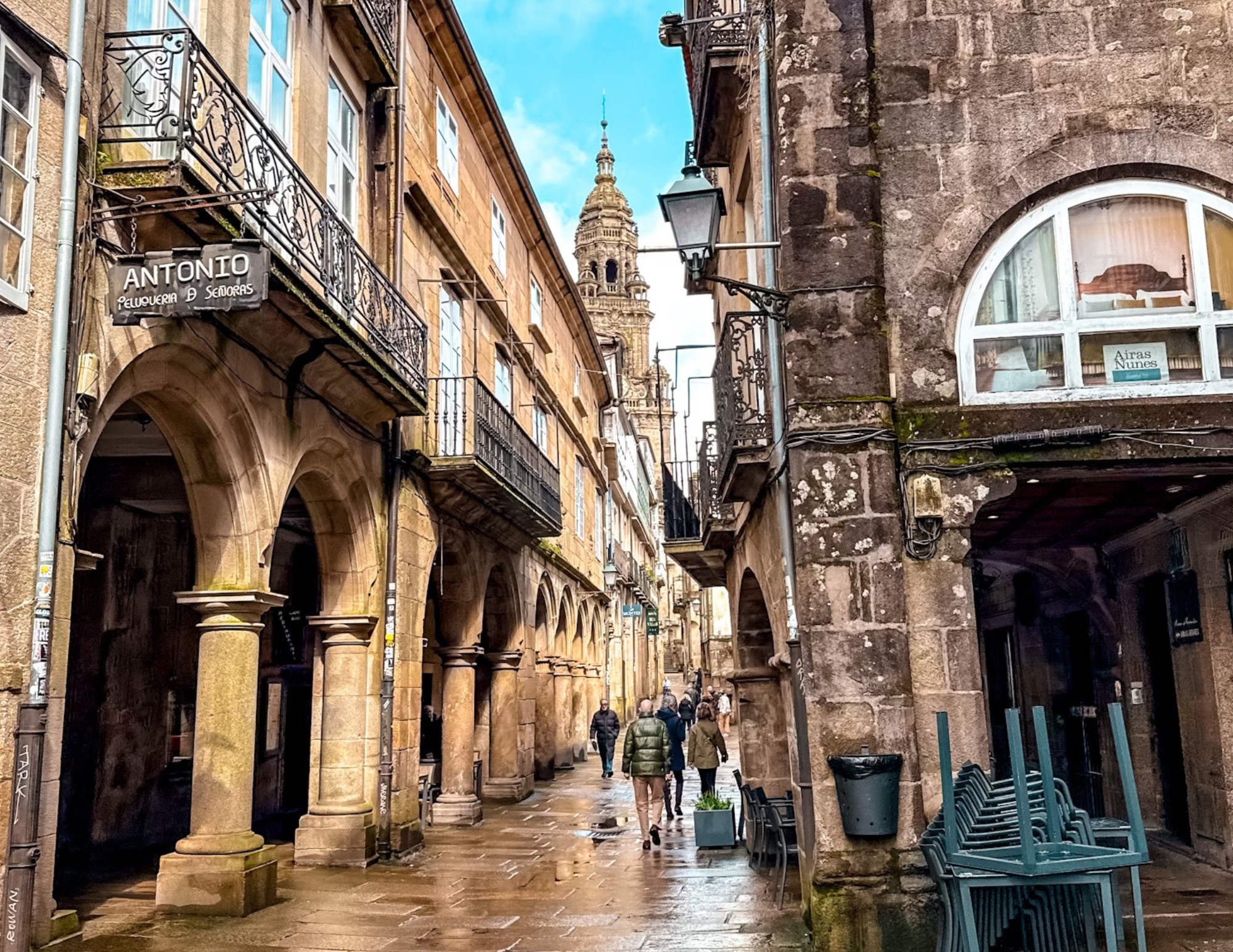
For a deeper walk through the historic center, read my Santiago de Compostela Old Town guide.
.png)
When To See the Shadow of the Pilgrim
The Shadow of the Pilgrim is best seen at night, after darkness falls and the Cathedral lights are on. During the day, you are not going to get the same effect because the whole point is the artificial light creating the shadow against the wall.
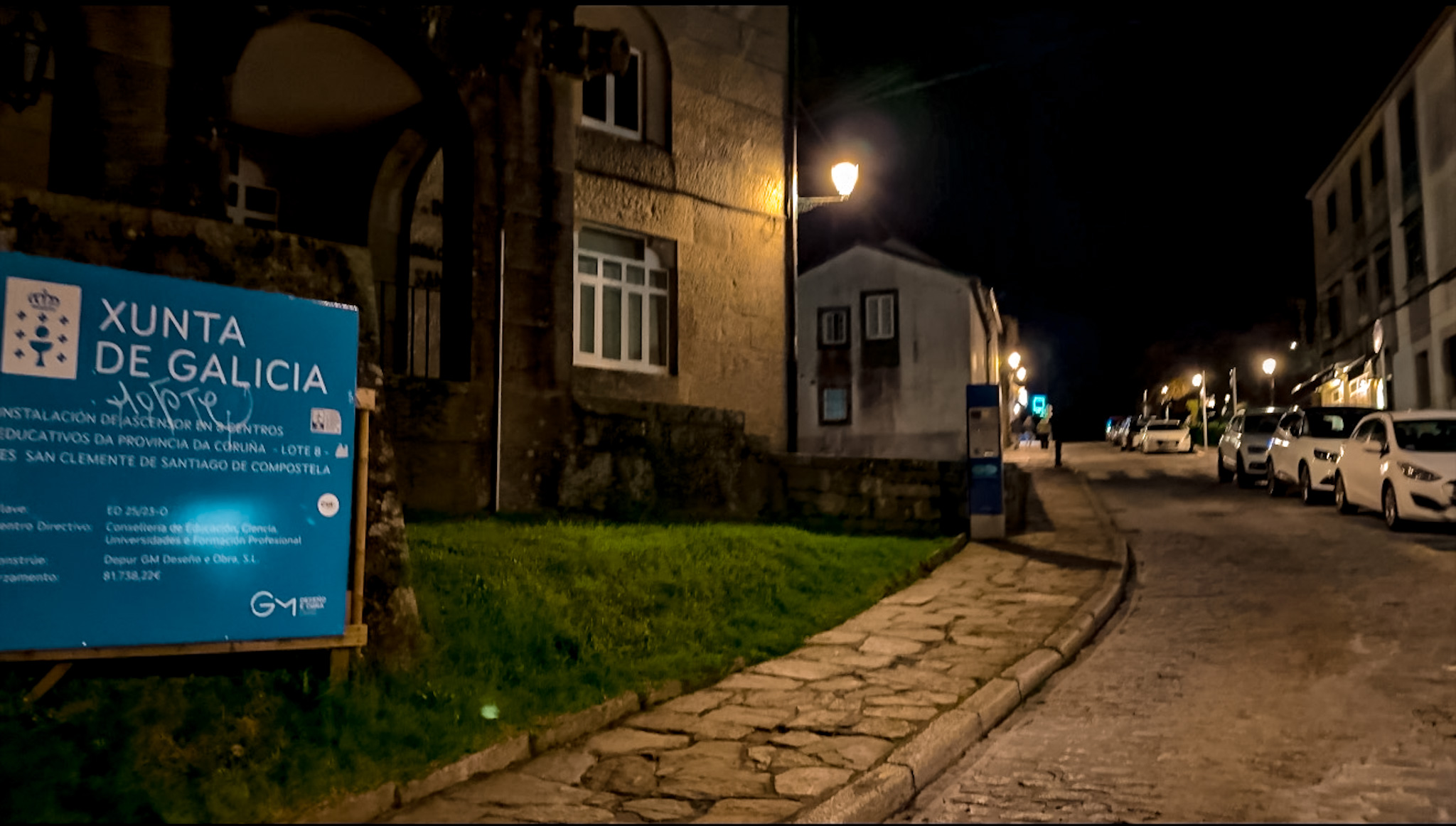
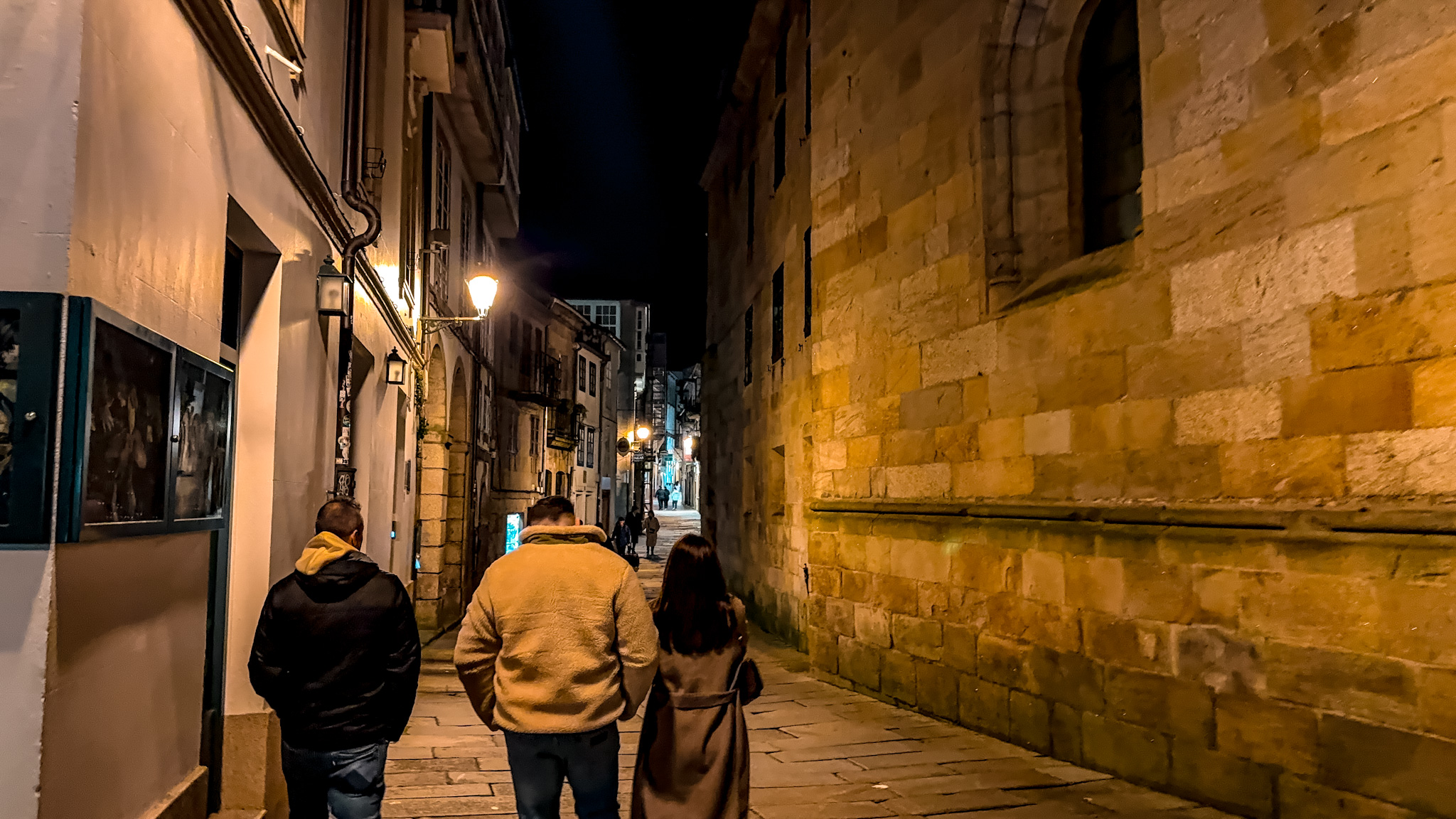
I would go after dinner or during an evening walk through the Old Town. Santiago feels different at night anyway, so this is a natural addition. You can see the Cathedral lit up, walk through the quieter streets, return to Praza do Obradoiro, then make your way toward Plaza de la Quintana to look for the shadow.
This is not something where you need a timed ticket or a complicated plan. You just need darkness and the right lighting.
That said, your experience may depend on the lighting, visibility, weather, crowds, and whether anything is blocking the view. So I would treat it as a fun nighttime detail, not something to stress over.
Why the Shadow Fits Santiago So Well
The Shadow of the Pilgrim works because Santiago de Compostela is already a city shaped by pilgrimage.
If this same shadow appeared in a random parking lot, nobody would care. But in Santiago, beside the Cathedral, near the end point of the Camino, it feels like part of the city’s story.
You spend the day seeing pilgrims arrive in Praza do Obradoiro. You see scallop shells, walking sticks, backpacks, and Camino symbols throughout the Old Town. You visit the Cathedral and start to understand why people have walked toward this city for centuries. Then at night, a pilgrim-shaped shadow appears on the Cathedral wall.
It almost feels too perfect.
That is why I think it is worth seeing. Not because it is some massive landmark, but because it adds to the atmosphere of Santiago. It gives the city a little mystery, a little legend, and a little nighttime magic.
For more context on the Camino side of the city, read my Museum of Pilgrimage in Santiago de Compostela guide.
The Legend Behind the Shadow of the Pilgrim
There are different legends connected to the Shadow of the Pilgrim, and that is part of what makes it interesting. One common story says the shadow represents a man dressed as a pilgrim waiting in Plaza de la Quintana for a woman he loved, often told as a priest or monk waiting for a nun who never came. Other versions connect the shadow to wandering souls, the square’s history, or darker stories tied to punishment and death.
I would not treat these legends as firm history. They are part of the storytelling around the city. But that is exactly what makes Santiago interesting. The city is full of faith, symbols, memory, and stories that have been passed around and reshaped over time.
What matters most is not proving one version. It is understanding why a shadow like this could become so meaningful in a city like Santiago.
The Cathedral area already feels emotional. Plaza de la Quintana already has that nighttime atmosphere. Add a pilgrim-shaped shadow to the wall, and of course people are going to build stories around it.
That is how cities become more than buildings.
What Is Plaza de la Quintana?
Plaza de la Quintana is one of the important squares beside the Cathedral, and it is where you will find the Shadow of the Pilgrim. It is not the same as Praza do Obradoiro, the main square in front of the Cathedral, but it is very close and easy to include in a Cathedral walk.
This square has its own atmosphere, especially at night. It feels more enclosed and mysterious than the grand open feeling of Praza do Obradoiro. That makes it the perfect setting for the shadow.
Plaza de la Quintana is often described in two levels, with names connected to life and death: Quintana de Vivos and Quintana de Mortos. The lower area has been associated with the memory of an old cemetery, which is part of why so many legends and ghost stories feel natural in this space.
Even if you are not into legends, the square is worth seeing because it gives you another side of the Cathedral area. Santiago is not just one plaza and one façade. The Cathedral has different faces, and Plaza de la Quintana is one of the best places to feel that.
.png)
Is the Shadow of the Pilgrim Worth Seeing?
Yes, the Shadow of the Pilgrim is worth seeing if you are already in Santiago overnight or planning to walk around the Cathedral after dark.
I would not call it a must-see in the same category as the Cathedral, Praza do Obradoiro, the Old Town, or Alameda Park. It is not something I would rush through dinner for or rearrange my whole day around.
But it is absolutely worth adding to an evening walk.
This is one of those small travel details that gives a city personality. It takes only a few minutes, it is close to the Cathedral, it costs nothing, and it gives you a little Santiago story to carry with you.
The best way to experience it is to see the Cathedral area at night first. Let the atmosphere build. Walk through the Old Town. Notice the lights, stone streets, and quieter squares. Then look for the shadow in Plaza de la Quintana.
That way, it feels like part of the evening instead of a random photo stop.
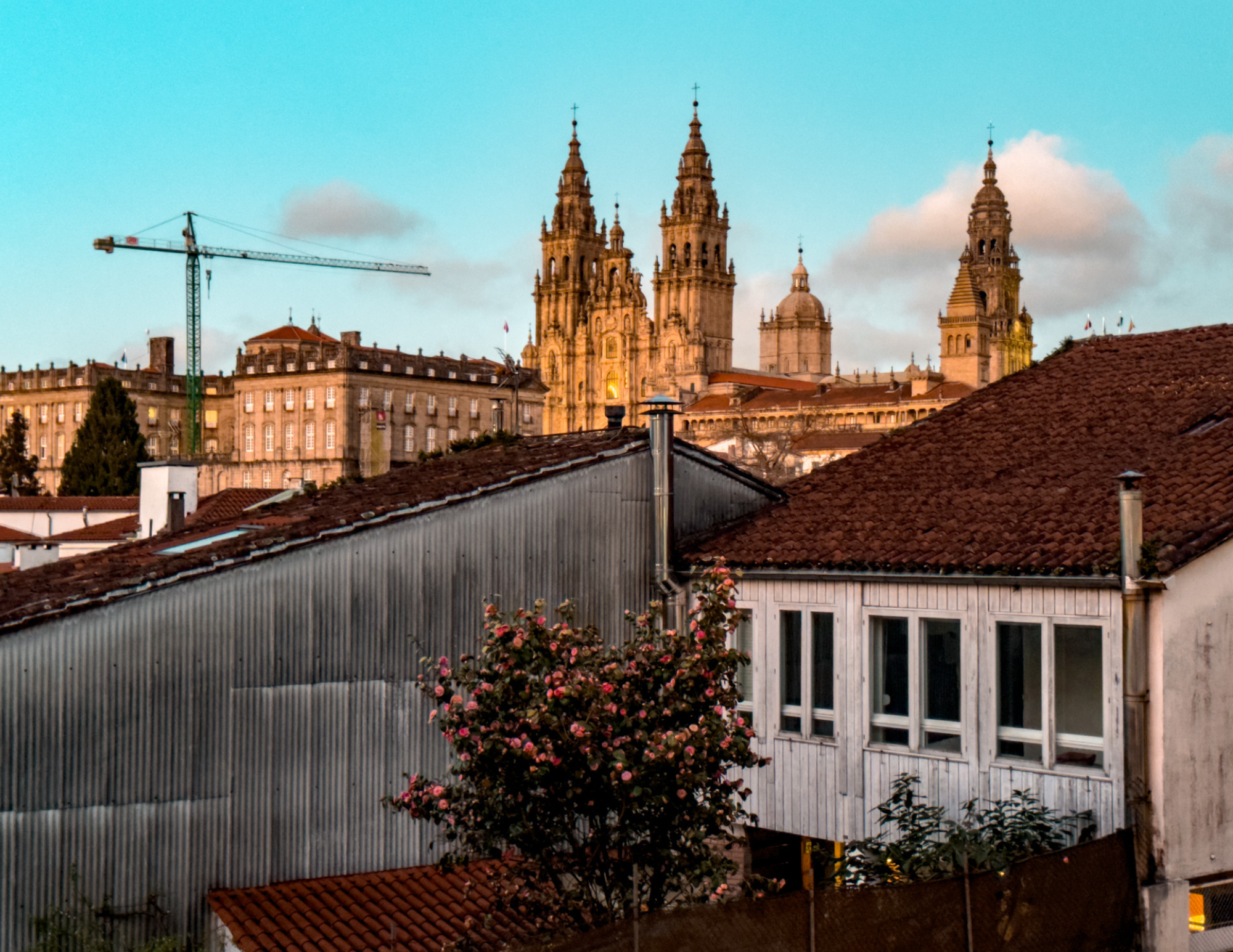
How To Add the Shadow of the Pilgrim to Your Santiago Itinerary
The easiest way to add the Shadow of the Pilgrim to your Santiago itinerary is to save it for after dinner.
Spend your day visiting the Cathedral, Praza do Obradoiro, the Old Town, the Museum of Pilgrimage, Mercado de Abastos, or Alameda Park. Have dinner or a drink in the historic center. Then, before going back to your hotel, walk toward the Cathedral area.
Start with Praza do Obradoiro if you want the classic nighttime Cathedral view. Then walk around the Cathedral toward Plaza de la Quintana and look for the shadow.
This makes the evening feel like a gentle loop instead of an extra task.
If you only have one day in Santiago, this is a perfect way to end it. You get the daytime version of the city, the food, the walking, the Cathedral views, and then this small nighttime detail before closing out the day.
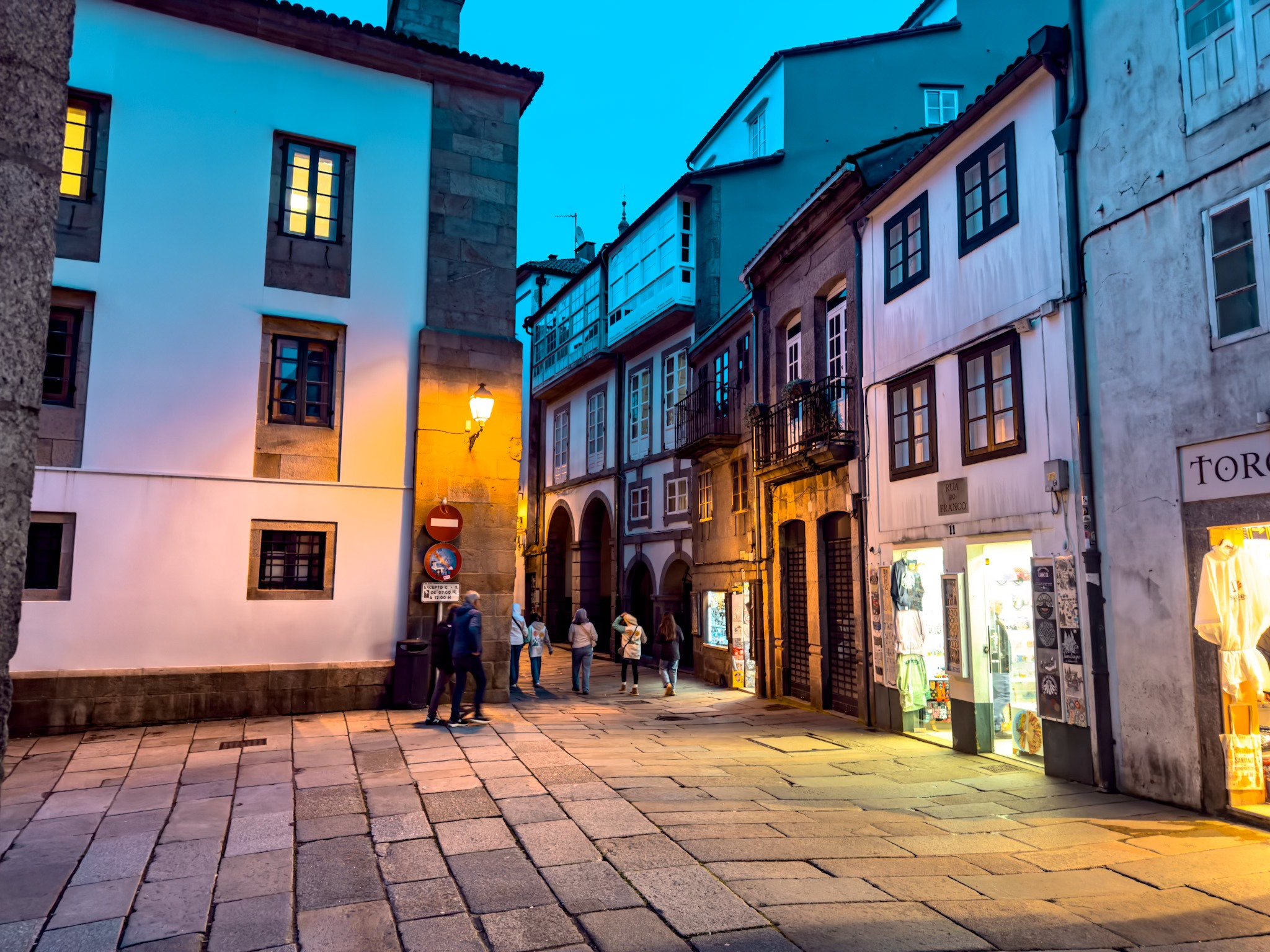
Can You See the Shadow of the Pilgrim on a Day Trip?
If you are only visiting Santiago as a day trip and leaving before dark, you probably will not see the Shadow of the Pilgrim. Since it depends on night lighting, it is really an evening or nighttime stop.
This is one reason I think Santiago is better with at least one overnight stay. You can still see the main highlights in one day, but the city feels different after dark. The Cathedral area softens, the Old Town becomes moodier, and small details like the Shadow of the Pilgrim become part of the experience.
If you are deciding whether to stay overnight or leave after a daytime visit, this is one more reason to stay if your schedule allows it.
Santiago does not need a packed nightlife plan. A simple nighttime walk around the Cathedral can be enough.
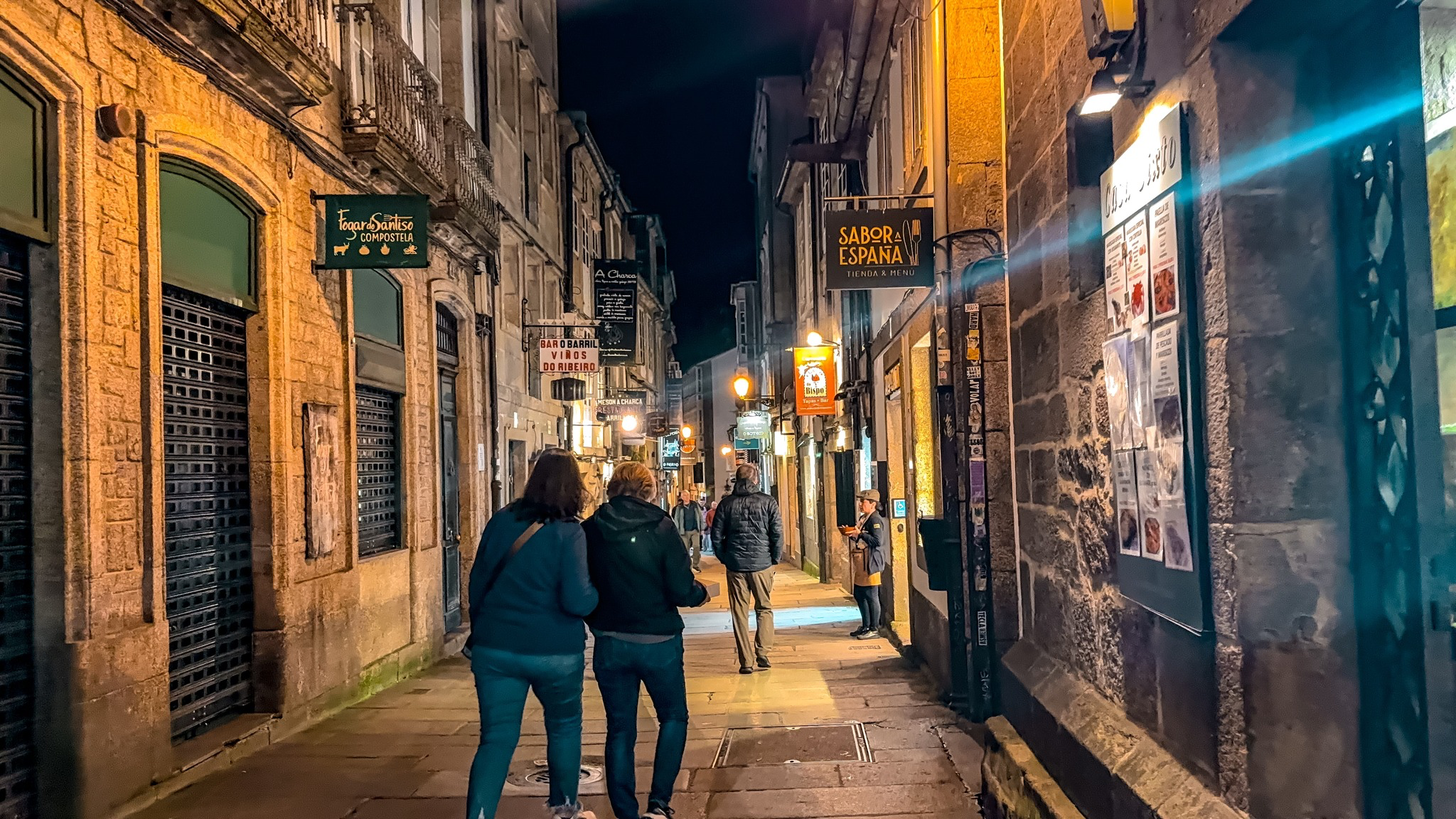
Tips for Finding the Shadow of the Pilgrim
Go after dark, not during the day.
Head to Plaza de la Quintana beside the Cathedral.
Look near the base of the Clock Tower and Holy Door area.
Give your eyes a moment to adjust and scan the wall where the light hits.
Do not expect a huge attraction with signs and crowds organized around it. Part of the fun is finding it as a small detail.
Pair it with a full nighttime Cathedral walk so the stop feels atmospheric.
If you are creating content, this can make a good quick clip or photo, but try to capture the mood around it too: the stone square, Cathedral lights, and quiet nighttime feeling.
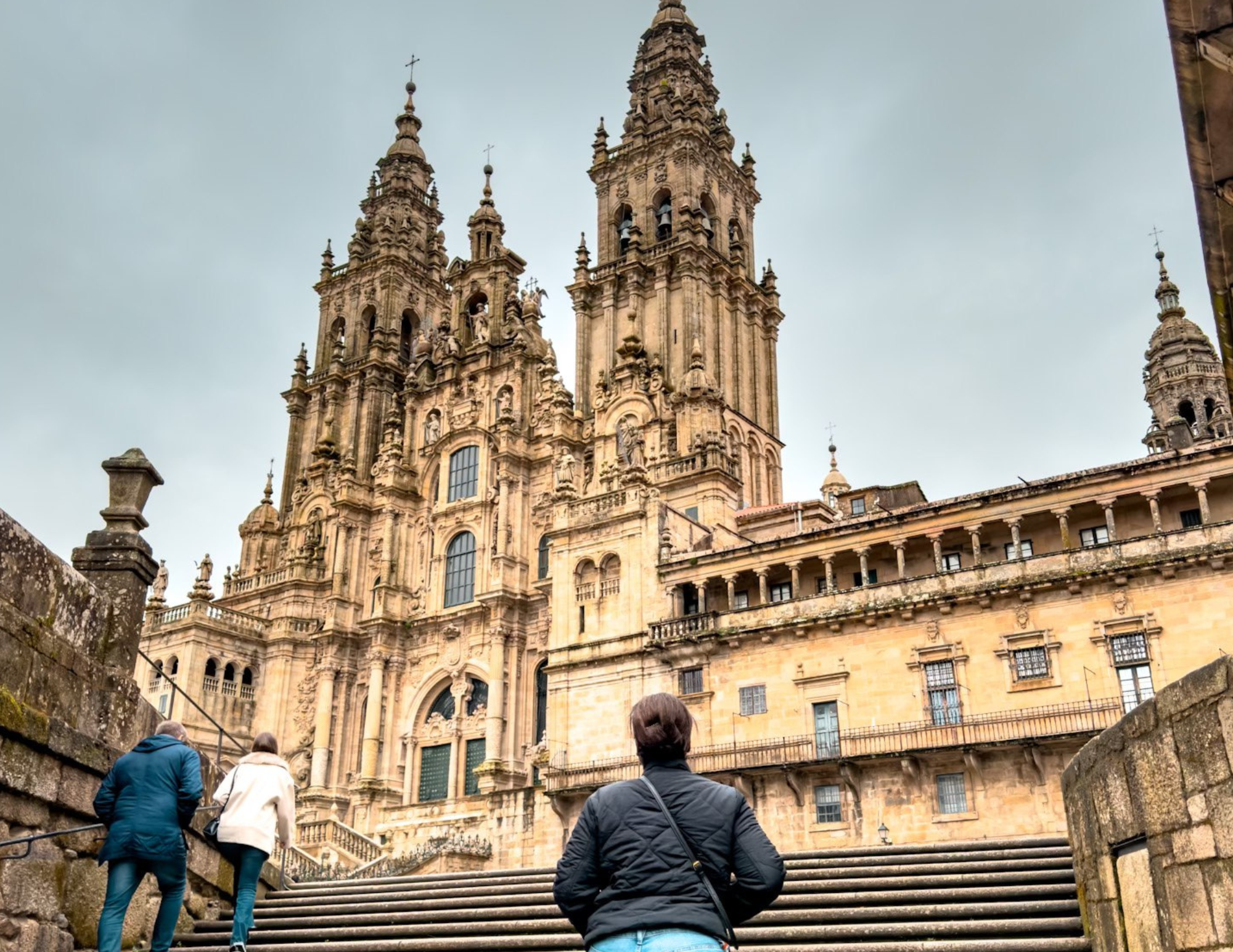
What To Do Near the Shadow of the Pilgrim
Because the Shadow of the Pilgrim is right near the Cathedral, it is easy to combine with other nearby Santiago stops.
Before seeing it, you can visit the Cathedral, spend time in Praza do Obradoiro, walk through the Old Town, have dinner near Rúa do Franco, or stop for vermouth or local wine. During the day, you can also visit the Museum of Pilgrimage or walk to Alameda Park for Cathedral views.
At night, I would keep things simple. Have dinner, return to the Cathedral area, see Praza do Obradoiro lit up, walk to Plaza de la Quintana, find the shadow, then wander back slowly through the Old Town.
That is enough.
Santiago is not a city where every evening needs to be packed with activity. Sometimes the best night is just a walk through old streets and one strange little shadow on a wall.
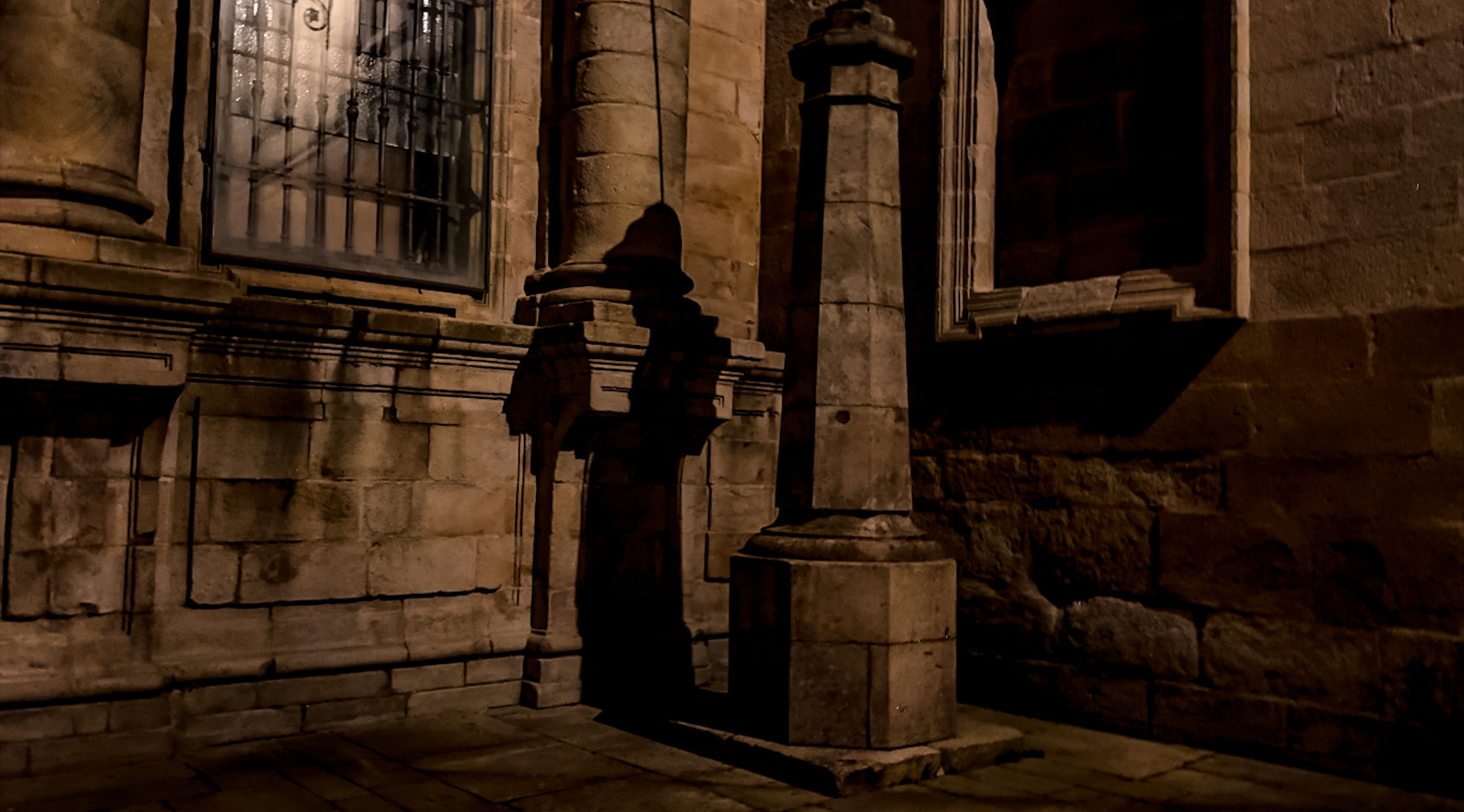
Shadow of the Pilgrim vs. Other Santiago Stops
The Shadow of the Pilgrim is not as important as the Cathedral, Praza do Obradoiro, or the Old Town. Those are the core Santiago experiences.
It is also not as useful for context as the Museum of Pilgrimage or Museo do Pobo Galego, and it is not as scenic as Alameda Park.
But it has something different: atmosphere.
This is the kind of stop that makes a city feel personal. It is small, memorable, free, and a little strange. It gives you a reason to pay attention to the city after dark instead of treating sightseeing as something that ends before dinner.
So no, I would not prioritize it above the major sights. But yes, I would absolutely include it if you are sleeping in Santiago.
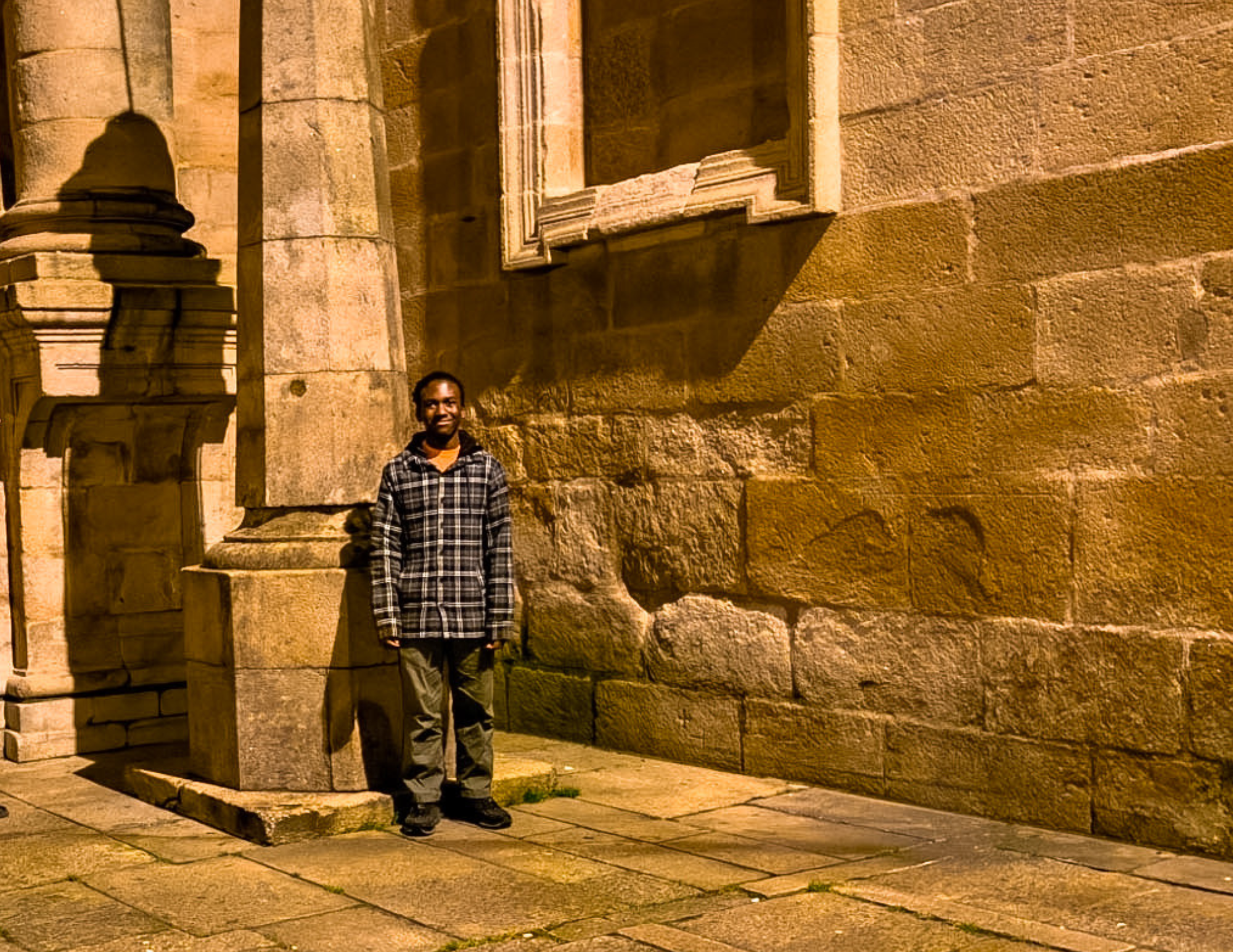
Is the Shadow of the Pilgrim Good for Kids or Teens?
Yes, the Shadow of the Pilgrim can be fun for kids or teens because it feels more like a city secret than a formal attraction.
For teens, especially, this kind of stop can work better than another church or museum because there is a little mystery to it. It is visual, quick, and tied to a legend. You can explain that people see the shape of a pilgrim on the wall at night, then let them try to find it.
Younger kids may also enjoy the “spot the shadow” part, depending on the time of night and how tired everyone is.
This is a good family add-on because it does not require a ticket, long attention span, or major commitment. Just make sure everyone still has energy after dinner.
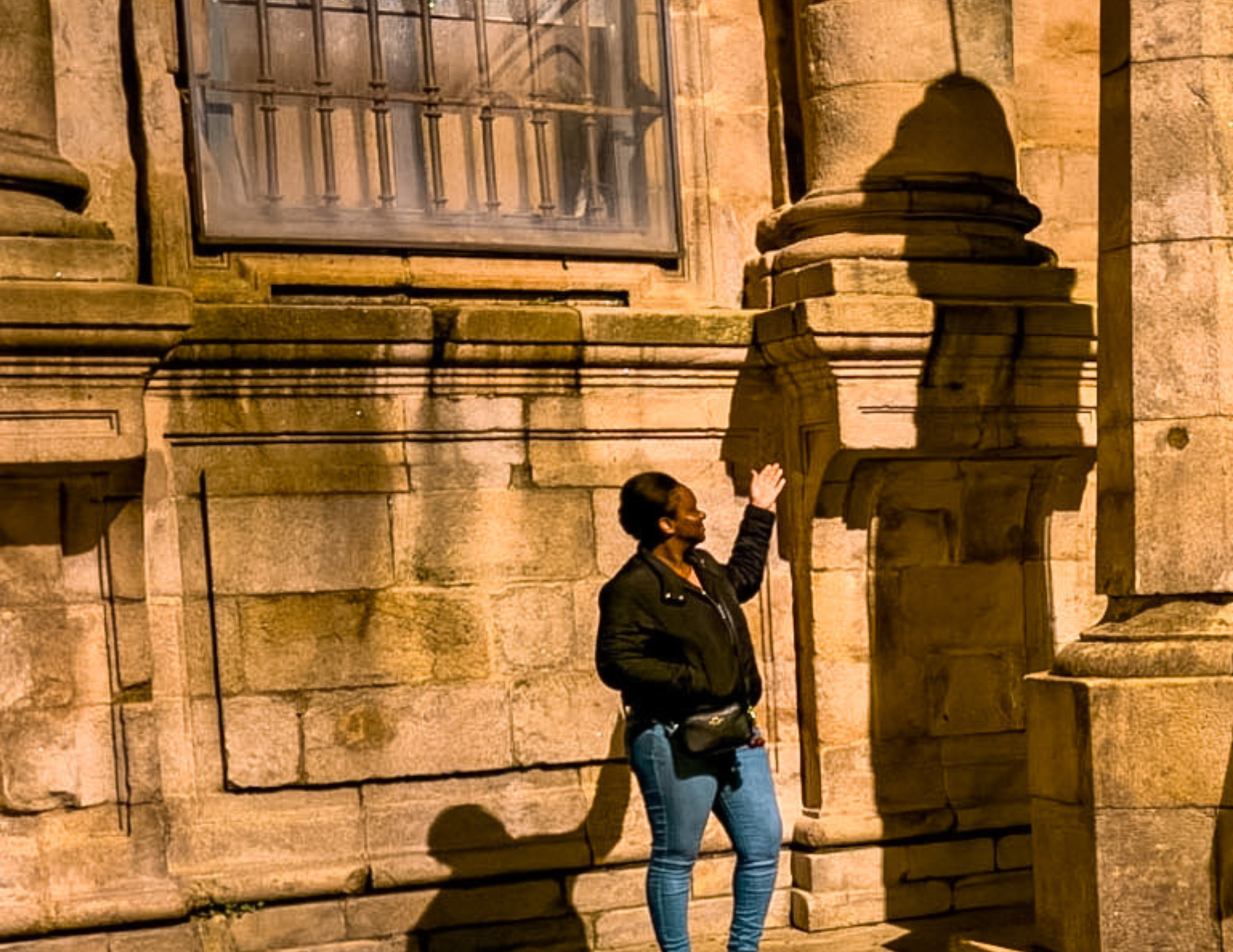
Photography Tips for the Shadow of the Pilgrim
Photographing the Shadow of the Pilgrim can be a little tricky because it depends on nighttime lighting. Your phone may brighten the scene too much or struggle with the contrast, so tap the screen to focus and adjust exposure if needed.
Try taking a wider photo first so you capture the wall and surrounding Cathedral area, then take a closer shot of the shadow itself. Sometimes the wider photo gives a better sense of place than a tight zoom.
If you are filming, move slowly and let the viewer see the square before you reveal the shadow. This is one of those details that works well when you build the mood first.
Do not be surprised if it looks more obvious in person than on camera, or the other way around. Shadows can be funny like that.
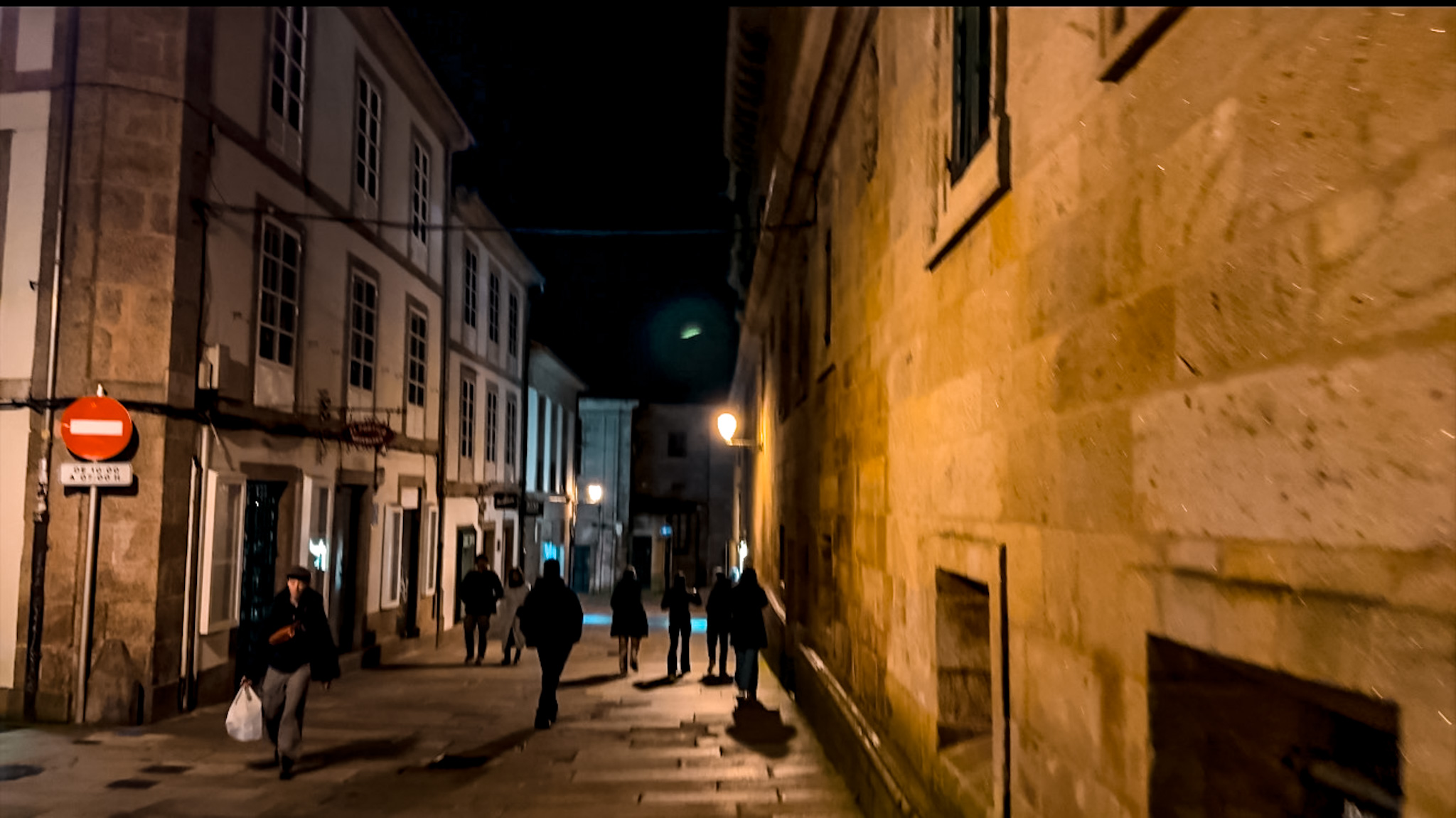
My Honest Take on the Shadow of the Pilgrim
My honest take is that the Shadow of the Pilgrim is not something you need to overhype, but it is absolutely worth seeing.
It is small. It is simple. It is technically just light and architecture doing something interesting. But because it happens in Santiago, beside the Cathedral, in a city built around pilgrimage, it feels meaningful.
That is the part I like.
Travel is not only about the biggest attractions. Sometimes it is about the tiny details that make you remember a place differently. A shadow on a wall. A legend people keep telling. A quiet square at night. A Cathedral glowing behind you. A city that feels like it has more stories than you have time to hear.
The Shadow of the Pilgrim is one of those details.
Do not make it the main event. Just let it be a small final note in your Santiago day.
Final Thoughts on the Shadow of the Pilgrim in Santiago de Compostela
The Shadow of the Pilgrim is worth looking for because it captures something Santiago does really well: mixing history, faith, legend, atmosphere, and small visual details into one memorable moment.
It is not a major sight. It is not something that needs a ticket. It is not a reason by itself to visit Santiago. But if you are already there, and especially if you are staying overnight, it is an easy and meaningful addition to your evening.
Go after dark. Walk around the Cathedral. See Praza do Obradoiro lit up. Make your way to Plaza de la Quintana. Look near the Clock Tower and Holy Door area. Let your eyes find the pilgrim shape on the wall.
Then keep walking.
That is the best way to experience it. Not as a checklist item, but as one of those small Santiago moments that makes the city feel a little more mysterious.
For the full city plan, read my Santiago de Compostela travel guide. For the best way to structure your day, read my One day in Santiago de Compostela itinerary. And for more context on why pilgrimage shapes the city so deeply, read my Museum of Pilgrimage in Santiago de Compostela guide.

Cavetta is the creator of LifeWithVetta.com and has been traveling the world full time since 2020. She has visited more than 60 countries while worldschooling her son and documenting what it really takes to live abroad. Her guides focus on travel, moving abroad, digital nomad life, and designing a life beyond the traditional path.
