
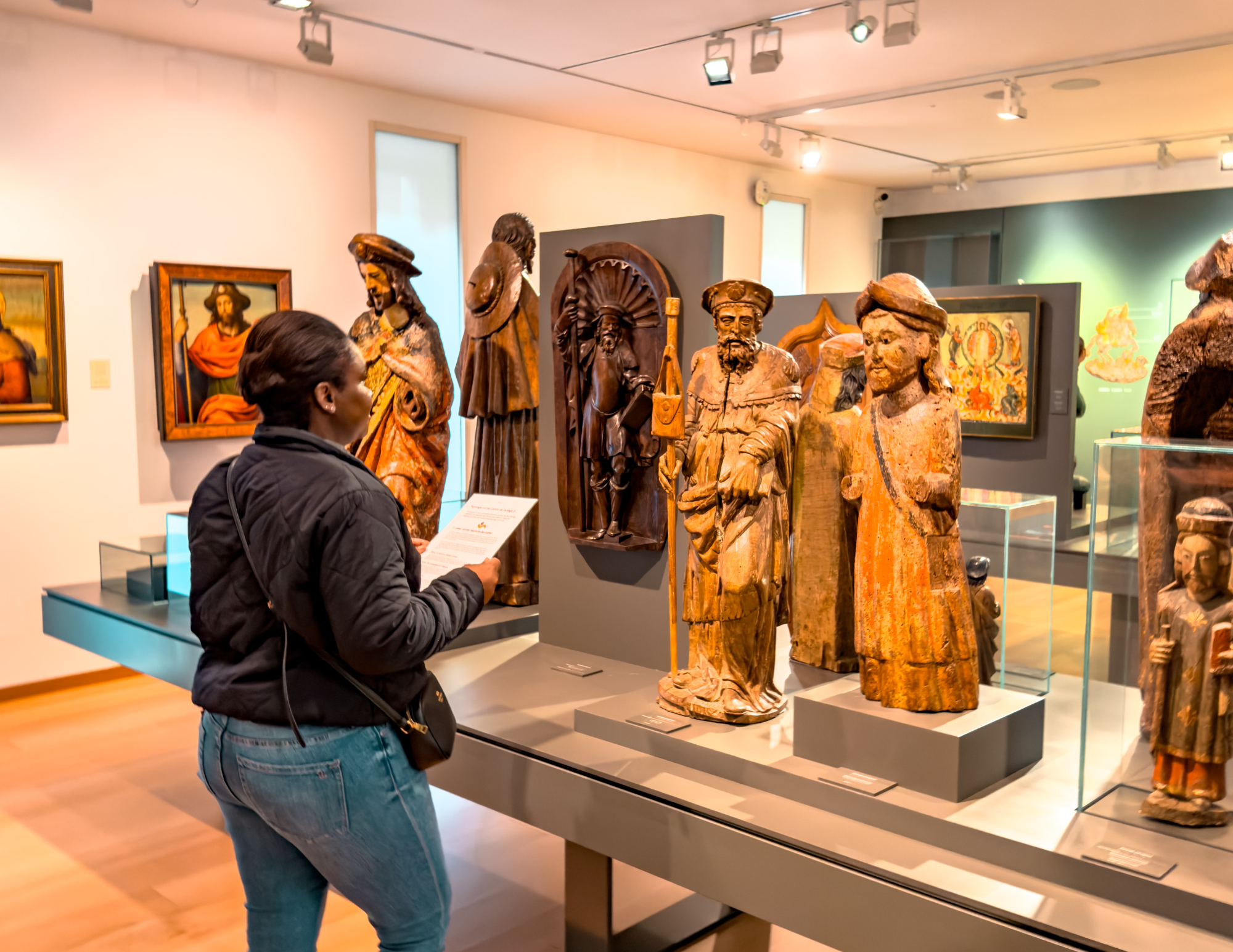
The Museum of Pilgrimage in Santiago de Compostela is one of the best places to visit if you want the city to make more sense.
Santiago is beautiful on the surface. You can walk into Praza do Obradoiro, see the Cathedral, wander the Old Town, eat Galician food, and still have a good trip. But once you start understanding why people have been making their way here for centuries, the city hits differently.
That is where the Museum of Pilgrimage comes in.
This museum helps explain the history, symbols, routes, devotion, movement, and cultural importance behind Santiago de Compostela as a pilgrimage city. It gives more context to the Camino without making you feel like you need to be a pilgrim yourself to care. And honestly, that is what makes it one of the more meaningful museum stops in Santiago.
I visited Santiago after spending time in Vigo, and the difference between the two cities stood out immediately. Vigo felt more coastal and everyday, while Santiago felt like a city built around arrival. You see that clearly around the Cathedral, but the Museum of Pilgrimage gives you the background behind that feeling.
If this is your first time in the city, read my Santiago de Compostela travel guide first, then use this Museum of Pilgrimage guide to decide whether it deserves a spot in your itinerary. If you only have one day, my One day in Santiago de Compostela itinerary shows how to fit it into a walkable route without overloading your day.
.png)
What Is the Museum of Pilgrimage in Santiago de Compostela?
The Museum of Pilgrimage, officially known as the Museo das Peregrinacións e de Santiago, is a museum focused on Santiago, pilgrimage culture, the Camino de Santiago, and the historic importance of the city as a destination for travelers and pilgrims.
The main exhibition space is in Praza das Praterías, right near the Cathedral, which makes it very easy to add to a first-time visit. That location matters because you can move from the Cathedral area straight into a museum that helps explain the reason the Cathedral and the city became so important. The museum also lists a separate administrative site at Casa Gótica on Rúa San Miguel, but the exhibition space visitors usually care about is in Praza das Praterías.
The museum is not just about one route or one religious object. It is about the wider phenomenon of pilgrimage and how Santiago became one of the most important arrival points in Europe. That includes the Camino, the figure of Saint James, the Cathedral, symbols connected to pilgrimage, travel objects, historic routes, and Santiago’s role as both a religious and cultural destination.
For me, this kind of museum works best when you pair it with the city itself. Visit the Cathedral. Sit in Praza do Obradoiro. Watch pilgrims arrive. Walk through the Old Town. Then go into the museum with those images fresh in your mind. The exhibits will feel less abstract because you have already seen the living version of the story outside.
.png)
Is the Museum of Pilgrimage Worth Visiting?
Yes, the Museum of Pilgrimage is worth visiting if you want to understand Santiago beyond the Cathedral photo.
This is especially true if you did not walk the Camino. When you arrive in Santiago as a regular traveler, it is easy to see the emotion around you but not fully understand it. You see people with backpacks. You see scallop shells. You see pilgrims sitting in the square. You see the Cathedral as the endpoint. But the museum helps connect those pieces.
It gives you context for why the city matters, why people have traveled here for centuries, and why Santiago feels different from many other historic cities in Spain.
That said, I would not say every single visitor has to go. If you are only in Santiago for a few hours and just want the Cathedral, Old Town, and a meal, you can still have a meaningful visit without it. But if you have a full day or more, the museum is one of the best cultural stops to add because it directly explains the identity of the city.
It is not a random museum. It is one of the museums that makes Santiago make sense.
.png)
Where Is the Museum of Pilgrimage?
The Museum of Pilgrimage’s main exhibition space is in Praza das Praterías, very close to the Cathedral of Santiago de Compostela. That makes it one of the easiest museums to include while exploring the Old Town.
This location is one of the reasons I like it for first-time visitors. You do not need to go far out of your way. You can visit the Cathedral, walk around the different Cathedral squares, and then stop at the museum as part of the same historic-center route.
It also fits well before or after lunch because you are already near the Old Town’s restaurants, cafes, and walking streets. If you are planning your day around the Cathedral, Rúa do Franco, Mercado de Abastos, and Alameda Park, this museum slides into the route easily.
For a deeper walk through this part of the city, read my Santiago de Compostela Old Town guide.
.png)
Museum of Pilgrimage Hours and Tickets
The Museum of Pilgrimage is open Tuesday to Friday from 9:30 a.m. to 8:30 p.m., Saturday from 11:00 a.m. to 7:30 p.m., and Sunday or holidays from 10:15 a.m. to 2:45 p.m. The museum is closed on Mondays and on certain holidays, so it is smart to double-check before planning your day around it.
This is especially important in Santiago because Mondays can affect museum plans, and holiday closures can surprise you if you build a whole itinerary around one stop.
Since the museum is free, it becomes an easy yes if you are already near the Cathedral and have time. You do not have to make it a big financial decision. You can go in, spend as much time as feels right, and leave with more context for the city.
Still, I would not treat “free” as a reason to rush through. Give yourself enough time to actually absorb the exhibits, especially if you are using the museum to better understand the Camino and Santiago’s identity.
.png)
How Much Time Do You Need at the Museum of Pilgrimage?
For most travelers, I would plan around 45 minutes to 1.5 hours at the Museum of Pilgrimage.
If you are moving quickly and only want a basic overview, you can keep the visit shorter. If you enjoy museums, history, symbols, religious art, or Camino context, give yourself more time.
This museum doesn’t need to take over your whole day. Its strength is that it fits seamlessly into a Santiago itinerary. You can see the Cathedral area, visit the museum, eat nearby, and continue walking through the Old Town without feeling like you had to restructure your whole day.
If you only have one day in Santiago, I would visit the Cathedral first, then add the Museum of Pilgrimage before or after lunch. That way you get the emotional experience of the square and then the context behind it.
.png)
Why This Museum Helps You Understand Santiago
The Museum of Pilgrimage helps you understand Santiago because it explains the “why” behind the city.
Without context, Santiago can look like a beautiful historic city with a famous Cathedral. With context, it becomes a place shaped by centuries of movement, faith, hope, hardship, ritual, and arrival.
That difference matters.
When you are standing in Praza do Obradoiro watching pilgrims arrive, you can feel that something important is happening, even if you do not know the full history. The museum helps you understand the roots of that feeling. It gives the Camino more shape. It explains why certain symbols repeat throughout the city. It helps you understand why the Cathedral became such a powerful destination.
I think this is especially helpful for travelers who are curious but not religious. You do not have to share the beliefs behind the pilgrimage to understand the cultural and historical impact of it.
That is what makes the museum valuable. It gives you a way into Santiago’s story.
.png)
What You Can Expect Inside
Inside the Museum of Pilgrimage, expect exhibits connected to pilgrimage, Santiago’s religious history, the Camino de Santiago, travel symbols, devotional objects, city history, and the broader cultural importance of pilgrimage.
Here, the objects are more interesting when you connect them back to what you have seen outside. The scallop shell symbols, pilgrim imagery, routes, historic travel objects, and religious references all feel more meaningful after you have walked through the Old Town and seen pilgrims near the Cathedral.
The museum helps you slow down and understand that pilgrimage is not only about walking. It is also about identity, ritual, memory, belief, movement, and the relationship between people and sacred places.
You may also see temporary exhibitions depending on when you visit, so the exact experience can change over time. That is another reason to check current museum details before going.
.png)
Pair It With the Cathedral
The Museum of Pilgrimage is great to pair with the Cathedral of Santiago de Compostela. I would not visit the museum completely separate from the Cathedral experience because the two explain each other.
The Cathedral gives you the emotional and visual center of Santiago. The museum gives you the context.
Start in Praza do Obradoiro and take in the Cathedral from the outside. Watch the square for a while. Walk around the Cathedral from different sides. Go inside if you can. Then visit the Museum of Pilgrimage to better understand the history and movement behind what you just experienced.
This order works well because the museum does not feel like isolated information. It feels connected to what you have already seen.
For a deeper Cathedral visit, read my Santiago de Compostela Cathedral guide.
.png)
Pair It With Praza do Obradoiro
Praza do Obradoiro is one of the most important places to experience before or after the Museum of Pilgrimage. This is the main square in front of the Cathedral and the place where the emotion of the Camino is most visible.
You will see people arriving, sitting, resting, celebrating, crying, taking photos, and staring at the Cathedral. This is where the idea of pilgrimage becomes human.
The museum gives you the history, but the square gives you the feeling.
That is why I would not rush through Praza do Obradoiro just to get to the museum. Spend time there first. Notice the backpacks, the walking poles, the tired faces, the relief. Then go into the museum with those images in your mind.
The exhibits will land differently when you have already seen the modern version of pilgrimage happening right outside.
.png)
Pair It With the Old Town
The Museum of Pilgrimage also fits naturally into your Old Town walk. Since it is near the Cathedral, you can visit it while exploring the historic center without needing a separate transportation plan.
A strong route could look like this: start at Praza do Obradoiro, walk around the Cathedral squares, visit the Museum of Pilgrimage, wander through the Old Town, stop at Rúa do Franco, eat Galician food, and then continue toward Alameda Park later in the day.
That kind of route gives you history, atmosphere, food, and views without making the day feel scattered.
Santiago’s Old Town is one of the best parts of the city, and the museum adds meaning to the walk. After visiting, the Camino symbols, pilgrim shops, Cathedral streets, and arrival atmosphere all feel more connected.
.png)
Museum of Pilgrimage vs. Cathedral Museum
The Museum of Pilgrimage and the Cathedral Museum are not the same thing, and that is worth understanding before you plan your day.
The Cathedral Museum is more focused on the Cathedral itself, including its art, history, architecture, and religious treasures. It is the better choice if your main interest is the Cathedral as a building and institution.
The Museum of Pilgrimage is more focused on pilgrimage, Santiago, the Camino, and the wider cultural and religious movement that made the city important.
Both can be worth visiting, but you do not have to do both if you have limited time.
If you are most interested in the Cathedral, choose the Cathedral Museum. If you are most interested in the Camino and why Santiago became such a major destination, choose the Museum of Pilgrimage.
If you have two days in Santiago, doing both gives you a much fuller picture. If you only have one day, I would choose based on what you care about more: the Cathedral’s art and architecture or the broader pilgrimage story.
.png)
Museum of Pilgrimage vs. Museo do Pobo Galego
The Museum of Pilgrimage and Museo do Pobo Galego also serve different purposes.
The Museum of Pilgrimage helps you understand Santiago through the Camino and pilgrimage. Museo do Pobo Galego helps you understand Galicia as a region, including its culture, traditions, identity, and history.
If this is your first time in Santiago and you want to understand why the city feels so connected to arrival, the Museum of Pilgrimage is the better first choice.
If you already understand the Camino or want to go deeper into Galician culture, Museo do Pobo Galego is a great addition. It gives Santiago a broader regional context and reminds you that the city is not only a pilgrimage destination. It is also part of Galicia, with its own language, food, music, and traditions.
If you love cultural museums and have enough time, visit both. If you only have one museum slot, choose based on whether your interest is Santiago as a pilgrimage city or Galicia as a region.
.png)
Is It Good If You Did Not Walk the Camino?
Yes, I actually think the Museum of Pilgrimage is especially useful if you did not walk the Camino.
When you visit Santiago as a regular traveler, you can feel a little outside of the main story. You are watching people arrive after something physically and emotionally huge, while you may have simply arrived by train or bus. There is nothing wrong with that. Most travelers are not walking the full Camino. But the museum helps bridge that gap.
It gives you enough background to appreciate what is happening around you. You start to understand the symbols, the routes, the devotion, and the long history behind the modern Camino.
You do not need to become a pilgrim to appreciate Santiago. You just need a little context, and this museum gives you that.
.png)
Is It Good for Kids or Teens?
The Museum of Pilgrimage can be good for older kids and teens if they are curious about history, travel, symbols, religion, or why people take long journeys. It may be less exciting for younger kids who need more interactive or visual stimulation, depending on their interests.
For teens, I would frame it around the idea of why people walk for days or weeks to reach a place. That question alone can make the museum more interesting. People walk for faith, grief, healing, challenge, transition, tradition, adventure, or reflection. That is something young people can understand even if they are not religious.
If you are traveling as a family, I would keep the visit manageable. Do not turn it into a long forced museum stop. Pair it with the Cathedral square, a food break, and maybe Alameda Park so the day has variety.
.png)
Best Time To Visit the Museum of Pilgrimage
The best time to visit the Museum of Pilgrimage depends on how you want to structure your day.
Morning works well if you want to start with the Cathedral area and then go into the museum before lunch. This gives your day a strong Santiago foundation from the beginning.
Early afternoon also works, especially if you use it as a quieter cultural stop after lunch and before walking to Alameda Park.
I would not leave it too late if you are visiting on a day with shorter Sunday or holiday hours. Also remember that the museum is listed as closed on Mondays, so do not build your Monday Santiago itinerary around it unless you have confirmed current opening details.
For a one-day visit, I think late morning or early afternoon is the easiest time to fit it in.
.png)
How To Fit the Museum Into One Day in Santiago
If you only have one day in Santiago, I would fit the Museum of Pilgrimage into the day after seeing the Cathedral area.
Start in Praza do Obradoiro, walk around the Cathedral, go inside if you can, then visit the Museum of Pilgrimage. After that, continue through the Old Town, stop for lunch, visit Mercado de Abastos if you are interested in food culture, and walk toward Alameda Park later in the afternoon.
This keeps the museum connected to the city instead of making it feel like a random stop.
If you are short on time, you can shorten the museum visit and still get value from it. Since it is close to the Cathedral, even a focused visit can help you understand Santiago better.
For the full route, read my One day in Santiago de Compostela itinerary.
.png)
What To Do Near the Museum of Pilgrimage
Because the Museum of Pilgrimage is near the Cathedral, there is a lot to do nearby.
You can visit the Cathedral of Santiago de Compostela, spend time in Praza do Obradoiro, walk around the Cathedral squares, explore the Old Town, stop along Rúa do Franco, visit Mercado de Abastos, eat Galician food, and later walk toward Alameda Park for Cathedral views.
At night, you can return to the Cathedral area and look for the Shadow of the Pilgrim. That is one of those small Santiago details that fits perfectly after a day of learning about pilgrimage and walking through the historic center.
Read my Shadow of the Pilgrim Santiago de Compostela guide if you want to add that nighttime stop to your visit.
.png)
Tips for Visiting the Museum of Pilgrimage
Check the current hours before you go, especially if you are visiting on a Monday, Sunday, holiday, or during a busy travel period.
Visit the Cathedral area first if you can. The museum feels more meaningful when you have already seen Praza do Obradoiro and the Cathedral.
Do not rush through only because it is free. Give yourself enough time to understand the themes.
Use the museum as context, not as a replacement for walking the city. The best Santiago experience combines both.
Pair it with the Old Town, food, and Alameda Park so your day has balance.
If you are choosing between several museums, pick the one that matches your curiosity. Museum of Pilgrimage for Camino context, Cathedral Museum for Cathedral history, Museo do Pobo Galego for Galician culture.
.png)
Common Mistakes To Avoid
The first mistake is assuming the Museum of Pilgrimage and the Cathedral Museum are the same thing. They are not, and they serve different purposes.
The second mistake is skipping all context and treating Santiago like a quick Cathedral photo stop. The city becomes much more meaningful when you understand the pilgrimage story behind it.
The third mistake is visiting the museum without spending time in Praza do Obradoiro. The square gives you the living, emotional version of what the museum helps explain.
The fourth mistake is not checking hours. A free museum is only useful if it is open when you plan to go.
The fifth mistake is overloading your day. If you only have one day, do not try to force in every museum. Choose the stops that help you understand Santiago best.
.png)
My Honest Take on the Museum of Pilgrimage
My honest take is that the Museum of Pilgrimage is not just a filler stop. It is one of the better museums to visit in Santiago if you want the city to feel deeper.
Santiago can be moving even without explanation. Watching pilgrims arrive in front of the Cathedral is powerful on its own. But the museum helps you understand the story behind that emotion.
It gives context to the Camino, the symbols, the idea of pilgrimage, and the way Santiago became a city people move toward with so much intention.
Would I choose it over walking the Old Town? No. The Old Town itself is essential.
Would I choose it over seeing the Cathedral? No. The Cathedral is the heart of the city.
But would I add it to a first visit if I had time? Yes, especially because it is central, easy to reach, and directly connected to the reason Santiago matters.
.png)
Final Thoughts on the Museum of Pilgrimage in Santiago de Compostela
The Museum of Pilgrimage is worth visiting because it helps explain the feeling you get in Santiago.
It gives meaning to the backpacks, scallop shells, Cathedral square, walking routes, pilgrim emotion, and centuries of movement toward this city. It also helps you understand that Santiago is not just a pretty historic center with a famous church. It is a place shaped by arrival.
You do not have to walk the Camino to appreciate the museum. You do not have to be religious. You do not even have to know much about pilgrimage before you go.
But if you are curious about why Santiago feels different, this museum is one of the best places to start.
Visit the Cathedral. Sit in Praza do Obradoiro. Watch people arrive. Walk the Old Town. Then step into the Museum of Pilgrimage and let the city’s deeper story come into focus.
For the full city overview, read my Santiago de Compostela travel guide. For a practical route, read my One day in Santiago de Compostela itinerary. And if you want to understand the Cathedral itself in more detail, read my Santiago de Compostela Cathedral guide.

Cavetta is the creator of LifeWithVetta.com and has been traveling the world full time since 2020. She has visited more than 60 countries while worldschooling her son and documenting what it really takes to live abroad. Her guides focus on travel, moving abroad, digital nomad life, and designing a life beyond the traditional path.
