
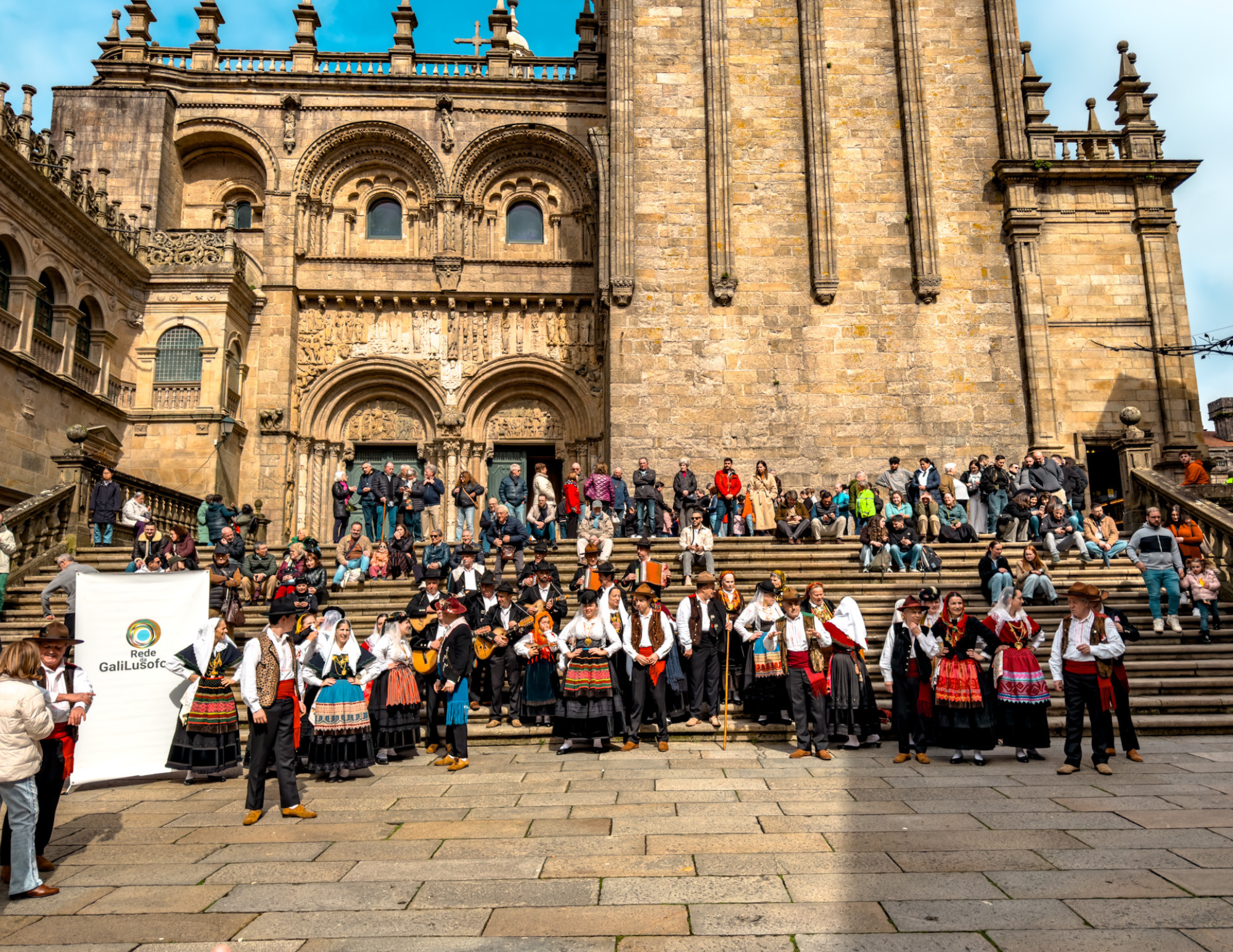
Santiago de Compostela’s Old Town is the kind of place that feels like it was built for slow wandering. Yes, the Cathedral is the center of the city. Yes, Praza do Obradoiro is the big emotional arrival point. But the Old Town is what makes Santiago feel layered beyond one famous landmark.
This is where the city starts to open up.
The stone streets, old buildings, arcades, plazas, churches, restaurants, music, pilgrims, shopfronts, and quiet corners all work together to create the feeling of Santiago. You do not really understand the city by standing in one square, taking one photo, and leaving. You understand it by walking through the historic center, turning down side streets, coming back to the Cathedral from different angles, eating something Galician, and noticing how the whole city seems to orbit around arrival.
I visited Santiago de Compostela after spending time in Vigo, and the difference between the two cities stood out right away. Vigo felt coastal, local, and a little more everyday. Santiago felt older and more symbolic. It had that historic weight where even a normal walk through the center felt connected to something much bigger.
This Santiago de Compostela Old Town guide is for travelers who want to know what to see, where to walk, which plazas matter, how to experience the city beyond the Cathedral, and why the historic center is worth your time even if you are not walking the Camino.
For the full city overview, read my Santiago de Compostela travel guide. If you only have one day, read my One day in Santiago de Compostela itinerary so you can fit the Old Town into a realistic route.
.png)
Why Santiago de Compostela Old Town Is Worth Visiting
Santiago de Compostela Old Town is worth visiting because it is not just a pretty historic center. It is the heart of one of Europe’s most meaningful pilgrimage cities, and you can feel that in the streets.
A lot of old towns in Europe are beautiful, but Santiago has a different emotional layer because of the Camino. People do not just pass through this city casually. Many people arrive here after walking for days or weeks, and that changes the atmosphere. You see backpacks, walking poles, scallop shell symbols, tired faces, relieved smiles, and people pausing in ways that make the city feel like more than a travel stop.
But the Old Town is not only about pilgrims. It is also about Galician food, historic architecture, local life, plazas, markets, museums, churches, shops, and the simple pleasure of walking through a place that feels deeply rooted.
This is one of the reasons I think Santiago is worth visiting even if you are not religious and even if you have no plans to walk the Camino. The historic center gives you architecture, culture, food, atmosphere, and a very walkable introduction to Galicia.
.png)
Is Santiago de Compostela Old Town Walkable?
Yes, Santiago de Compostela Old Town is very walkable, and walking is the best way to experience it.
The historic center is compact enough that you can see a lot in one day, but it does not feel empty or one-note. You can move from the Cathedral to nearby plazas, down food streets like Rúa do Franco, toward Mercado de Abastos, into quieter lanes, and out toward parks like Alameda without needing complicated transportation.
That said, wear comfortable shoes. The streets are old, often stone, sometimes uneven, and not the kind of place where you want to be fighting with uncomfortable sandals or stiff shoes. Santiago is a city where you will probably walk more than you expect because the next street always looks worth exploring.
If you are staying overnight, I would stay close to the Old Town. Being able to walk out in the morning, return after dinner, and see the Cathedral area at night makes the whole visit feel easier and more atmospheric.
.png)
Start at Praza do Obradoiro
Praza do Obradoiro is the best place to start because it is the emotional center of Santiago de Compostela. This is the main square in front of the Cathedral, and it is where many pilgrims end their Camino journey.
Even if you are not walking the Camino, you can feel the importance of this square. People arrive with backpacks, sit on the stone, hug each other, take photos, call family, cry, laugh, and stare at the Cathedral like they are trying to take in what just happened. It does not feel like a normal tourist plaza. It feels like a finish line.
This is one of those places where I would tell you not to rush. Stand there for a minute. Sit if you can. Watch the movement of the square. Look at the Cathedral façade. Notice the people around you. Some are tourists. Some are pilgrims. Some are locals passing through. All of that overlaps in a way that makes Santiago feel different from other historic cities.
Praza do Obradoiro is also one of the best places to understand how the Old Town works. The Cathedral anchors the square, but the streets around it pull you into the rest of the city. Once you have taken in the main view, start walking around the Cathedral instead of only seeing it from the front.
For a deeper visit to the Cathedral itself, read my Santiago de Compostela Cathedral guide.
.png)
Walk Around the Cathedral Squares
One of the best things to do in Santiago Old Town is walk around the Cathedral and experience it from different sides. The Cathedral is not only one façade and one photo. It is surrounded by streets and squares that each give you a different feeling.
Some parts feel grand and open. Others feel tighter, older, and more atmospheric. You might hear music in one corner, see tour groups passing through another, and then turn into a quieter space just steps away from the busiest square.
This is where the Cathedral starts to feel less like a single attraction and more like the center of an entire historic world. The Old Town wraps around it, and the more you walk, the more you see how deeply the building is connected to the city.
Do not rush this part. Walk slowly. Look up at the stonework. Notice the different entrances, angles, and surrounding buildings. Santiago rewards people who pay attention to details.
.png)
Wander Without Overplanning
After you have seen the main Cathedral area, give yourself permission to wander without overplanning. This is one of the best ways to experience Santiago’s Old Town.
The historic center is not huge, so getting a little lost is part of the fun without being stressful. You can turn down small lanes, pass under arcades, find quiet corners, stumble across churches, notice small shops, or end up back near the Cathedral before you even realize it.
Santiago has a moody beauty that I really appreciated. It does not need perfect weather to feel special. In fact, cloudy skies and damp stone almost make the city feel more like itself. Galicia is greener and rainier than many people expect from Spain, and Santiago wears that atmosphere well.
This is not a place where every moment needs to be scheduled. The Old Town itself is the experience. Let it be slow.
.png)
Walk Down Rúa do Franco
Rúa do Franco is one of the most well-known streets in Santiago’s Old Town, especially for food, drinks, restaurants, and people-watching. Because it is close to the Cathedral, most first-time visitors end up around here at some point.
It can feel touristy in parts, but I still think it is worth walking. Some streets become popular because they are central to how people move through a city, and Rúa do Franco is one of those streets in Santiago. It has that busy, historic-center energy where you see menus outside restaurants, people stopping for drinks, travelers comparing options, and groups drifting toward or away from the Cathedral.
I would not choose every meal on the most obvious street just because it is convenient, but I would absolutely include it in your Old Town walk. It gives you a feel for Santiago’s food-and-footsteps rhythm.
If you are planning your meals around the city, save my what to eat in Santiago de Compostela guide for the full food breakdown.
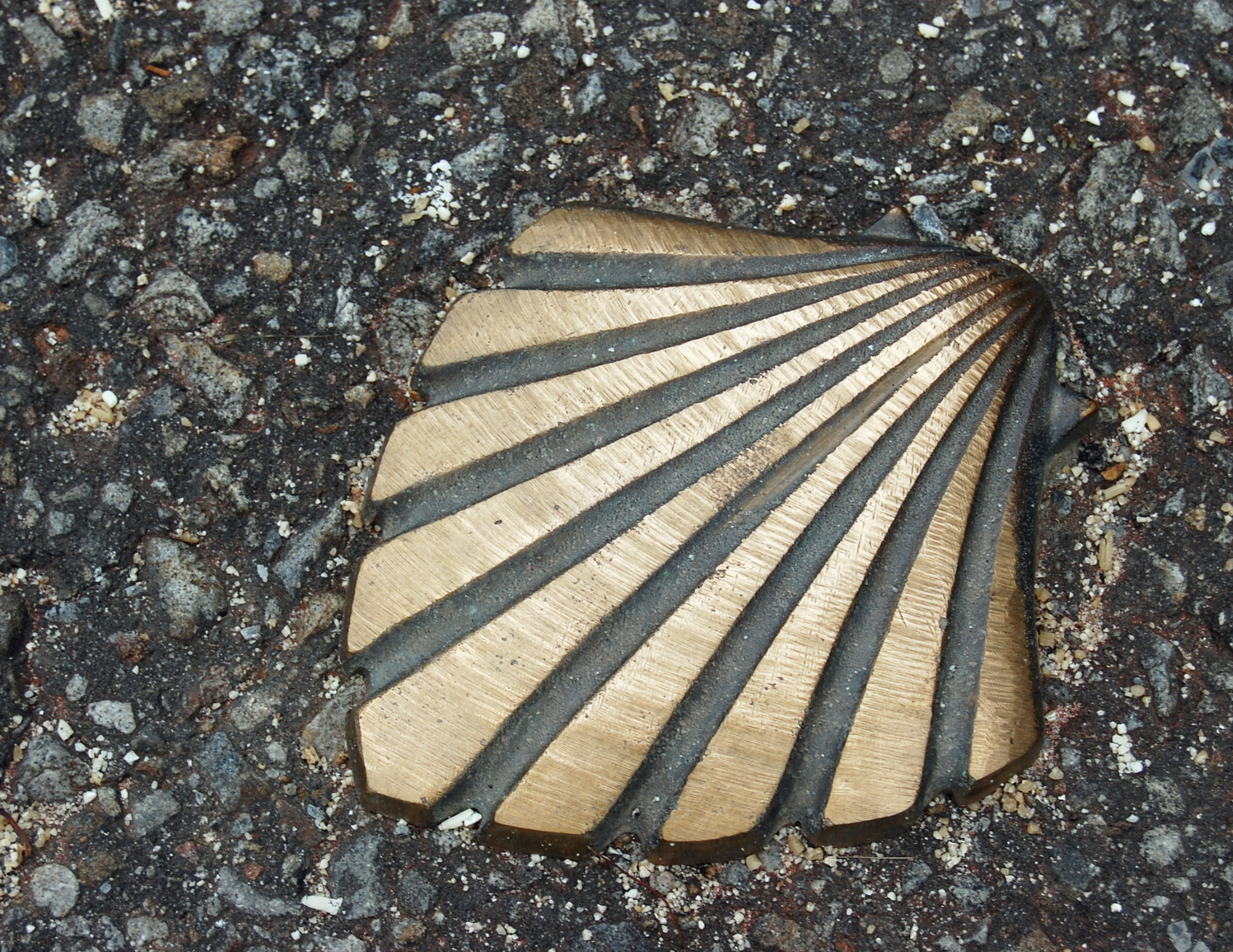
Notice the Camino Symbols
As you walk through Santiago’s Old Town, you will start noticing Camino symbols everywhere. The scallop shell is the most famous one, and you will see it connected to signs, souvenirs, markers, and pilgrim imagery throughout the city.
These symbols matter because they remind you that Santiago is not just a historic place people visit. It is a destination people move toward with intention.
Even if you are not walking the Camino, noticing the symbols adds context to the city. You start to understand why certain streets feel the way they do, why backpacks and walking poles are everywhere, and why the area around the Cathedral feels so emotional.
Santiago is one of those cities where the more context you have, the better it gets. You can still enjoy it as a beautiful old city, but knowing even a little about the Camino makes the Old Town feel more meaningful.
.png)
Visit the Museum of Pilgrimage
The Museum of Pilgrimage is one of the most relevant museum stops in Santiago because it connects directly to the reason the city is so important. If you did not walk the Camino yourself, this museum can help you understand more of the history, symbols, and meaning behind the pilgrimage.
I think this is a smart stop because Santiago can feel emotional before you even fully understand why. You see people arriving. You see the Cathedral. You see the symbols. You see the backpacks. The museum gives you context for all of that.
This is the kind of place I would add if you want your visit to feel deeper than just “I saw the Cathedral and walked around.” It helps explain why Santiago has mattered for centuries and why people still make their way here today.
If you only have one day, this is one of the best museum choices because it ties directly into the city’s identity.
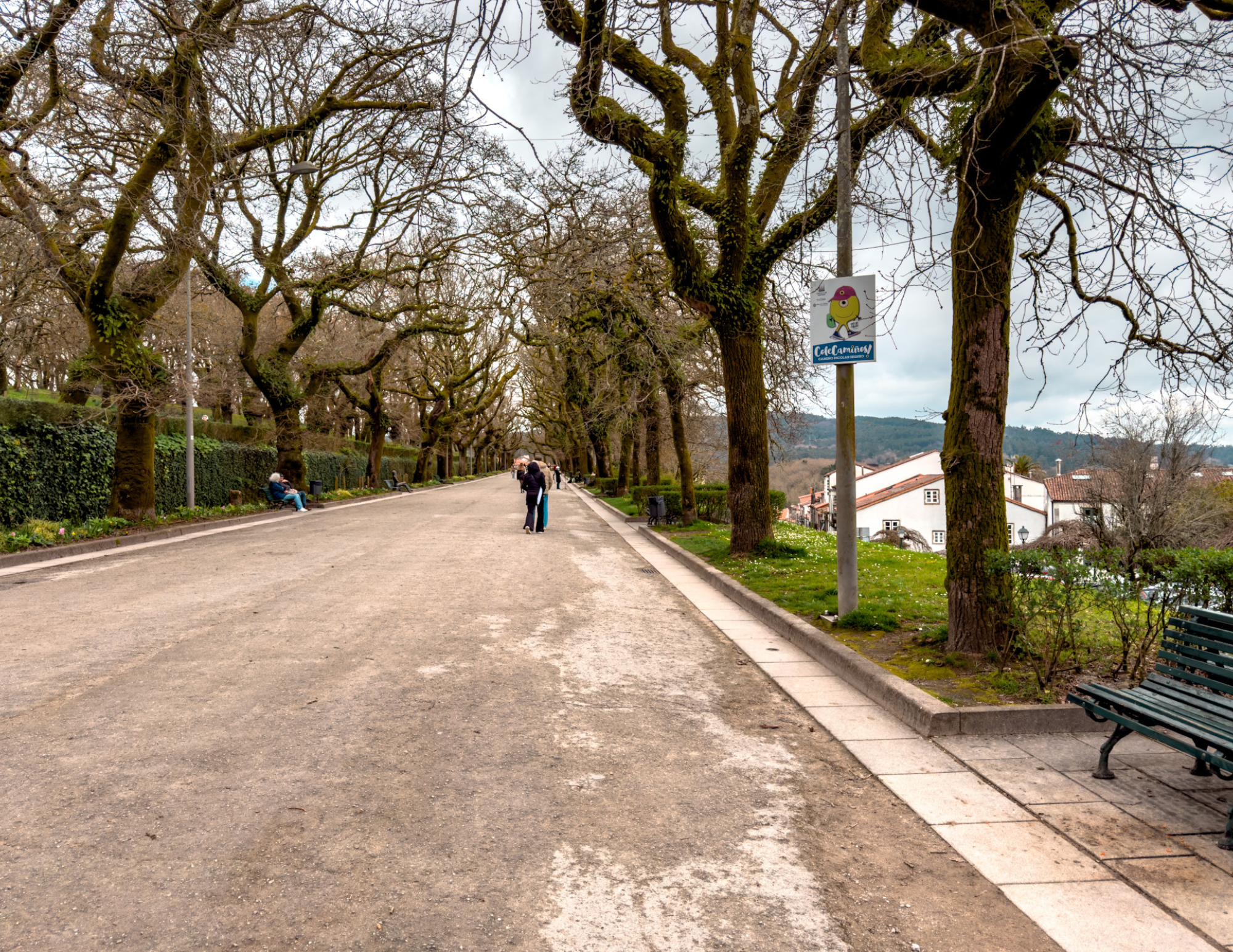
Walk Toward Alameda Park for Cathedral Views
Alameda Park sits just outside the tightest part of the Old Town, but it is one of the best places to include in a Santiago walk. The reason to go is simple: the views back toward the Cathedral are beautiful.
Instead of standing directly in front of the Cathedral, Alameda lets you see it rising above the rooftops. That perspective helps you understand how the Cathedral sits inside the city and why it dominates Santiago’s skyline.
I also liked the idea of using Alameda as a breathing space. Old Towns can be beautiful but intense because the streets are narrow, the buildings are close, and the main areas can get busy. Alameda gives you room to exhale.
If you are visiting in the late afternoon or around golden hour, this is a great time to go. You get a calmer walk, a different view, and a nice transition before dinner or an evening return to the Cathedral area.
Read my Alameda Park Santiago de Compostela guide for the best way to add it to your visit.
.png)
See Santiago Old Town at Night
If you are staying overnight, make sure you walk through Santiago’s Old Town after dark. The city feels different at night.
The Cathedral area softens. The stone streets glow under the lights. The crowds shift. Restaurants fill. The historic center feels moodier, quieter, and more atmospheric. It is one of those cities where nighttime adds another layer instead of just feeling like the day is over.
Praza do Obradoiro is especially worth revisiting at night. The Cathedral lit up against the dark sky is beautiful, but the feeling of the square is what makes it memorable. It is calmer than during the day, and you can take in the space without as much movement around you.
This is also a good time to look for the Shadow of the Pilgrim, one of Santiago’s small nighttime details near the Cathedral area. It is not a major attraction in the way the Cathedral is, but it gives the city a little mystery and makes your evening walk feel more intentional.
Read my Shadow of the Pilgrim Santiago de Compostela guide if you want to add it to your night walk.
.png)
Best Streets and Areas to Focus On
For a first visit, you do not need to know every street name in Santiago’s Old Town. The best approach is to focus on the areas that give you the strongest sense of the city.
Start with Praza do Obradoiro and the Cathedral area. Walk around the Cathedral from multiple sides. Move through the nearby historic streets. Include Rúa do Franco for food and people-watching. Add Mercado de Abastos if you want a market stop. Continue toward the Museum of Pilgrimage or Museo do Pobo Galego if you want more context.
Then walk toward Alameda Park for a different view of the Cathedral.
That gives you a strong Old Town experience without turning the day into a rigid map exercise.
Santiago is compact enough that you can explore naturally, but having those anchors helps.
.png)
How Long Do You Need for Santiago Old Town?
You can get a good feel for Santiago Old Town in half a day if you are short on time, but I would give it a full day if you can.
A half day lets you see the Cathedral area, Praza do Obradoiro, a few historic streets, and maybe stop for food. A full day lets you walk slowly, visit a museum, see the market, go to Alameda Park, eat Galician food, and return at night.
If you are only visiting Santiago as a day trip, focus on the Cathedral, Old Town streets, Rúa do Franco, one meal, and maybe Alameda Park. If you are staying overnight, add the nighttime walk. That evening atmosphere is one of the reasons I think Santiago deserves more than just a rushed stop.
For a realistic route, read my One day in Santiago de Compostela itinerary.
.png)
What To Eat While Exploring the Old Town
Food is a major part of exploring Santiago’s Old Town. Even if this post is focused on walking and sightseeing, you should absolutely build food into your route.
Look for Galician dishes like caldo gallego, pulpo, empanada gallega, seafood, tortilla, local cheeses, and regional desserts. For drinks, Albariño and vermouth are both good choices depending on the time of day and what you are eating.
I would not treat meals as random breaks. In Santiago, food helps connect you to Galicia. A warm bowl of caldo gallego on a cool day or a seafood meal after wandering the old streets can make the city feel more complete.
If you only have one day, plan one proper Galician meal. If you have two days, add a market stop, a vermouth break, and a second sit-down meal.
For the full food breakdown, read my What to eat in Santiago de Compostela guide.
.png)
Is Santiago Old Town Too Touristy?
Santiago Old Town is definitely popular, especially around the Cathedral and main streets, but I would not say that ruins it. This is a pilgrimage city and a major historic destination, so people are part of the atmosphere.
The key is knowing how to move through it. Spend time in Praza do Obradoiro, but do not stay only there. Walk around the Cathedral from different sides. Turn into quieter streets. Visit the market. Go to Alameda Park. Return at night. Add a museum. Eat somewhere that feels more connected to the region than the most obvious tourist menu.
The Old Town has tourist energy, but it also has real history, local life, food culture, and emotional weight. You can still have a meaningful experience if you slow down and do not treat it like a quick photo stop.
.png)
Is Santiago Old Town Good for Families?
Santiago Old Town can be good for families, especially if your kids or teens can handle walking and enjoy historic places when there is context behind them.
For teens, I would explain the Camino before visiting the Cathedral area. The idea that people walk across Spain and other parts of Europe to arrive in that square makes the city more interesting than just “another old town.” The pilgrims, backpacks, symbols, and emotion around the Cathedral can make the history feel real.
For younger kids, the open plazas, street music, food stops, parks, and shorter walking route can help break up the day. Alameda Park is especially useful because it gives everyone space away from the tighter streets.
I would keep the pace flexible. Santiago is not a city where you need to force every museum and church into one day. Let the Old Town be a walk, not a lecture.
.png)
Tips for Visiting Santiago de Compostela Old Town
Wear shoes you can walk in all day. The Old Town is compact, but you will be on stone streets, uneven surfaces, and sometimes slopes.
Pack for rain or cool weather depending on the season. Galicia can be damp, and Santiago’s moody weather is part of its personality, but you will enjoy it more if you are dressed for it.
Do not rush Praza do Obradoiro. Give yourself time to watch pilgrims arrive and understand why that square matters.
See the Cathedral from more than one angle. Walk around it instead of only photographing the front.
Eat Galician food. The food is part of the region’s identity, and Santiago is a great place to try it.
Return at night if you are staying over. The Old Town feels different after dark, and the Cathedral area is worth seeing twice.
Leave room for wandering. This is not a city that needs every minute planned.
.png)
My Favorite Way To Experience Santiago Old Town
My favorite way to experience Santiago Old Town is to let the Cathedral anchor the day without letting it become the only thing you see.
Start in Praza do Obradoiro. Watch the square. Take in the Cathedral. Walk around the building from different sides. Then drift into the streets. Stop for food. Notice the symbols. Visit a museum if you want more context. Go to Alameda Park for a view. Come back at night.
That kind of day gives Santiago room to work on you.
It is not about seeing the most things. It is about understanding why this small historic center has mattered to so many people for so long.
.png)
Final Thoughts on Santiago de Compostela Old Town
Santiago de Compostela Old Town is one of the best reasons to visit the city, even if you are not walking the Camino. The Cathedral may be the most famous landmark, but the historic center is what gives the city its texture.
The Old Town is where you feel the movement of pilgrims, the weight of the Cathedral, the beauty of the stone streets, the comfort of Galician food, the quiet of small plazas, and the atmosphere that makes Santiago different from other Spanish cities.
This is not a place I would rush through. Walk slowly. Look around. Sit in Praza do Obradoiro. Eat something regional. Go back out at night. Let the city feel old, meaningful, and lived-in all at once.
If you are planning your first visit, read my Santiago de Compostela travel guide for the full overview, my One day in Santiago de Compostela itinerary for a practical route, and my Santiago de Compostela Cathedral guide for a deeper look at the city’s most important landmark.

Cavetta is the creator of LifeWithVetta.com and has been traveling the world full time since 2020. She has visited more than 60 countries while worldschooling her son and documenting what it really takes to live abroad. Her guides focus on travel, moving abroad, digital nomad life, and designing a life beyond the traditional path.
