
.png)
Santiago de Compostela is one of those cities where one day can actually give you a real feel for the place, as long as you do not try to treat it like a checklist of random attractions. The historic center is compact, the main sights are close together, and so much of the experience comes from walking, eating, pausing in plazas, watching pilgrims arrive, and letting the city reveal itself slowly.
I visited Santiago after spending time in Vigo, and it immediately felt different from the coastal side of Galicia. Vigo felt local, relaxed, and a little under the radar. Santiago felt older, heavier, and more symbolic. It is not just a city people visit. It is a city people arrive in, and you feel that most around the Cathedral and Praza do Obradoiro.
This one-day Santiago de Compostela itinerary is for first-time visitors who want a full but realistic day. It is especially helpful if you are coming from Vigo, Porto, A Coruña, or another northern Spain stop and only have one day to give Santiago. If you are still planning your route, read my Santiago de Compostela travel guide first, then use this itinerary to organize your day.
You can see the Cathedral, walk through the Old Town, eat Galician food, visit a museum, stop at Alameda Park, and return to the Cathedral area at night without feeling like you spent the whole day running from place to place.
That is the beauty of Santiago. You do not need to overcomplicate it.
.png)
Is One Day Enough for Santiago de Compostela?
One day in Santiago de Compostela is enough to see the main highlights, especially if you stay near the Old Town or arrive early. You can visit the Cathedral area, spend time in Praza do Obradoiro, wander through the historic center, eat a proper Galician meal, visit one museum or cultural stop, and walk to Alameda Park for one of the best views of the city.
Would I stay longer if I had the time? Yes. Santiago is the kind of city that benefits from lingering. Two days would give you more time for the Cathedral’s paid areas, Mercado de Abastos, Museo do Pobo Galego, San Domingos de Bonaval Park, more food stops, and slower evenings.
But if you only have one day, do not skip it. Santiago is very walkable, and the emotional center of the city is easy to experience even in a short visit.
One day is enough to understand why the city matters. Two days is better if you want to feel less rushed.
.png)
The Best Way To Spend One Day in Santiago de Compostela
The best way to spend one day in Santiago is to keep your day centered around the Old Town and Cathedral area. This is not a city where you need to waste time bouncing across town. The strongest first-time experience is right in the historic center.
I would structure the day like this:
Start with coffee or breakfast near the Old Town, then head toward the Cathedral and Praza do Obradoiro before the day gets too busy. Spend the morning around the Cathedral area, walk through the historic streets, stop for Galician food, visit the Museum of Pilgrimage or another cultural site in the afternoon, walk to Alameda Park for views, then return to the Cathedral area after dark.
That route gives you history, food, atmosphere, views, and a little Camino context without making the day feel overloaded.
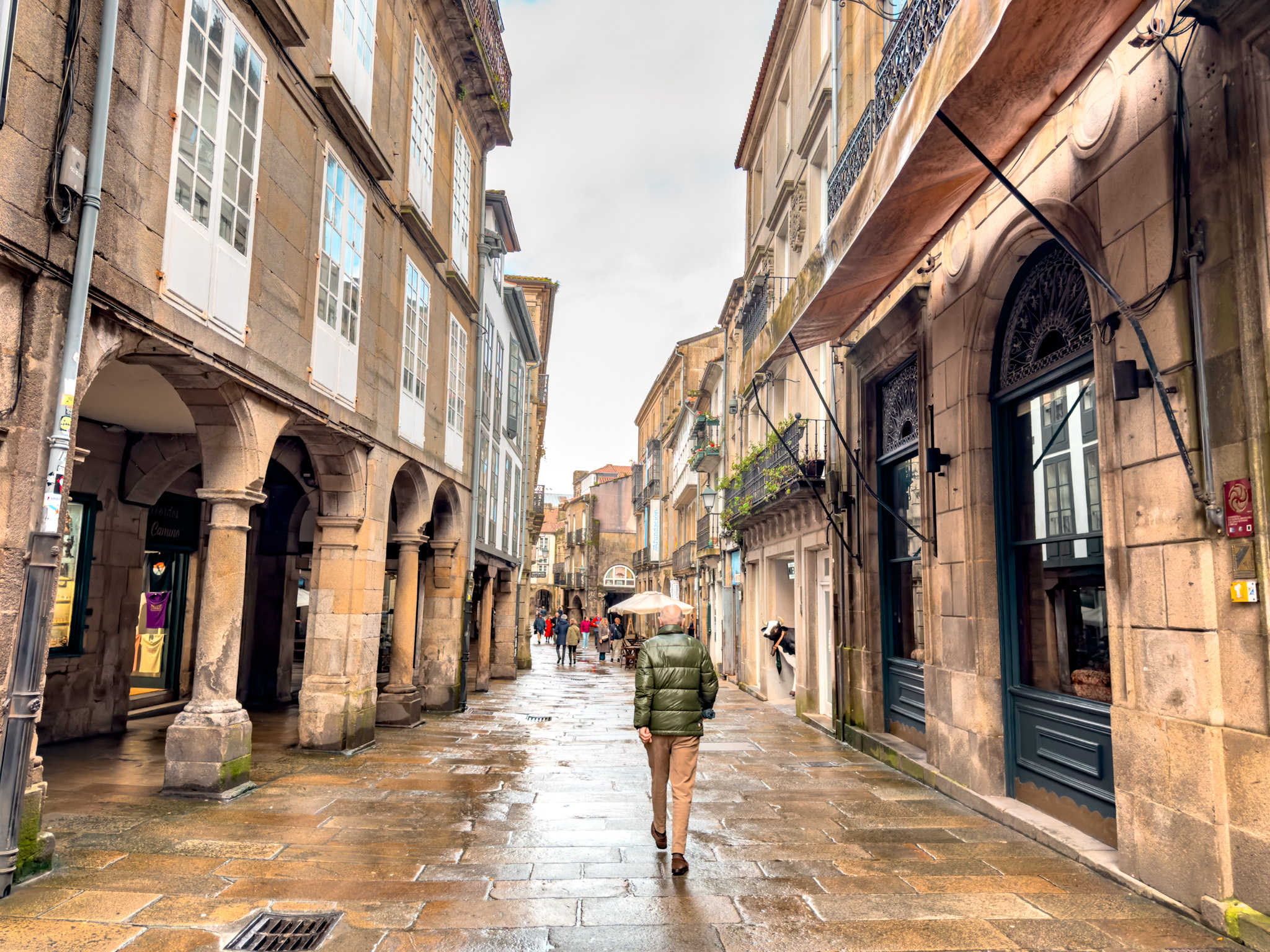
Morning: Start Near the Old Town
Start your morning as close to the Old Town as possible. Santiago is a city best explored on foot, so the less time you spend dealing with transportation, the better.
If you are staying overnight, choose accommodation near the historic center so you can step outside and begin walking right away. If you are arriving by train or bus, give yourself a little time to get into the center before you start sightseeing. The goal is not to rush straight into the Cathedral like you are checking off a box. The goal is to ease into the city.
Find coffee, breakfast, or something simple near the Old Town, then start walking toward the Cathedral area. Santiago has that old-stone, slightly moody, northern Spain feeling, especially in the morning. If the weather is gray or a little damp, it almost fits the city. Galicia does not need perfect blue skies to feel beautiful.
This is a good time to notice the details: the stone streets, the arcades, the pilgrims already moving through the city, the small shops opening, and the way the historic center slowly pulls you toward the Cathedral.
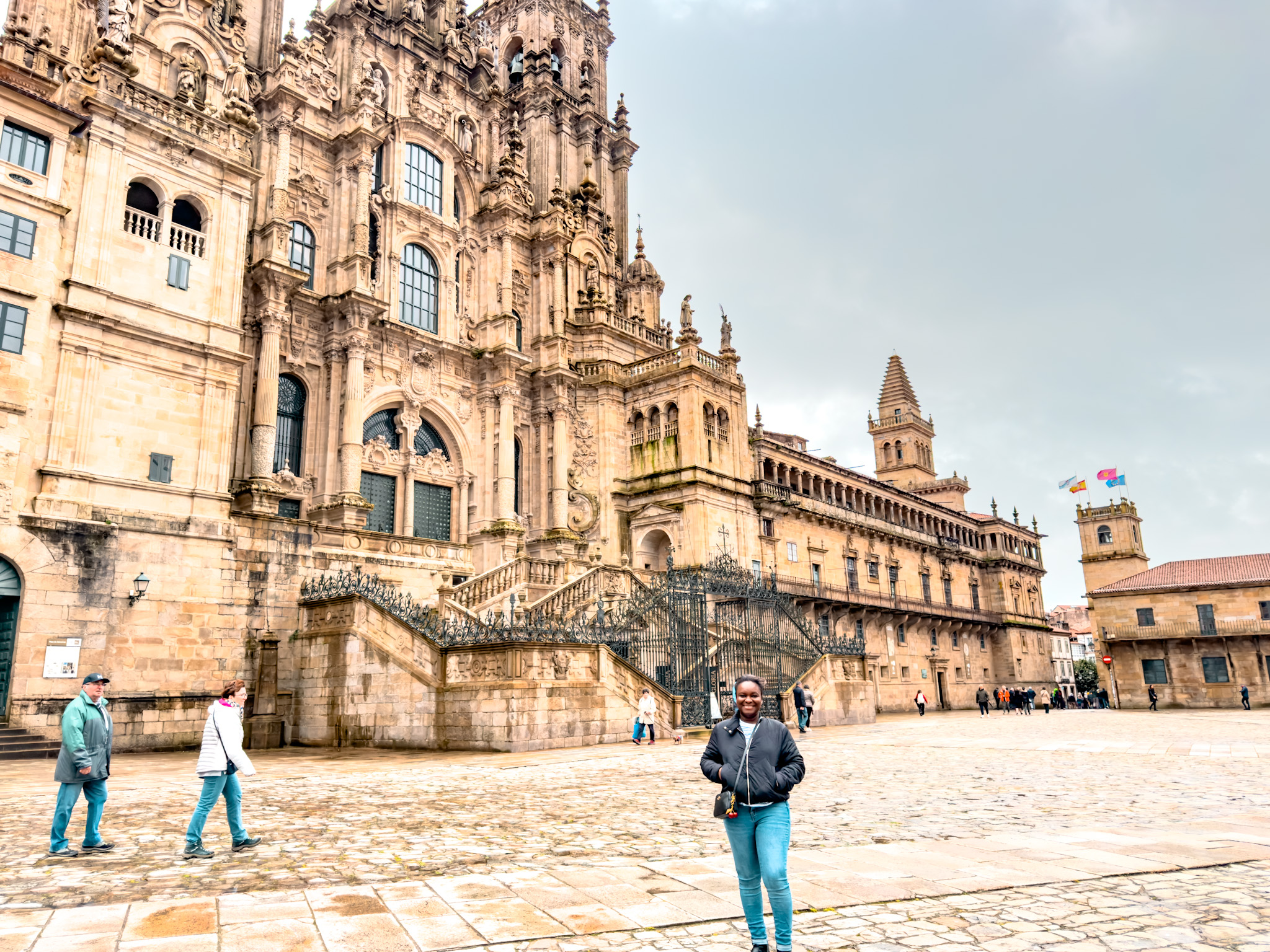
Stop 1: Walk Toward the Cathedral of Santiago de Compostela
The Cathedral is the obvious first major stop, but I would not treat it like just another church visit. This is the heart of Santiago de Compostela and the reason the city carries so much emotional weight.
As you walk toward it, pay attention to how the streets begin to open up. Santiago is designed in a way that makes the Cathedral feel like the center of gravity. You turn a corner, pass through narrow historic lanes, and then suddenly the city gives you this grand reveal.
Even if you have seen photos, arriving in front of the Cathedral feels different in person. It is not only the building. It is the people around it. Pilgrims arrive with backpacks, walking poles, tired faces, and this mix of exhaustion and relief that gives the whole square a different kind of energy.
If you are not religious, the Cathedral is still worth seeing. If you did not walk the Camino, it is still worth seeing. It is one of those places where the meaning of the city becomes clearer once you are standing there.
For a deeper breakdown of the Cathedral, ticketed spaces, Pórtico da Gloria, rooftops, museum areas, and what is worth planning ahead, read my Santiago de Compostela Cathedral guide.
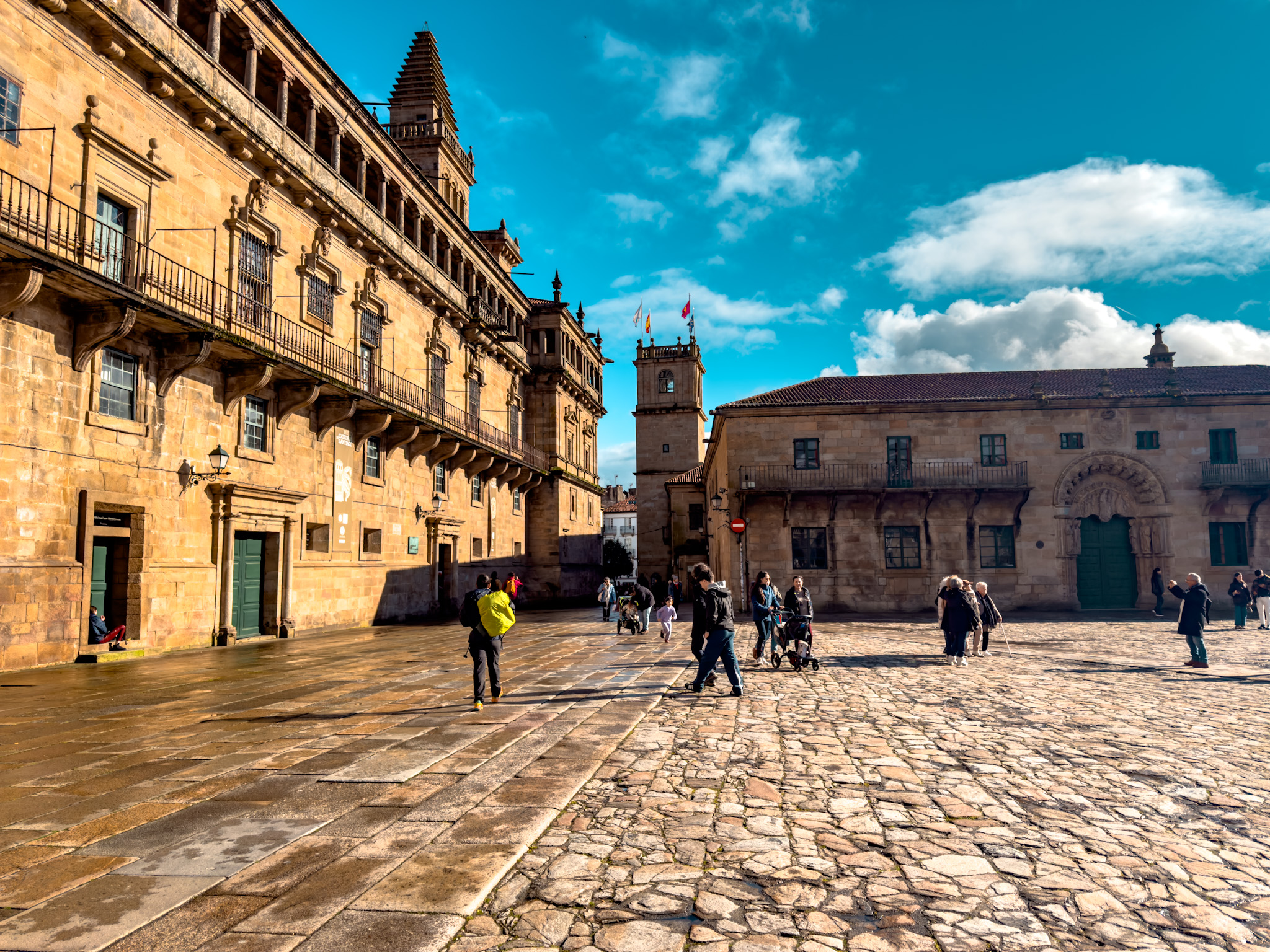
Stop 2: Spend Time in Praza do Obradoiro
Praza do Obradoiro is the main square in front of the Cathedral, and you should give yourself time here. Do not walk in, take a quick photo, and leave. This square is one of the most important parts of the whole Santiago experience.
This is where you really feel Santiago as an arrival city. People sit on the ground, hug, cry, take photos, call family, rest their bodies, and stare at the Cathedral like they cannot believe they finally made it. Some visitors are just passing through like you may be, but others have walked for days or weeks to get here.
That contrast is what makes the square powerful. You can be there as a regular traveler and still feel the emotion around you.
I would spend a few minutes just sitting or standing in the square. Look at the Cathedral façade, watch the pilgrims, listen to the sound of the plaza, and let the scene settle before moving on.
Santiago is not a city you understand by rushing.
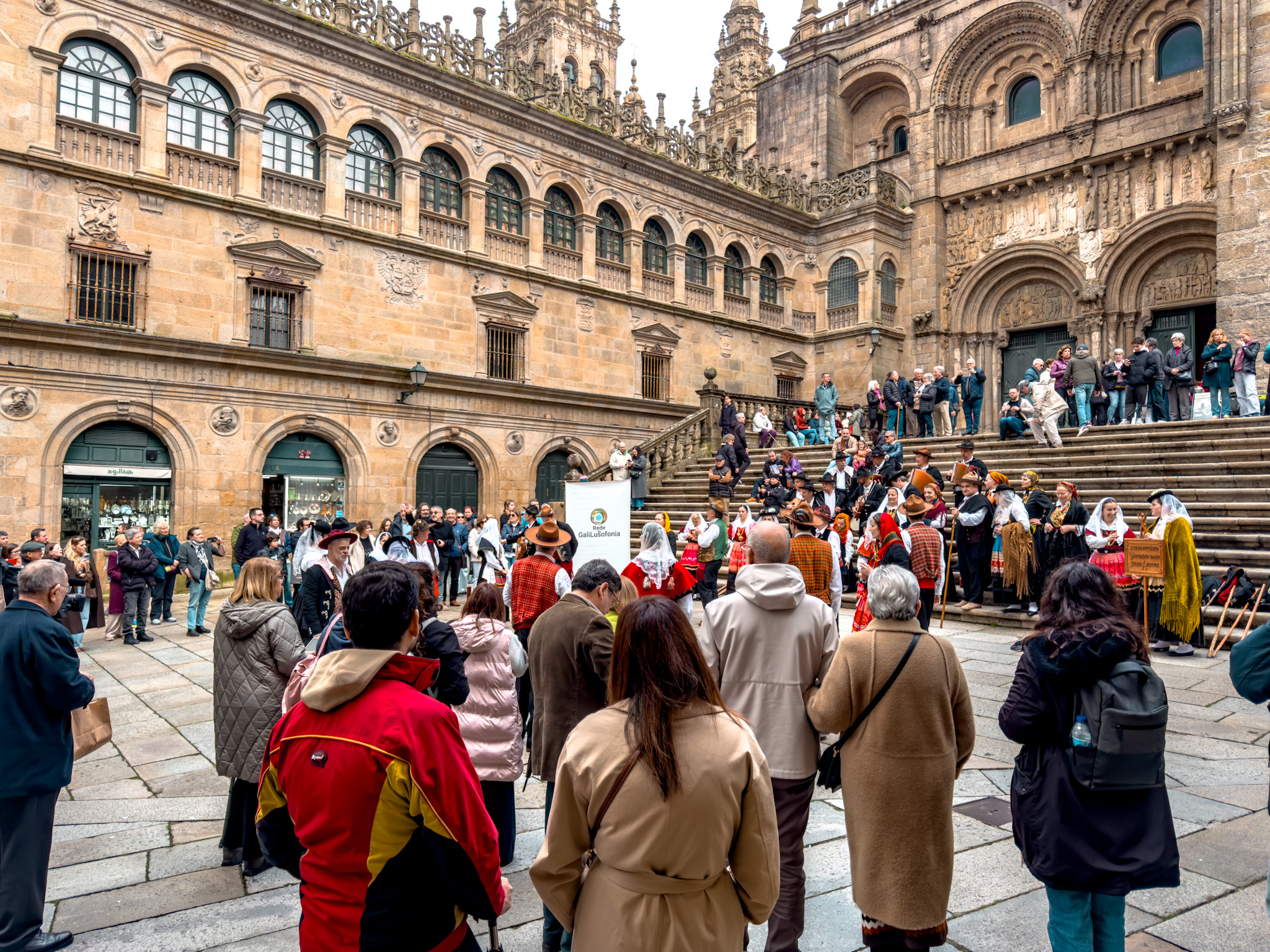
Stop 3: Walk Around the Cathedral Squares
After seeing Praza do Obradoiro, walk around the Cathedral instead of only viewing it from the front. One of the things I liked about Santiago is that the Cathedral is not experienced from just one angle. It has different sides, different plazas, and different moods depending on where you stand.
The area around the Cathedral includes several historic squares and streets that help you understand the scale of the building and how deeply it is woven into the Old Town. Some corners feel grand and open. Others feel narrow and almost hidden. You may hear music, see tour groups, watch pilgrims passing through, or find quieter pockets just a few steps from the busiest areas.
This is also where Santiago’s history starts to feel less like a single monument and more like an entire city built around centuries of movement, faith, art, and arrival.
Take your time here. This part of the day does not need to be complicated. Walk, stop, look up, take photos, and let the Cathedral area be more than one quick view.
Should You Go Inside the Cathedral?
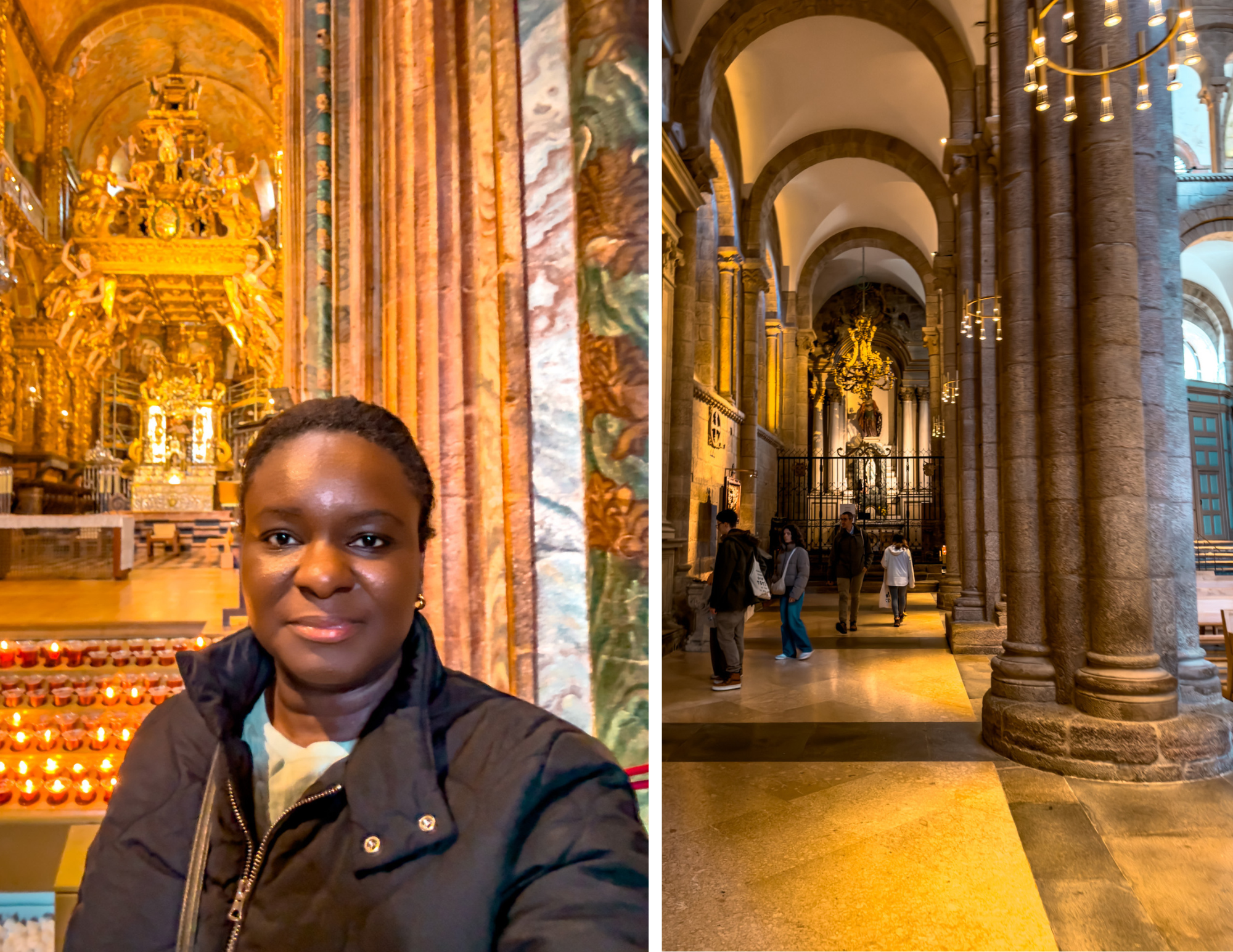
Yes, if you can, go inside the Cathedral. Even if you only do a basic visit, it helps complete the experience of Santiago.
That said, this is where you need to be realistic with one day. The Cathedral has different areas and visit options, and some ticketed experiences require more time and planning. If you are very interested in religious art, architecture, and Cathedral history, you may want to prioritize the Museum, the Pórtico da Gloria, or the rooftops. If you are doing a lighter one-day visit, you may prefer to keep the Cathedral simple and save your time for the Old Town, food, and city atmosphere.
For most first-time visitors with one day, I would do the basic Cathedral visit, spend time around Praza do Obradoiro, and only add a paid Cathedral experience if it is high on your personal list.
If you care deeply about seeing the Pórtico da Gloria or a rooftop view, plan that first and build the rest of the day around your ticket time.
Midday: Wander Through Santiago’s Old Town
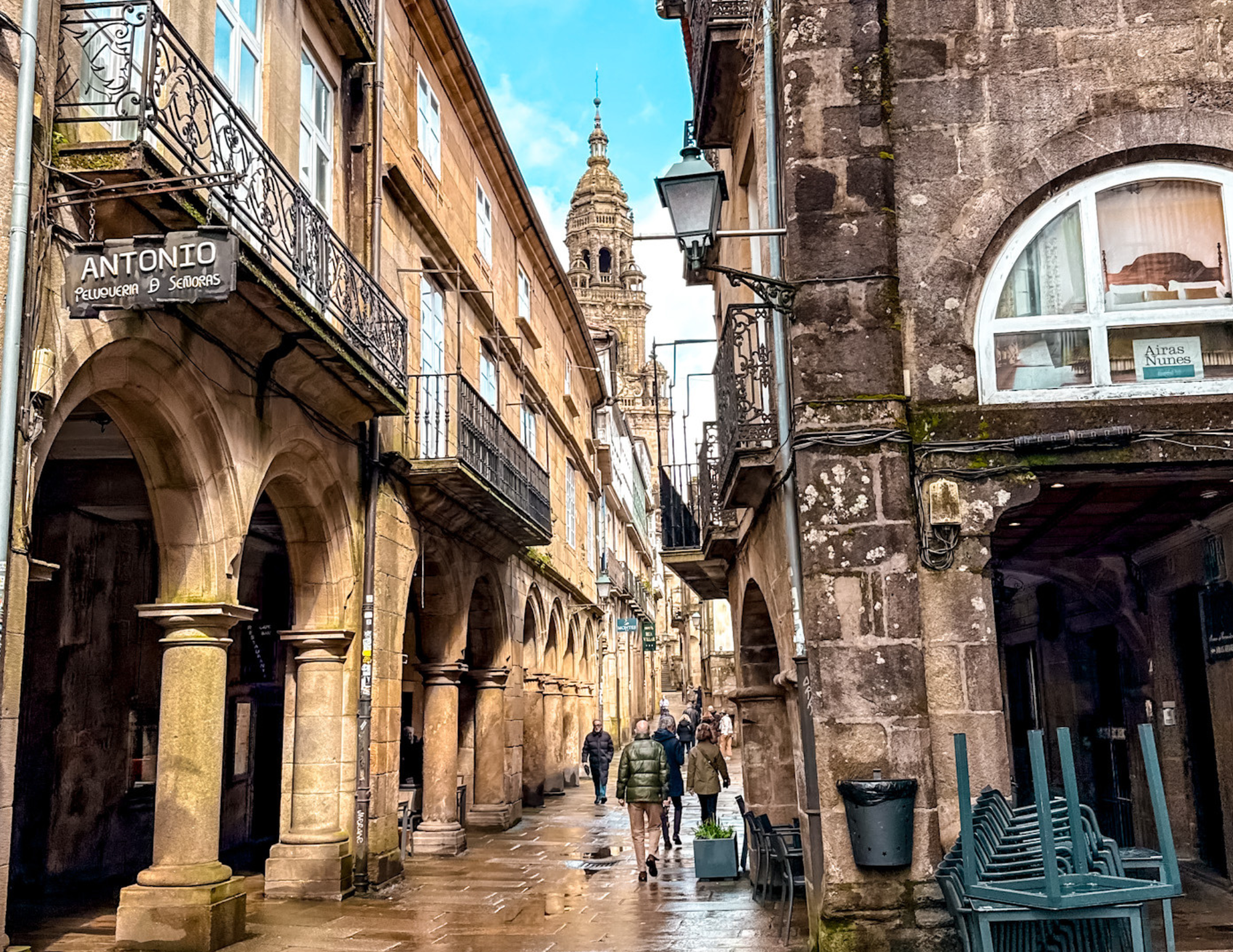
After the Cathedral area, spend late morning wandering through Santiago’s Old Town. This is one of the biggest reasons Santiago is worth visiting, and it is also why the city works so well in one day.
The historic center is compact but full of atmosphere. You will find stone streets, arcades, small plazas, churches, cafes, shops, restaurants, and little corners that feel like they have been holding stories for centuries.
I would not over-map this part. Yes, have a general direction, but do not turn the Old Town into a rigid route. Santiago is better when you leave room for detours.
Walk down the streets near the Cathedral. Pass through the lanes that pull you away from the main square. Notice the scallop shell symbols connected to the Camino. Listen for music. Look at the old buildings. Stop when something catches your attention.
If you want a deeper walk through the streets, plazas, and historic center, read my Santiago de Compostela Old Town guide.
.png)
Stop 4: Walk Down Rúa do Franco
Rúa do Franco is one of the most well-known streets in Santiago’s Old Town, especially for restaurants, bars, and the steady flow of visitors moving through the center. Since it is close to the Cathedral, it is easy to work into a one-day itinerary.
This street can feel busy and touristy in parts, but I still think it is worth walking on a first visit. Some places are popular because they are central, and Rúa do Franco is part of the city’s historic rhythm. You will see menus, food displays, people stopping for drinks, and the kind of energy that naturally builds near a major pilgrimage destination.
I would not choose every meal based only on the most obvious central street, but I would absolutely walk it. It helps you get a feel for the food-and-wandering side of Santiago.
If you are hungry by this point, you can stop for lunch nearby, or you can keep walking toward a more specific Galician food stop.
Lunch: Eat Galician Food
For lunch, make Galician food part of your Santiago day. This is not the place to treat food as filler between attractions. Galicia has its own food identity, and Santiago is a great city to experience it.
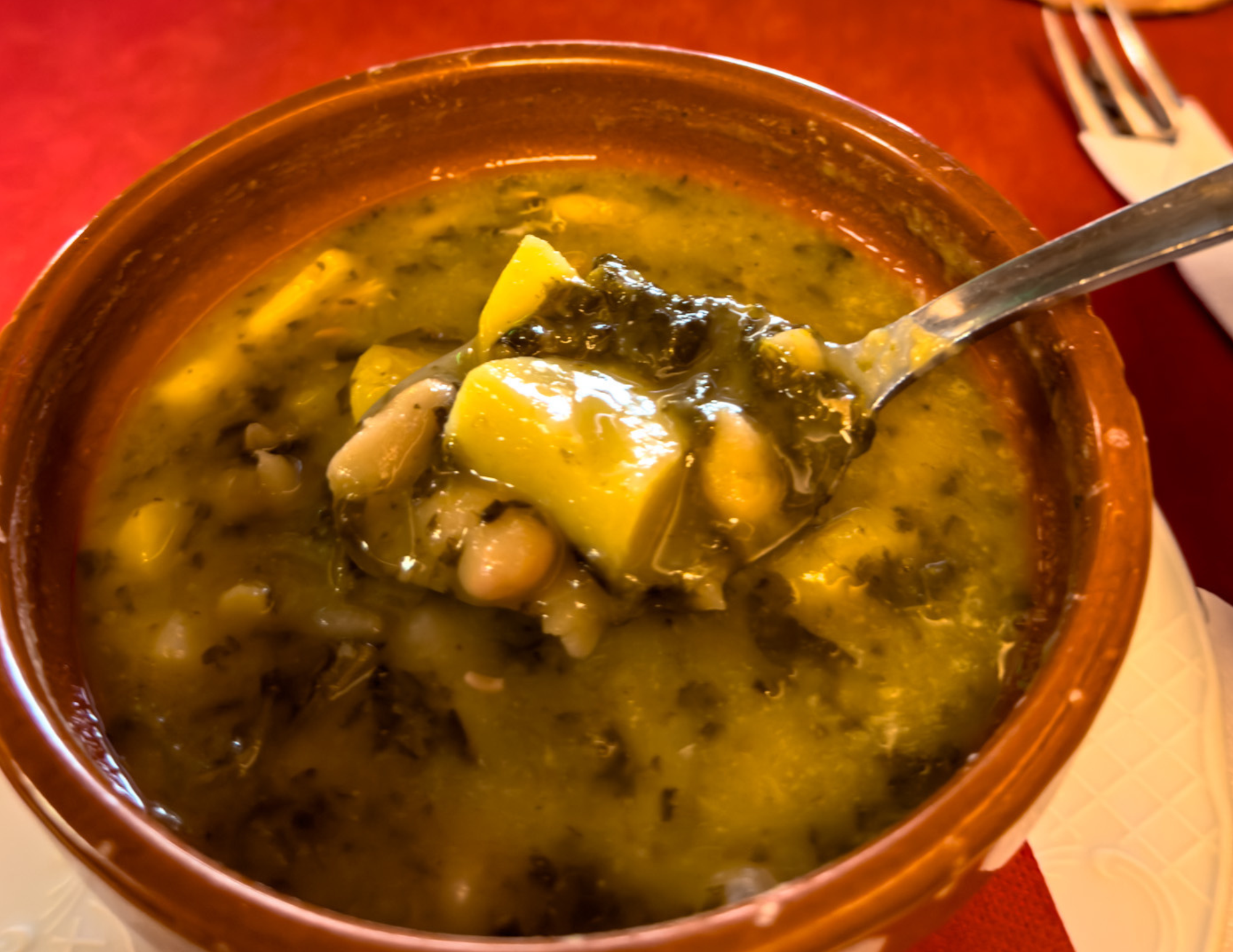
A few things to look for are caldo gallego, pulpo, empanada gallega, seafood, tortilla, local cheeses, Albariño, and vermouth. Caldo gallego is especially comforting if the weather is cool or rainy. Pulpo is one of the dishes Galicia is known for. Empanada gallega is a classic savory option that feels very different from the small empanadas many people may picture from other countries.
For one day in Santiago, I would choose one proper Galician meal instead of snacking randomly all day. Sit down, order something regional, and let the food be part of understanding the city.
If you want more ideas on what to try and how to plan your meals, read my What to eat in Santiago de Compostela guide.
Optional Stop: Mercado de Abastos
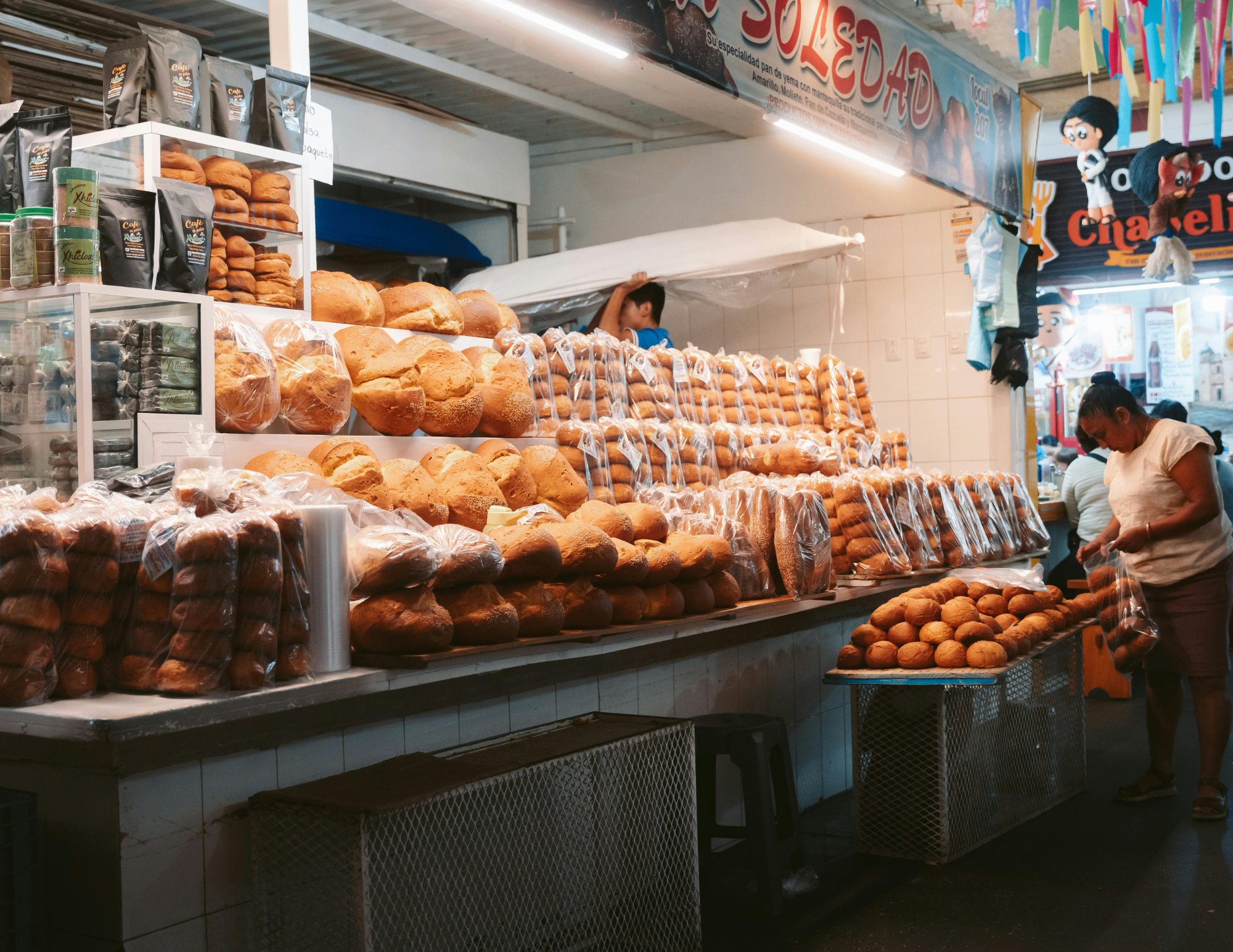
If you enjoy food markets, Mercado de Abastos is a great midday or early afternoon stop. This is one of the places where Santiago feels less like only a pilgrimage destination and more like a lived-in Galician city.
Markets show you what a region eats. In Santiago, that means seafood, produce, cheeses, meats, breads, local products, and the kinds of ingredients that make Galician food feel hearty, simple, and deeply connected to the region.
If you have already had lunch, you can still walk through just to see it. If you are more of a grazer, you can use the market area as part of your food experience.
I would include Mercado de Abastos if you are moving at a relaxed pace. If your Cathedral visit takes longer or you are not a market person, you can skip it without ruining the day.
.png)
Afternoon: Visit the Museum of Pilgrimage
In the afternoon, I would choose one museum or cultural stop. For a first visit to Santiago, the Museum of Pilgrimage makes the most sense because it connects directly to the identity of the city.
This museum helps explain the Camino, pilgrimage traditions, symbols, and the long history of people traveling to Santiago. I think it is especially useful if you did not walk the Camino yourself. You can feel the emotion in Praza do Obradoiro, but the museum helps you understand more of the context behind it.
Santiago is beautiful on the surface, but it becomes more meaningful when you understand why people have been making their way here for so long. The Museum of Pilgrimage adds that layer without taking you far from the historic center.
If you only have time for one museum in Santiago, this is the one I would prioritize for a first visit.
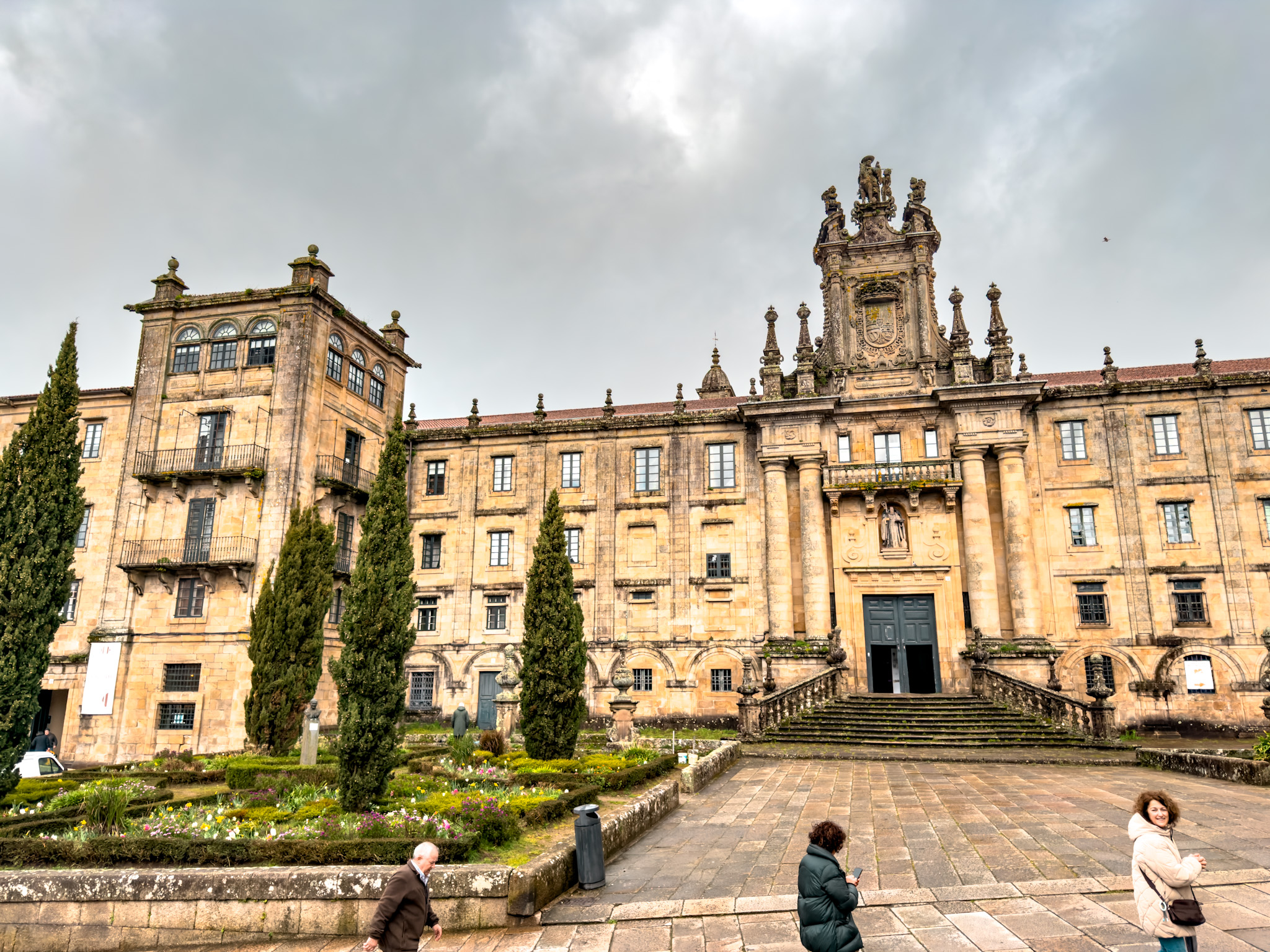
Alternative Afternoon Stop: Museo do Pobo Galego
If you are more interested in Galicia as a region than the Camino specifically, Museo do Pobo Galego is another strong option. This museum focuses more on Galician culture, identity, traditions, and history.
This is a good choice if you are trying to understand Santiago beyond the Cathedral. Galicia has its own language, food culture, music, landscapes, and traditions, and that regional identity is part of what makes Santiago feel different from other Spanish cities.
I would choose the Museum of Pilgrimage if your main interest is the Camino and Cathedral context. I would choose Museo do Pobo Galego if you want a broader understanding of Galicia.
You probably do not need to do both on a one-day itinerary unless you are moving quickly or skipping other stops.
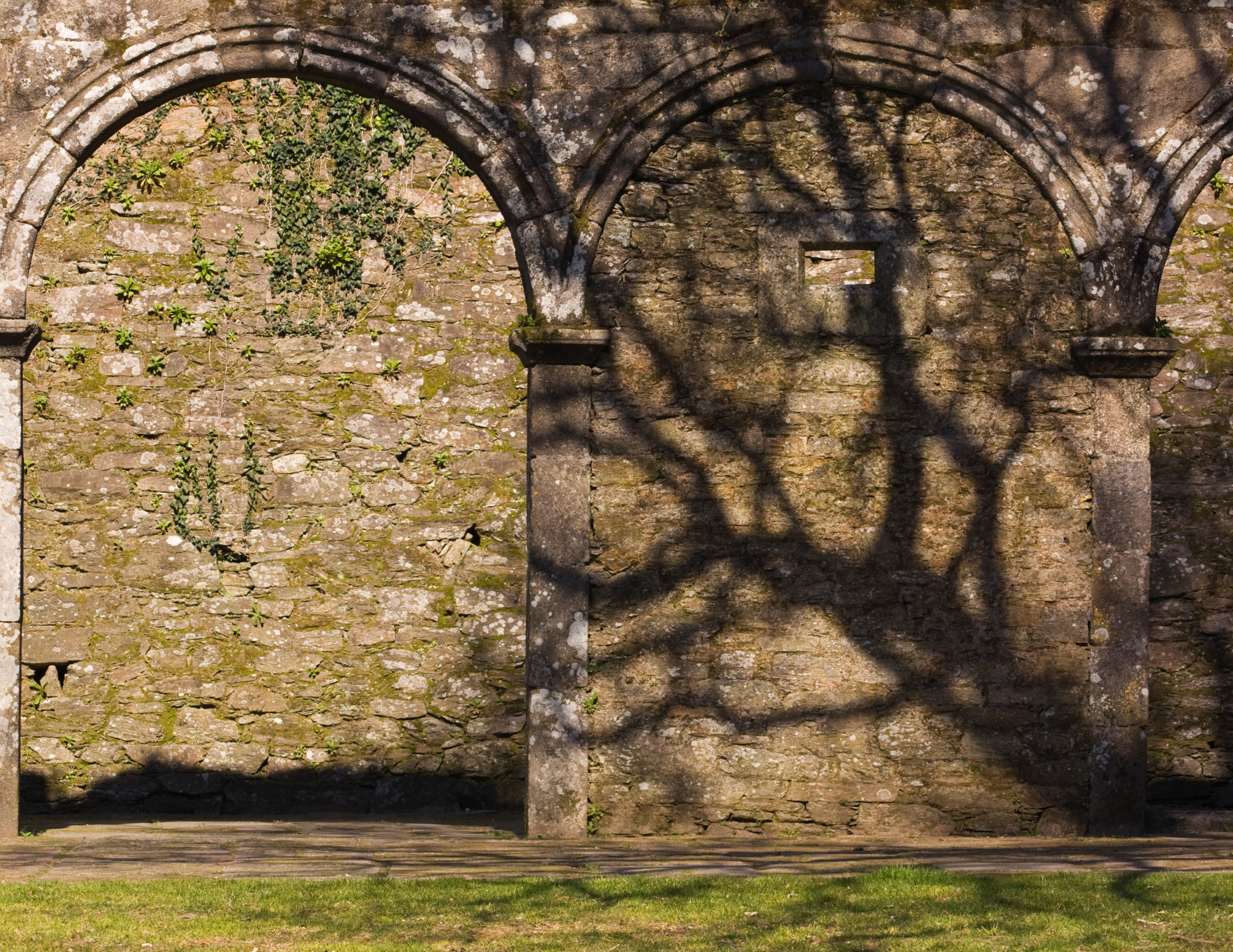
Stop 5: Walk Through San Domingos de Bonaval Park
If you visit Museo do Pobo Galego, it makes sense to add San Domingos de Bonaval Park because it is nearby and gives you a peaceful break from the denser Old Town streets.
This park feels quieter than the Cathedral area and gives your day a little breathing room. After hours of stone streets, plazas, museums, and restaurants, having green space helps balance the itinerary.
I would not call this a must-do if you only have one day and are short on time, but it is a good add-on if you are already nearby or if you like slower, calmer corners of a city.
Santiago has a lot of emotional and historic weight, so breaks like this can make the day feel more grounded.
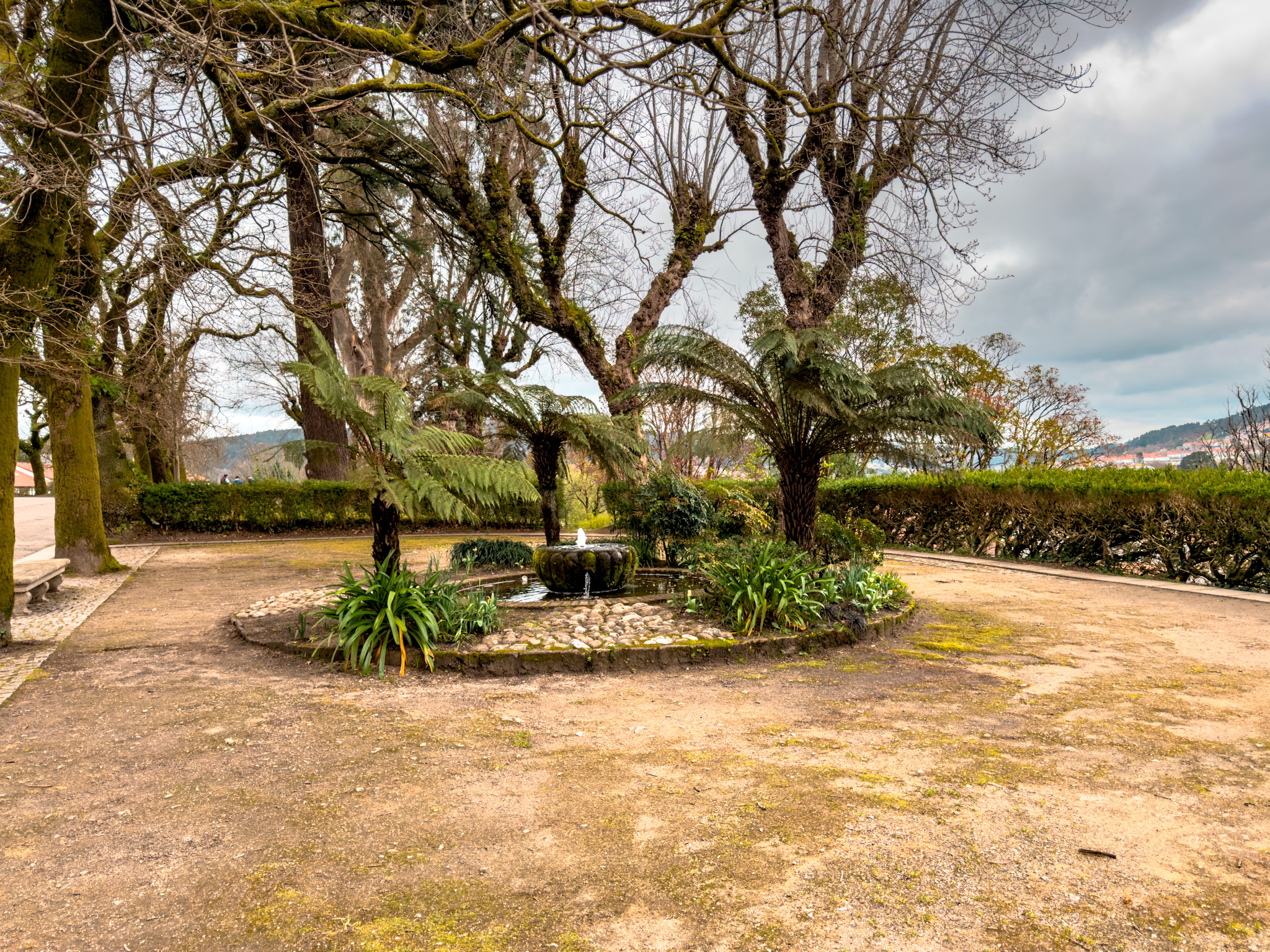
Late Afternoon: Walk to Alameda Park
Later in the afternoon, head to Alameda Park. This is one of my favorite types of city stops because it gives you a pause without pulling you too far away from the main sights.
Alameda Park is a great place to walk, breathe, and see Santiago from a different perspective. One of the best reasons to go is the view back toward the Cathedral. Instead of standing directly in front of it, you get to see it rising above the rooftops, which gives you a better sense of how it sits within the city.
This is also a good time to slow down. One day itineraries can easily become too packed, but Santiago is not the city for that. Alameda Park gives you space to reset before dinner and evening wandering.
If you are taking photos, late afternoon or golden hour can be especially beautiful.
For more details on viewpoints and where to walk, read my Alameda Park Santiago de Compostela guide.

Early Evening: Vermouth, Wine, or a Slow Dinner
By early evening, I would shift out of sightseeing mode and into food mode. Santiago is a good city for a slower dinner or a drink before eating.
Vermouth fits the rhythm of northern Spain well, especially if you want something relaxed before dinner. Albariño is also a good choice if you want to try a Galician wine, especially with seafood or lighter dishes.
For dinner, choose something that feels regional instead of defaulting to the easiest tourist menu. This is a good time to try pulpo, empanada gallega, seafood, caldo gallego if you did not have it earlier, or another Galician dish.
One of the best things about Santiago is that the day does not need a dramatic ending. A good meal, a drink, and a nighttime walk back toward the Cathedral can be enough.
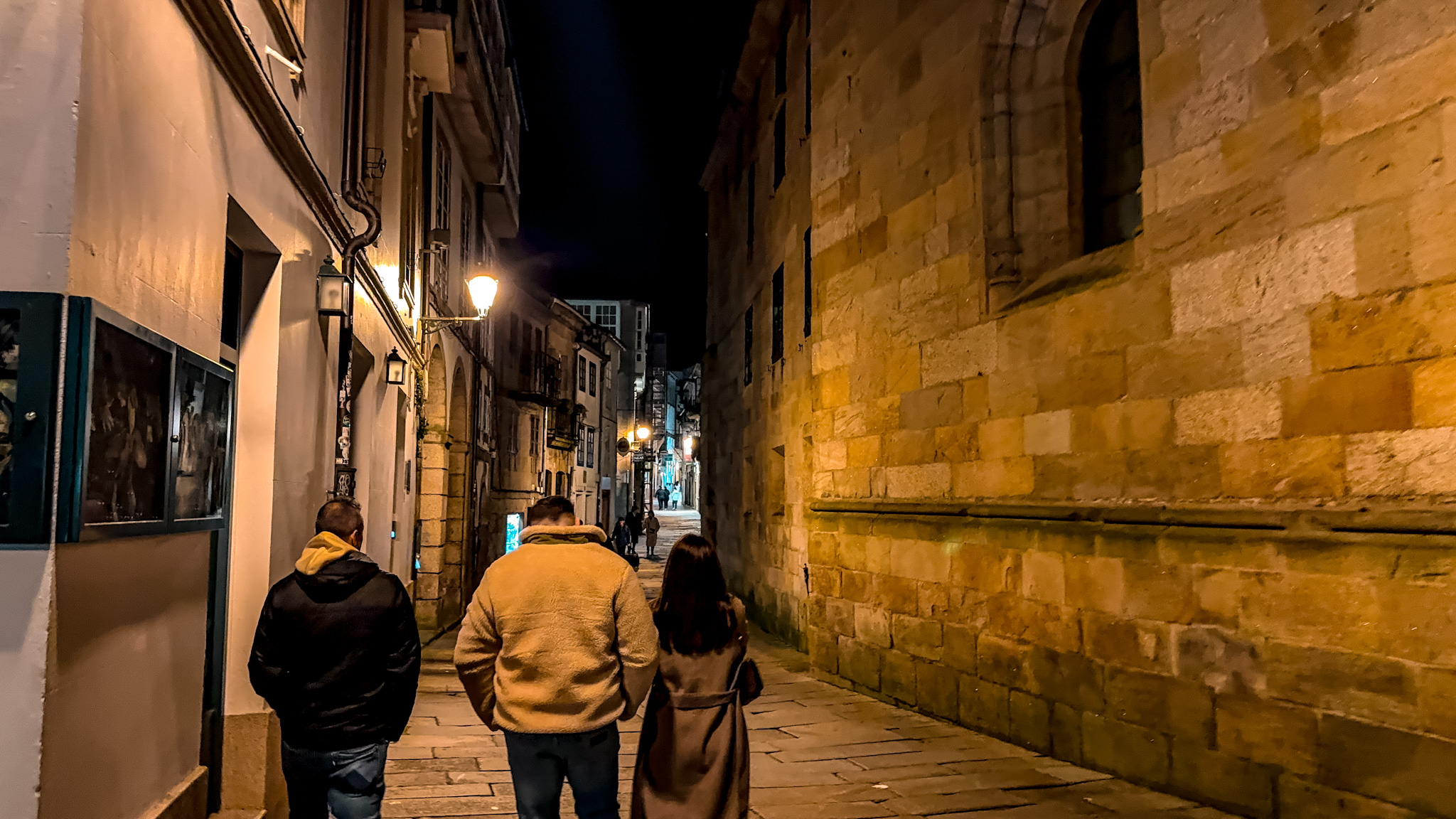
Night: Return to the Cathedral Area
If you are staying overnight, return to the Cathedral area after dark. This is one of the best parts of spending a full day in Santiago instead of leaving too early.
The city feels different at night. Praza do Obradoiro is softer. The Cathedral is lit up. The crowds shift. The stone streets take on a quieter, moodier feeling. You may hear music, see people sitting around, or simply feel the atmosphere change from daytime sightseeing to something more reflective.
This is why I think Santiago deserves at least one night if your schedule allows it. The Cathedral area after dark gives you a completely different version of the city.
You do not need a formal plan. Just walk back toward the Cathedral, pass through the Old Town, and let the evening be slow.
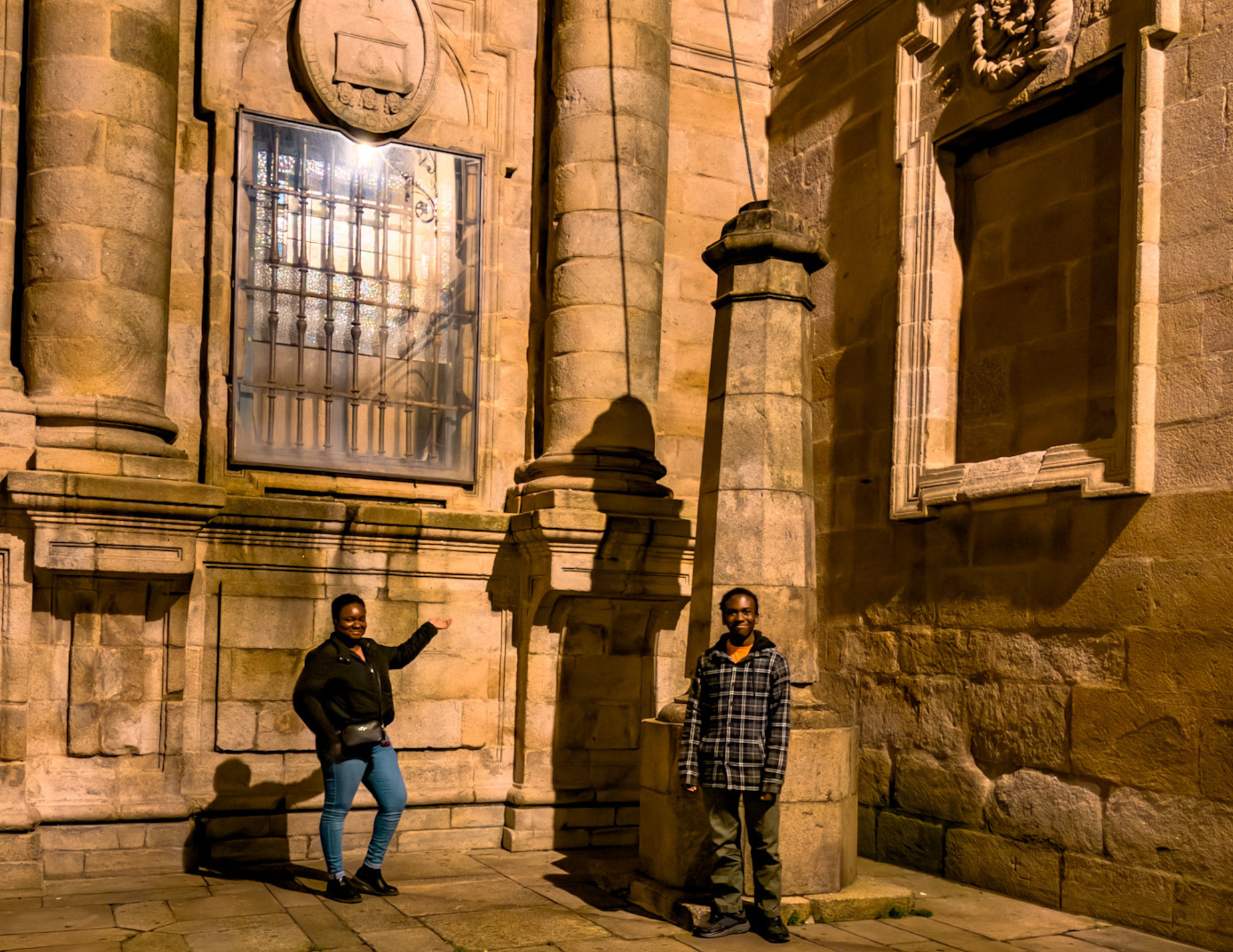
Find the Shadow of the Pilgrim
If you want to add a small nighttime detail, look for the Shadow of the Pilgrim. This is one of those Santiago moments that feels more like a hidden detail than a major attraction, but it adds character to the evening.
The shadow appears near the Cathedral area when the light hits in a way that creates the shape of a pilgrim-like figure on the wall. It is one of those small city legends that makes you pay closer attention to your surroundings.
I would not build the whole night around it, but if you are already walking near the Cathedral after dinner, it is worth looking for.
Read my Shadow of the Pilgrim Santiago de Compostela guide for where to find it and how to add it to an evening walk.
.png)
One Day Santiago de Compostela Itinerary Summary
Here is the simple version of how I would spend one day in Santiago:
Morning: Start near the Old Town with coffee or breakfast, then walk toward the Cathedral.
Late morning: Visit the Cathedral area, spend time in Praza do Obradoiro, and walk around the Cathedral squares.
Midday: Wander through the Old Town and Rúa do Franco.
Lunch: Eat Galician food, ideally something regional like caldo gallego, pulpo, empanada, seafood, or tortilla.
Early afternoon: Visit the Museum of Pilgrimage, or choose Museo do Pobo Galego if you want more Galician cultural context.
Late afternoon: Walk to Alameda Park for views back toward the Cathedral.
Evening: Have vermouth, wine, or a slow Galician dinner.
Night: Return to the Cathedral area and look for the Shadow of the Pilgrim.
This gives you a full day without making the city feel like homework.
.png)
What To Skip With Only One Day
If you only have one day in Santiago, you will need to make choices. I would not try to do every museum, every Cathedral ticketed option, every park, every market, and every food stop in one day.
With limited time, I would skip anything that pulls you too far out of the historic center unless it is personally important to you. Santiago’s strongest first-time experience is concentrated around the Cathedral, Old Town, food, and walkable atmosphere.
I would also avoid overbooking your day with timed entries unless there is something you really care about. One timed Cathedral experience can work beautifully. Three timed activities can make the city feel stressful.
For one day, the goal is not to see everything. The goal is to leave feeling like you understood Santiago.
.png)
What I Would Not Miss With One Day in Santiago
If I had only one day, I would not miss the Cathedral area, Praza do Obradoiro, the Old Town, one Galician meal, Alameda Park, and an evening walk back through the historic center.
Those pieces give you the best version of Santiago in a short amount of time. You get the history, the pilgrimage atmosphere, the food, the views, and the feeling of the city after dark.
If you can add one museum, choose the Museum of Pilgrimage. If you can add one food-focused stop, choose Mercado de Abastos. If you can add one paid Cathedral experience, choose the one that matters most to you and plan the day around it.
.png)
Can You Visit Santiago de Compostela as a Day Trip?
Yes, you can visit Santiago de Compostela as a day trip, especially from places like Vigo or A Coruña. The city’s walkable center makes it realistic because you do not need complicated transportation once you arrive.
That said, I think Santiago is better with an overnight stay. The city has a different feeling after dark, and staying overnight gives you a chance to experience the Cathedral area without only seeing it during the busiest daytime hours.
If your schedule only allows a day trip, still go. Arrive early, keep your plans focused, and stay in the Old Town area. If your schedule allows one night, take it.
.png)
Tips for Spending One Day in Santiago de Compostela
Wear comfortable shoes. The historic center is very walkable, but the streets can be uneven, and you will likely be on your feet for most of the day.
Pack for possible rain. Galicia is greener for a reason, and gray skies or light rain are part of the region’s personality. A small umbrella or rain jacket can make the day much more comfortable.
Do not rush the Cathedral square. Praza do Obradoiro is not just a photo stop. Give yourself time to watch the city happen around you.
Plan ahead for ticketed Cathedral areas. If you want to see the Pórtico da Gloria, rooftops, or specific museum spaces, do not leave that decision until the last second.
Eat something Galician. Food is part of understanding Santiago, not just something to squeeze in between stops.
Stay for the evening if you can. Santiago at night is worth experiencing, even if all you do is walk back toward the Cathedral after dinner.
.png)
Final Thoughts on One Day in Santiago de Compostela
One day in Santiago de Compostela is enough to make the city worth your time. You may not see every museum or every church, but you can absolutely experience the heart of the city.
You can stand in Praza do Obradoiro and watch pilgrims arrive. You can walk through the Old Town and feel the age of the streets. You can visit the Cathedral, eat Galician food, see the city from Alameda Park, and return after dark when the stone streets and Cathedral lights make everything feel softer.
Santiago is not the kind of place that needs to impress you with constant activity. Its power is quieter than that. It comes from history, arrival, faith, food, weather, footsteps, and the feeling that people have been moving toward this city for a very long time.
If you are building a Galicia route, read my Vigo travel guide.
Santiago may be famous as the end of the Camino, but even if your own journey there is just a train ride, a bus ride, or one stop in a longer trip, it is still a city worth arriving in.

Cavetta is the creator of LifeWithVetta.com and has been traveling the world full time since 2020. She has visited more than 60 countries while worldschooling her son and documenting what it really takes to live abroad. Her guides focus on travel, moving abroad, digital nomad life, and designing a life beyond the traditional path.
